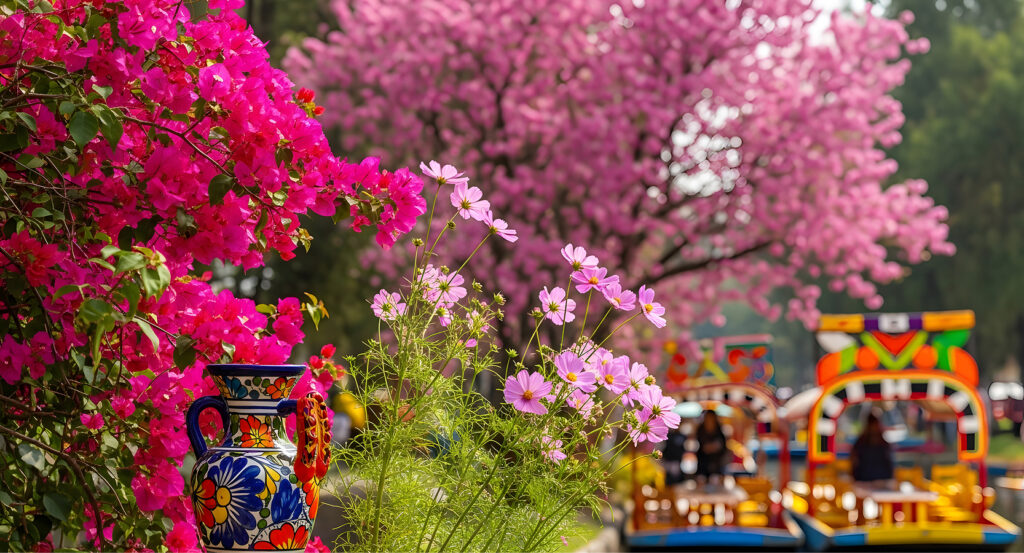
Why Xochimilco matters.
Xochimilco in Mexico City isn't just a destination, it's a living echo of an ancient civilization, a place where time drifts as gently as the colorful boats that glide across its canals.
South of the city center, this UNESCO World Heritage Site feels worlds apart from the metropolis, offering a glimpse into the life and landscape of pre-Hispanic Mexico. Its name, derived from Nahuatl, means “the place where flowers grow,” and the moment you arrive, it's easy to see why. The canals of Xochimilco shimmer under the sun, bordered by floating gardens known as chinampas, fertile man-made islands that date back to the Aztec Empire, when they were used to feed the great city of Tenochtitlan. Today, those same waterways are alive with color and music: mariachi bands serenade from passing boats, vendors offer tamales and micheladas, and families celebrate milestones aboard trajineras, flat-bottomed boats painted in electric hues. Each one bears a woman's name, “Lupita,” “Carmen,” “Maria”, their arches draped in flowers, each a small floating universe of laughter and rhythm. Here, life unfolds at the pace of the current, a reminder that even in one of the world's busiest cities, joy still finds its way through the water.
What defines Xochimilco.
Beneath its energetic surface, Xochimilco holds layers of history and ecological wonder that make it one of the most remarkable living systems on Earth.
The canals are the last remnants of the vast lake system that once covered the Valley of Mexico, where the Aztecs mastered the art of sustainable farming through chinampas, rectangular plots made from mud and reeds that floated on the water and produced crops year-round. These islands still exist today, tended by local farmers who carry on centuries-old techniques that blend agriculture and aquaculture in perfect balance. The water supports a fragile ecosystem that includes the critically endangered axolotl, a mystical, regenerating salamander that has become an icon of Mexico City itself. The entire network of canals stretches for 180 kilometers, an aquatic labyrinth that connects communities, traditions, and biodiversity in a delicate equilibrium. During colonial times, Xochimilco's waterways were used to transport goods into the city, and by the 20th century, they became a favorite escape for locals seeking respite from urban life. In 1987, UNESCO declared Xochimilco a World Heritage Site, recognizing not only its cultural heritage but also its vital ecological role. Even as modernity presses in, restoration projects and conservation efforts continue to protect the canals from pollution and overdevelopment. Beneath the laughter of trajineras and the songs of mariachis lies a sacred continuity, a living discussion between the past and present, between humanity and the water that sustains it.
How Xochimilco fits.
A visit to Xochimilco is a plunge into Mexico City's most joyful rhythm, equal parts history, culture, and celebration.
Start the adventure early at one of the main docks, such as Embarcadero Nuevo Nativitas or Cuemanco, where rows of trajineras wait like a fleet of painted dreams. Negotiate your boat fare, typically by the hour, and bring snacks or drinks to enjoy as you float. As you set off, the world slows to the rhythm of the oar dipping into water, and the sounds of mariachis echo between canals. Don't rush, the pleasure of Xochimilco lies in drifting, in waving to passing boats, in dancing to live music, or simply watching the sunlight shimmer across the water. Along the way, stop at one of the floating gardens where farmers sell fresh flowers, plants, and local produce, or visit Isla de las Muñecas, the haunting “Island of the Dolls,” where hundreds of weathered dolls hang from trees, said to honor a drowned girl's spirit. For an authentic taste of the region, bring a picnic or try quesadillas and corn from floating food vendors. If you prefer a quieter experience, aim for a weekday morning when the canals are serene and the mist still clings to the reeds. As the sun sets and the city's skyline fades in the distance, you'll feel suspended in a timeless space, the reflection of lanterns shimmering in the water, laughter echoing down the channels. Xochimilco is more than a place to visit, it's an experience to feel, a reminder that Mexico City's heart still beats in rhythm with the water, carrying its ancient spirit into the present.
Where your story begins.
Foresyte Travel reveals places that feel extraordinary long before you arrive.
Enjoy editorial crafted for luxury travelers.
Foresyte may earn a commission when you book.