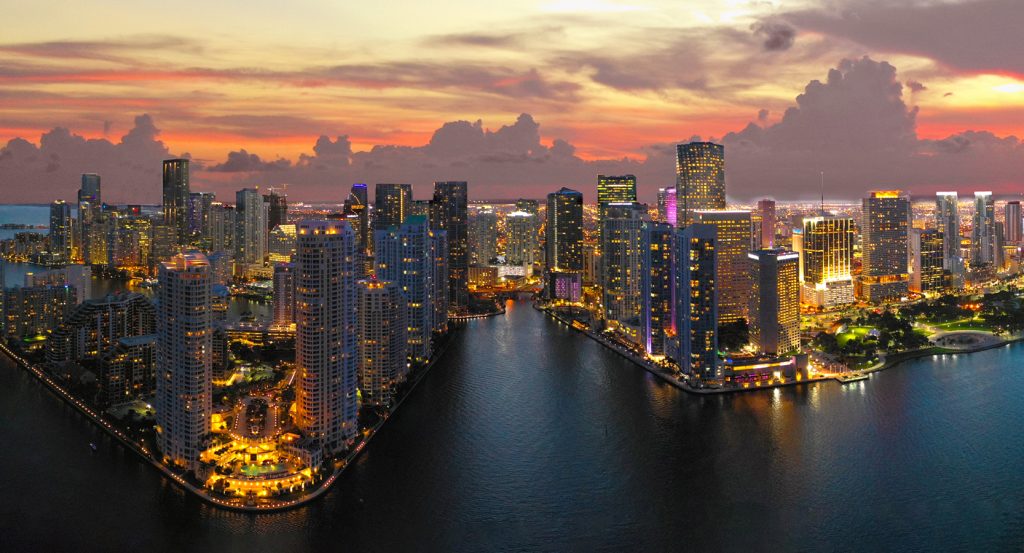
Why you should experience 47th Street in Miami, Florida.
47th Street is a colorful corridor where Little Haiti's Caribbean heritage, artistic expression, neighborhood enterprise, and immigrant traditions continue shaping one of northern Miami's most culturally distinctive urban communities.
Running through Little Haiti between Little River and the Upper Eastside, the corridor connects established residential blocks, neighborhood churches, independent businesses, and longstanding commercial streets that collectively reflect Miami's emergence as one of the nation's foremost centers of Haitian culture. Royal palms, brightly painted murals, modest twentieth-century homes, and locally owned storefronts create a streetscape where generations of Haitian families have sustained cultural traditions through entrepreneurship, visual art, and community life. Throughout the corridor, neighborhood institutions, creative spaces, and family-operated businesses reinforce an environment defined by resilience, cultural continuity, and enduring local identity. The result is an experience characterized by artistic vitality, architectural familiarity, and one of northern Miami's most authentic neighborhood corridors.
What you should know about 47th Street.
47th Street is best known for traversing Little Haiti, whose modern character emerged after sustained Haitian migration during the 1970s established the neighborhood as one of the largest and most influential Haitian communities in the United States. Residential blocks surrounding the corridor evolved from early twentieth-century subdivisions into compact collections of masonry homes, duplexes, apartment buildings, neighborhood churches, and storefront commercial buildings whose reinforced concrete construction, decorative stucco finishes, terrazzo thresholds, jalousie windows, and clay barrel roofs remain characteristic of Miami's subtropical architecture. Nearby Little River supported early agricultural settlement before surrounding farmland gradually transitioned into urban neighborhoods, while Biscayne Boulevard and Interstate 95 expanded regional accessibility that accelerated residential and commercial growth across northern Miami. Royal palms, gumbo limbo, live oaks, sea grape, white ibis, monk parakeets, zebra longwing butterflies, and native pollinator habitats continue contributing to the corridor's tropical landscape despite decades of metropolitan development.
Kompa and rara music traditions have remained closely associated with the cultural life surrounding 47th Street, where neighborhood festivals, community gatherings, and local performance venues introduced generations of residents to rhythms rooted in Haitian musical heritage. Instrument makers, percussionists, dancers, and vocal ensembles expanded those traditions by preserving ceremonial rhythms alongside contemporary Caribbean musical styles, ensuring that both ancestral and modern influences continued shaping the surrounding cultural landscape. Community radio broadcasts, neighborhood celebrations, and locally organized performances further strengthened those musical traditions by connecting artists with audiences while reinforcing shared cultural character across Little Haiti. Together, these musical practices, performance traditions, and community celebrations demonstrate how 47th Street reflects Little Haiti's continuing role as one of Miami's foremost centers of Haitian cultural expression.
How to fold 47th Street into your trip.
47th Street works as an exploration of Little Haiti's artistic traditions, neighborhood enterprise, and Caribbean heritage.
Begin at Little Haiti Cultural Complex, where galleries, artist studios, performance spaces, and cultural exhibitions introduce the creative traditions that continue shaping the neighborhood while providing context for the surrounding streets. Continue to Caribbean Marketplace, where artisan workshops, handcrafted goods, and neighborhood vendors demonstrate how commerce has long preserved Haitian craftsmanship while supporting generations of independent entrepreneurs. Conclude at Haitian Heritage Museum, where historical exhibitions, archival collections, and works by Haitian artists provide the historical payoff by connecting Miami's Haitian community with the broader story of Haiti's history, migration, and cultural achievement. The progression moves from contemporary artistic expression through traditional commerce before culminating in historical understanding, revealing how 47th Street connects creativity, entrepreneurship, and Haitian heritage.
Where your story begins.
Foresyte Travel reveals places that feel extraordinary long before you arrive.
Experience premium editorial crafted for luxury travelers.