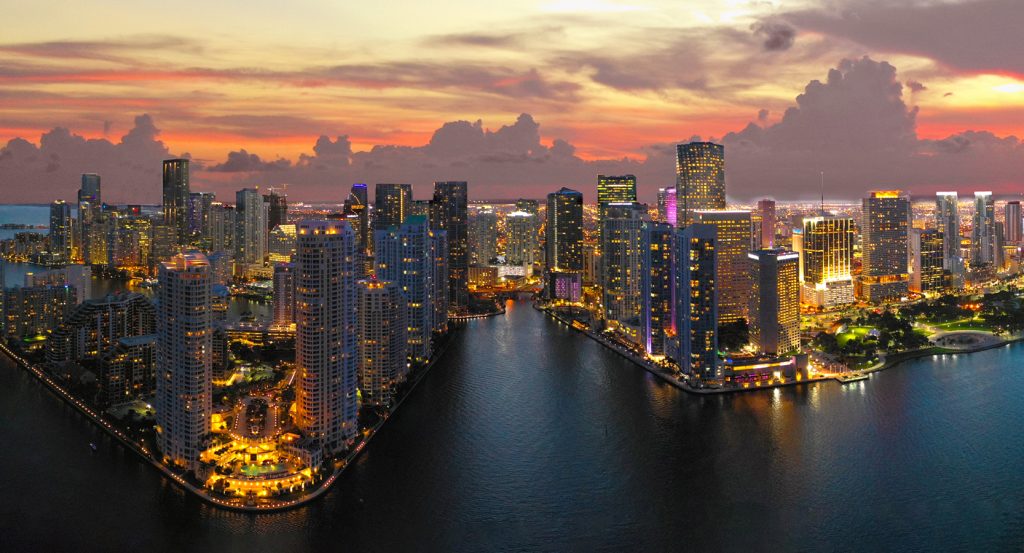
Why you should experience 75th Street in Miami, Florida.
75th Street is a cultivated corridor where Little Haiti's Caribbean heritage, creative traditions, neighborhood enterprise, and tropical landscape shape one of northern Miami's most engaging community streets.
Running through Little Haiti between Little River and the Upper Eastside, the corridor connects established residential blocks, neighborhood businesses, schools, churches, and cultural institutions that collectively reflect Miami's evolution into one of the nation's foremost Caribbean cultural centers. Mature royal palms, colorful murals, shaded sidewalks, and independently operated storefronts create a streetscape where Haitian traditions and successive waves of immigrant entrepreneurship remain closely intertwined. Throughout the corridor, family-owned businesses, cultural organizations, and flourishing subtropical vegetation reinforce an environment shaped by artistic expression, community stewardship, and decades of neighborhood investment. The result is an experience defined by cultural authenticity, neighborhood continuity, and one of northern Miami's most distinctive urban corridors.
What you should know about 75th Street.
75th Street is best known for traversing Little Haiti, a neighborhood transformed during the late twentieth century as Haitian immigrants established one of the largest and most influential Haitian communities in the United States following successive migration waves beginning in the 1970s. The corridor occupies land first developed during Miami's early suburban expansion, when pine rocklands, truck farms, and scattered residential subdivisions gradually gave way to masonry storefronts, neighborhood schools, churches, apartment buildings, and independently operated commercial districts serving a growing urban population. Residential and commercial construction introduced Mediterranean Revival houses, reinforced concrete apartment buildings, masonry duplexes, decorative stucco façades, terrazzo entrances, clay barrel roof tiles, and hurricane-adapted structural techniques that continue illustrating the district's architectural evolution. Improvements to Northeast 2nd Avenue, Interstate 95, Biscayne Boulevard, municipal drainage canals, and the surrounding street grid strengthened regional accessibility while encouraging sustained residential and commercial investment across northern Miami. Royal palms, gumbo limbo, live oaks, sabal palms, sea grape, white ibis, monk parakeets, zebra longwing butterflies, and native pollinator species remain integral to neighborhood streetscapes, preserving South Florida's subtropical ecological character despite continuous urban development.
The Caribbean Marketplace established a permanent gathering place for Haitian artisans, craftspeople, and entrepreneurs while strengthening the neighborhood's role as a center for traditional art, commerce, and cultural exchange. Creole-language educational programs, neighborhood libraries, literary organizations, and cultural festivals continue preserving Haitian language, folklore, music, and storytelling traditions introduced by generations of immigrant families. Independent bakeries, botanicas, produce markets, art studios, and family-operated restaurants remain central to the surrounding commercial landscape, reflecting entrepreneurial traditions that continue sustaining Little Haiti's cultural identity. Together, these cultural institutions, educational initiatives, and enduring local businesses demonstrate how 75th Street preserves the historical, artistic, and commercial traditions that continue distinguishing Little Haiti within metropolitan Miami.
How to fold 75th Street into your trip.
75th Street works as an exploration of Little Haiti's artistic heritage, neighborhood traditions, and Caribbean culture.
Begin at Caribbean Marketplace, where artisan workshops, handcrafted goods, and neighborhood businesses introduce the entrepreneurial traditions that define Little Haiti before following 75th Street through the surrounding community. Continue to Little Haiti Cultural Complex, whose exhibitions, performances, and educational programming broaden the appreciation for the neighborhood's enduring artistic legacy. Conclude at Haitian Heritage Museum, where historical collections, paintings, sculpture, and archival exhibitions provide the culminating reward by revealing the cultural history that continues shaping Little Haiti today. The progression moves naturally from neighborhood enterprise through living cultural expression before concluding with historical interpretation, revealing how 75th Street connects commerce, creativity, and Caribbean heritage.
Where your story begins.
Foresyte Travel reveals places that feel extraordinary long before you arrive.
Experience premium editorial crafted for luxury travelers.