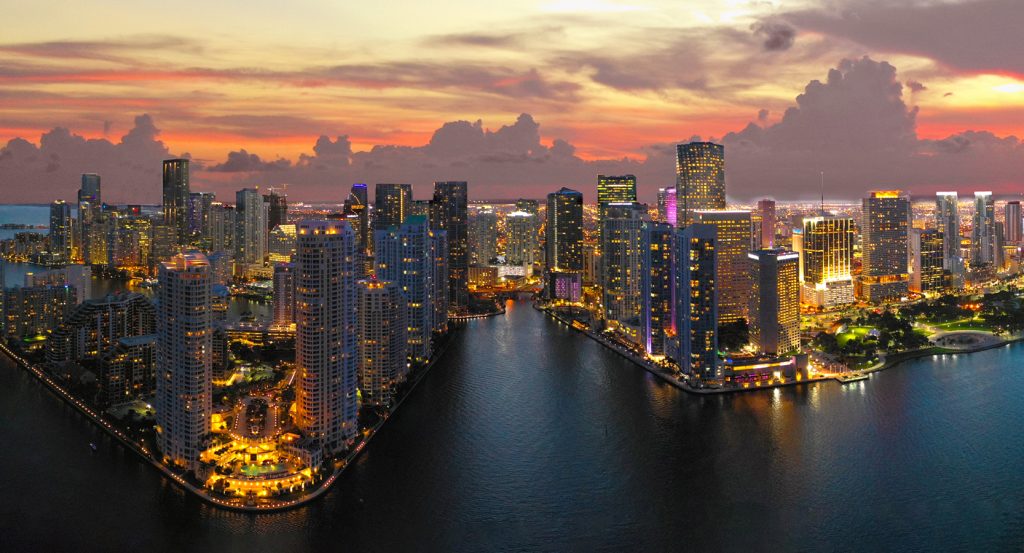
Why you should experience 82nd Street in Miami, Florida.
82nd Street is a leafy corridor where Upper Eastside's architectural heritage, waterfront setting, neighborhood character, and tropical landscape create one of northern Miami's most appealing residential streets.
Running through the Upper Eastside between Little River and Shorecrest, the corridor connects historic residential blocks, neighborhood institutions, Biscayne Bay access points, and mature tree-lined streets that collectively reflect Miami's early twentieth-century expansion beyond its original urban core. Broad lawns, native hardwoods, Mediterranean Revival residences, and carefully preserved landscaping create a streetscape where architectural continuity and coastal living remain closely intertwined. Throughout the corridor, long-established homes, neighborhood gathering spaces, and flourishing subtropical vegetation reinforce an environment shaped by decades of thoughtful residential development and community stewardship. The result is an experience defined by architectural distinction, neighborhood tranquility, and one of northern Miami's most enduring residential corridors.
What you should know about 82nd Street.
82nd Street is best known for extending through Miami's Upper Eastside, where residential development accelerated during the Florida land boom of the 1920s as Biscayne Bay attracted architects, developers, and new residents seeking waterfront communities beyond Downtown. The corridor became part of a collection of planned subdivisions featuring Mediterranean Revival, Mission Revival, Art Deco, and Streamline Moderne residences distinguished by stucco exteriors, clay barrel roof tiles, decorative ironwork, terrazzo flooring, and reinforced concrete construction adapted to South Florida's subtropical climate. Construction coincided with major infrastructure projects that expanded bridges, municipal utilities, paved roadways, and drainage systems, allowing formerly wooded coastal land to support permanent residential neighborhoods throughout the Upper Eastside. Coral rock walls, oolitic limestone foundations, masonry garden features, engineered seawalls, stormwater canals, and hurricane-resistant utility improvements demonstrate successive investments that strengthened the corridor as Miami continued expanding northward during the twentieth century. Live oaks, royal poincianas, gumbo limbo, mahogany, sabal palms, sea grape, monk parakeets, great egrets, and white ibis remain prominent throughout the surrounding landscape, preserving a diverse urban canopy characteristic of Biscayne Bay neighborhoods.
The MiMo Historic District immediately south of the corridor preserves one of the nation's largest collections of Miami Modern commercial architecture, documenting the design movement that reshaped Biscayne Boulevard after World War II through expressive geometric forms, decorative breeze block, and dramatic cantilevered canopies. Biscayne Bay's proximity continues influencing neighborhood planning through shoreline conservation initiatives, mangrove restoration, tidal resilience projects, and environmental stewardship that protect the coastal ecosystem surrounding the corridor. Independent neighborhood organizations and preservation advocates have supported restoration efforts for historic residences while encouraging the retention of mature tree canopy and architecturally significant building features across the Upper Eastside. Together, these preservation initiatives, coastal environmental programs, and architectural resources demonstrate how 82nd Street continues reflecting the historic evolution and environmental character of Miami's Upper Eastside.
How to fold 82nd Street into your trip.
82nd Street works as an exploration of northern Miami's architecture, waterfront landscapes, and cultural destinations.
Begin at Legion Park, where Biscayne Bay views, mature shade trees, and waterfront walking paths introduce the coastal landscape before following 82nd Street through the Upper Eastside. Continue to MiMo Biscayne Boulevard Historic District, whose distinctive postwar architecture and preserved commercial buildings broaden the appreciation for one of Miami's defining design movements. Conclude at The Kampong, where rare tropical plant collections, historic gardens, and Biscayne Bay scenery provide the culminating reward by celebrating South Florida's extraordinary botanical heritage. The progression moves naturally from the bayfront landscape through architectural discovery before concluding amid internationally significant tropical gardens, revealing how 82nd Street connects neighborhood history, coastal ecology, and Miami's enduring design legacy.
Where your story begins.
Foresyte Travel reveals places that feel extraordinary long before you arrive.
Experience premium editorial crafted for luxury travelers.