Why you should experience Hotel Van Cleef in Brugge, Belgium.
Hotel Van Cleef is where Brugge's old-world intimacy meets contemporary refinement, a boutique hideaway that feels less like a stopover and more like an ongoing conversation with the city itself.
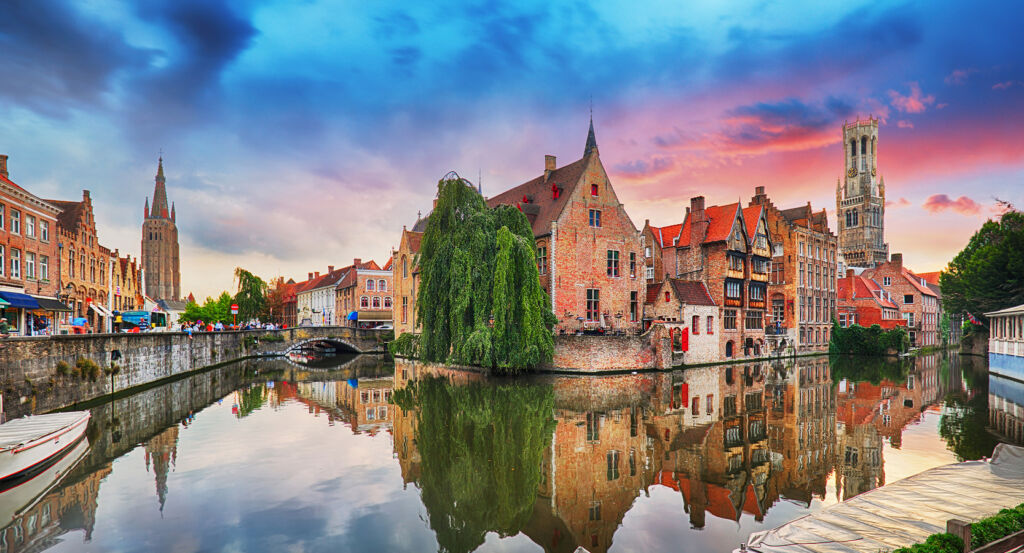
Brugge is a place people often visit for postcard moments: canals, spired roofs, gilded facades, and cobblestone rhythms that feel like living history. But Hotel Van Cleef invites you to inhabit that history. Tucked into a quieter quarter of Brugge's medieval core, the property feels embedded rather than imposed, as if the city arranged itself around this collection of refined spaces rather than the other way around. From the moment you arrive, the experience signals intention. The exterior reads like a residential enclave, understated yet composed, suggesting a stay defined by thoughtful presence. Inside, interiors balance heritage and contemporary comfort with composure: soft hues, tactile materials, and design choices that favor clarity over visual noise. This is a hotel shaped by restraint rather than excess, allowing spaces to breathe rather than demand attention. Guest rooms embody this philosophy. Each room feels resolutely individual, less a template and more a carefully proportioned container of comfort. Beds are deeply comfortable, lighting is calibrated for both rest and reflection, and furnishings are chosen for feel as much as form. Windows frame the city's light, revealing slow, shifting skies that feel alive. The bathrooms are well-scaled and purposeful, emphasizing spatial logic and finish quality over ornament, reinforcing the hotel's reliance on substance. Public spaces further articulate this approach. Lounges, nooks, and social zones are arranged to encourage pause without pressure, movement without friction, and presence without intrusion. The atmosphere feels curated yet unforced, a rare balance that makes each moment feel useful. Service at Hotel Van Cleef follows the same intelligent restraint: attentive without intrusion, knowledgeable without performance, and delivered with a warmth that makes the hotel feel like a local institution rather than a generic stop on a travel itinerary. The location amplifies all of this. Positioned within easy walking reach of Brugge's most iconic landmarks, Markt, Burg, canals, historic guild houses, the hotel sits at a junction of quiet and context. You are never far from the heart of the city, yet the rhythm here feels deliberate: slower, more observant, and deeply rooted in place. Hotel Van Cleef does not attempt to soften Brugge's history or reframe it through performance. Instead, it respects the city's complexity by offering an environment of calm intention, allowing you to engage Brugge's public grandeur with a private sense of poise.
What you should know about Hotel Van Cleef.
Hotel Van Cleef is not merely a boutique hotel in Brugge; its character is rooted in a lineage of local curiosity, architectural care, and cultural continuity that distinguishes it from more obvious heritage properties.
Unlike some hotels that wear history as a costume, Van Cleef's spaces have been shaped through a process of surgical refinement, preserving architectural character where it matters while introducing contemporary elements that feel like natural continuations. The result is a fabric of spaces where old and new coexist quietly: original masonry, timber, and brick converse with modern materials, refined lighting, and precise detailing that highlights spatial calm. One of the property's lesser-known strengths is how it navigates scale. Brugge's medieval layout, narrow streets, tight passageways, framed views, can feel cramped or overwhelming to the uninitiated, but Van Cleef's interiors counteract that compression with intelligent volumetrics: careful ceiling heights, proportioned rooms, and sightlines that feel generous. This creates an internal sense of ease that makes the city's external density feel navigable. Another defining element of the hotel is its embrace of local narrative. This is not a place that anchors its character in kitsch or period pastiche; it engages local culture through thoughtful cues, material palettes that echo Flemish restraint, spatial rhythms that feel attuned to Brugge's human scale, and details that reflect a deep understanding of place. Over time, this approach has attracted a specific kind of traveler: those who come to Brugge not for checklist tourism but for layered experience. Artists, designers, architects, and repeat visitors often cite the hotel's sense of internal coherence as a reason they return: it allows the city's external richness to be absorbed. The hotel's operational choices reinforce this identity. Service protocols emphasize clarity and anticipation rather than choreography; staff interact with you as guides rather than performers, offering insights into Brugge that feel lived rather than scripted. In a hospitality landscape often defined by theatrical gestures, Hotel Van Cleef's quiet authority does not perform identity, it inhabits it. This distinction makes all the difference over a multi-day stay, allowing the hotel to feel familiar.
How to fold Hotel Van Cleef into your trip.
Hotel Van Cleef works best when you let it shape the rhythm of your Brugge experience rather than simply acting as a place to sleep at night.
Begin your mornings with a deliberate pause: linger over coffee or tea in the hotel's calm spaces before stepping out. Allow the hotel's internal quiet to orient you rather than framing your day around landmark ticking. Walking from Van Cleef to the Markt or Burg feels effortless, but instead of racing toward the famous façades, wander slowly through side streets, letting the city reveal its scale in increments rather than all at once. Midday returns to the hotel can feel restorative. Go back to rest, reflect, or recalibrate before heading out again. This pause not only resets your physical energy but allows the city's physical layers to settle, making subsequent discoveries feel deeper and more layered. In the afternoons, weave Brugge's cultural sites and culinary venues into your day. Visit museums that reward attention rather than speed, explore artisan studios tucked into quiet lanes, or sit with a book near a canal without agenda. The hotel's placement makes these excursions feel connected. Evenings are particularly suited to the hotel's internal logic of calm anticipation. Whether you choose to dine within one of Brugge's refined restaurants or enjoy a relaxed meal nearby, let the evening unfold with a sense of focus. Afterward, return to Hotel Van Cleef not as a finish line but as a place where the day's experience lingers. Sit quietly in the lounge or your room and reflect on the city's layers, the way light moved, how stone surfaces shifted with the hour, the subtle rhythms of canals at dusk. On longer stays, this internal, external blend prevents fatigue, making each day feel distinct. When departure comes, leaving does not feel abrupt but like stepping back into the present after a period of intentional presence. Hotel Van Cleef doesn't ask you to consume Brugge; it invites you to live with it, allowing the city's history, texture, and pace to become part of your internal rhythm rather than a series of external impressions.
Where your story begins.
Foresyte Travel reveals places that feel extraordinary long before you arrive.
Experience premium editorial crafted for luxury travelers.