
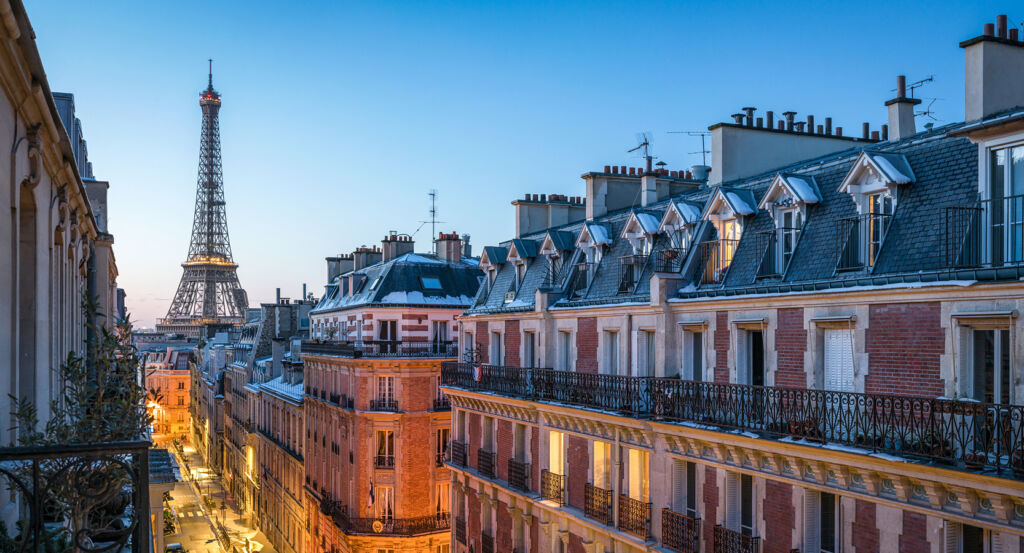
Why you should experience Hotel Pont Royal in Paris, France.
Hotel Pont Royal is a literary hotel where Saint-Thomas-d'Aquin's publishing heritage, Left Bank intellectual culture and nearly two centuries of hospitality converge inside a residence whose relationship with writers began long before Saint-Germain-des-Prés became synonymous with twentieth-century letters.
Set on Rue de Montalembert near Rue du Bac, the five-star property traces the building to 1750, when it was constructed as a writer's residence, before receiving recognition as a hotel in 1815. Chateaubriand belongs to the earliest chapter of a literary lineage that later expanded dramatically through the publishing houses and intellectual circles surrounding the address. During the twentieth century, writers associated with Gallimard, La Table Ronde and Le Seuil made the house a meeting place, while American expatriates and French intellectuals transformed its bar into another arena for the cultural exchange unfolding across the Left Bank. The result is a Saint-Thomas-d'Aquin hotel whose literary character developed through sustained proximity to publishers, authors and artists.
What you should know about Hotel Pont Royal.
Hotel Pont Royal is best known for developing one of Paris's enduring literary hotel traditions from a building constructed in 1750 as a writer's residence and recognized as a hotel in 1815, with Chateaubriand among the prominent literary figures associated with its early history. Robert Soalhat later created the hotel's basement bar, which became closely connected with writers from Gallimard, La Table Ronde and Le Seuil and drew Roger Nimier, Jacques Laurent and Antoine Blondin, collectively associated with the Hussards, alongside Romain Gary, Alphonse Boudard, Jean-Paul Sartre and Simone de Beauvoir. American influence shaped another chapter between the world wars when the bar pioneered cocktail culture at the property and attracted F. Scott Fitzgerald and Zelda Fitzgerald as American expatriates introduced unfamiliar mixed drinks into Parisian social life. Renovations added meeting rooms and renewed the basement in 1946, additional work reached the sixth floor in 1953, and Robert Soalhat subsequently managed the property with Pierre Soalhat, Jacques Soalhat, Monique Soalhat and Jean-Pierre Chabert between 1958 and 1989. Hôtels et Résidences du Roy acquired Pont Royal in 1990, eventually closing it for a two-year comprehensive renovation before its September 1999 reopening, while Champagne Hospitality assumed control in 2022 and continues the house's contemporary chapter.
Julia Child adds another dimension to Pont Royal's postwar cultural history, arriving with Paul Child on November 3, 1948 and making the hotel their temporary Paris residence during the opening weeks of the period that would redirect her life toward French cuisine. Joël Robuchon subsequently connected the property with another field of French cultural authorship through L'Atelier de Joël Robuchon, whose red-and-black counter concept reorganized fine dining around direct views into the kitchen and whose culinary direction is now carried forward by chef Axel Manes. Bar F-Sharp continues the house's longstanding relationship with music and cocktails through a contemporary jazz and mixology identity, extending the social function once performed by Robert Soalhat's basement bar into the present hospitality program. Together, Julia Child, Joël Robuchon, Axel Manes and Bar F-Sharp extend Pont Royal's historical association with creative figures beyond publishing, connecting the same Rue de Montalembert address with twentieth-century culinary history, contemporary gastronomy and Parisian jazz culture.
How to fold Hotel Pont Royal into your trip.
Hotel Pont Royal works as the anchor for an afternoon tracing nineteenth-century art, decorative culture and literary history through the western Left Bank.
Begin at Musée d'Orsay, where the former Gare d'Orsay provides the architectural setting for major collections of painting, sculpture and decorative arts spanning the transformative decades between 1848 and 1914. Continue to Musée national Eugène-Delacroix, where the painter's final apartment and studio preserve a more intimate perspective on the Romantic artist within the streets of Saint-Germain-des-Prés. Conclude at Maison d'Auguste Comte, where the philosopher's preserved apartment reconstructs the domestic and intellectual environment associated with the founder of positivism. The progression moves from the expansive artistic record of nineteenth-century France through Delacroix's working environment into Comte's preserved intellectual world, placing Hotel Pont Royal's own history of writers and ideas within a broader Left Bank tradition of artistic and scholarly production.
Where your story begins.
Foresyte Travel reveals places that feel extraordinary long before you arrive.
Experience premium editorial crafted for luxury travelers.














































































































