
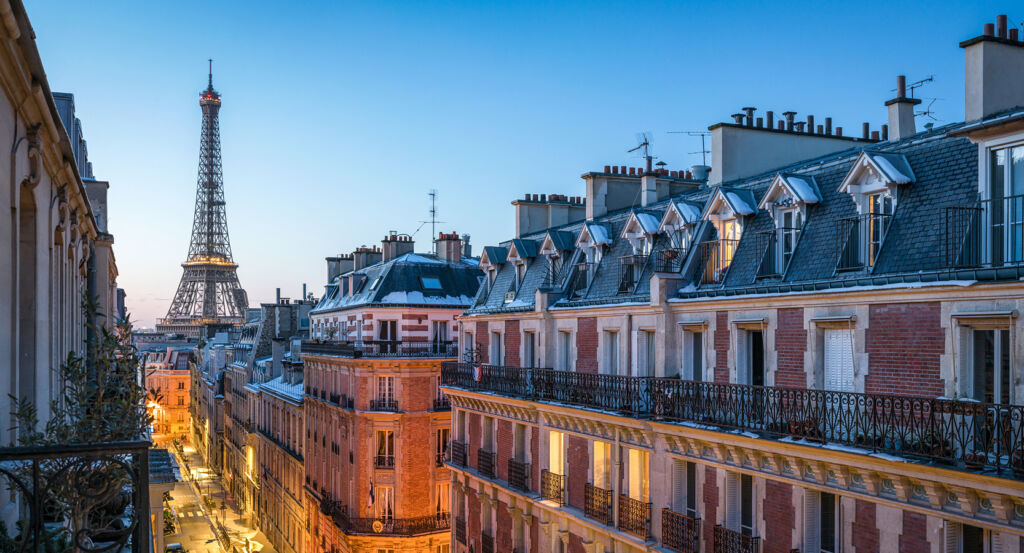
Why you should experience Hotel Le 209 Paris Bercy in Paris, France.
Hotel Le 209 Paris Bercy is a connected four-star hotel where Bercy's wine-trading inheritance, entertainment culture, cinematic institutions and long history of metropolitan reinvention converge along one of eastern Paris's oldest arterial streets.
Set along Rue de Charenton near Boulevard de Reuilly and just steps from Accor Arena, the hotel occupies No. 209 on a street extending from the Bastille corridor toward the former wine-trading territory that gave Bercy much of its historical identity. Nineteenth-century Bercy developed into the world's largest wine market as river and rail infrastructure fed enormous storage warehouses with barrels arriving along the Seine, while the district's position beyond earlier Parisian tax boundaries encouraged guinguettes and a culture of wine-centered sociability. The decline of that trade from the 1960s initiated another chapter, with Accor Arena opening in 1984, major redevelopment reshaping the former warehouse territory and Cinémathèque française eventually occupying Frank Gehry's former American Center. The result is a hotel where the commercial memory of Bercy's wine trade and successive generations of architecture, entertainment and cinema give a contemporary Rue de Charenton address a direct relationship with the district's reinvention.
What you should know about Hotel Le 209 Paris Bercy.
Hotel Le 209 Paris Bercy is best known for occupying 209 Rue de Charenton within a district whose modern character emerged from the rise, disappearance and cultural reinvention of one of the nineteenth century's great wine-trading centers. Bercy became the world's largest wine market during that century as merchants exploited access to the Seine and railway infrastructure, filling an extensive warehouse district with wine arriving particularly from Burgundy and the Morvan while the tax advantages of Bercy's former position beyond Paris encouraged guinguettes and the convivial culture remembered as Joyeux-Bercy. The wine economy declined from the 1960s, initiating a redevelopment cycle that produced Palais Omnisports de Paris-Bercy in 1984, the Ministry of Economy and Finance complex by 1990 and Parc de Bercy across territory previously associated with the warehouses. Another surviving portion of that commercial fabric became Chais Lheureux, nineteenth-century wine-storage buildings where collector and exhibition designer Jean Paul Favand established Musée des Arts Forains in 1996 after earlier iterations in Gentilly and the fifteenth Arrondissement. Bercy's progression from international wine commerce through large-scale redevelopment into cultural preservation gives Hotel Le 209 Paris Bercy an unusually legible position within the economic and cultural evolution of eastern Paris.
Cinema supplies another defining layer through Cinémathèque française, founded in 1936 by Henri Langlois, Georges Franju, Jean Mitry and Paul Auguste Harlé to collect, preserve and exhibit films alongside documents and objects connected with film history. Frank Gehry originally designed its present Bercy building for the American Center in 1993, and the state subsequently acquired the structure before a €33.9 million conversion created a 15,700-square-meter complex with four screening rooms containing 415, 188, 95 and 83 seats. Cinémathèque française moved into the building in September 2005 and merged with Bibliothèque du Film in January 2007, consolidating film and non-film collections within an institution that had previously occupied locations including Palais de Chaillot. Henri Langlois, Frank Gehry, Jean Paul Favand and the surviving Chais Lheureux demonstrate how Bercy's post-wine economy accumulated major institutions devoted to preserving cinema and popular entertainment while retaining physical traces of the district's earlier commercial identity.
How to fold Hotel Le 209 Paris Bercy into your trip.
Hotel Le 209 Paris Bercy works as the anchor for an afternoon tracing mass entertainment, cinematic preservation and the surviving architecture of Bercy's former wine empire.
Begin at Accor Arena, opened on February 3, 1984 as Palais Omnisports de Paris-Bercy during the district's redevelopment and subsequently developed into one of the capital's principal stages for major sporting competitions and international performers. Continue to Cinémathèque française, founded by Henri Langlois, Georges Franju, Jean Mitry and Paul Auguste Harlé in 1936 before moving in September 2005 into Frank Gehry's former American Center, a 15,700-square-meter building converted for €33.9 million with four screening rooms. Conclude at Musée des Arts Forains, where Jean Paul Favand installed his collection in the nineteenth-century Chais Lheureux in 1996 and developed an 11,400-square-meter environment preserving carousels, fairground objects and performing-arts material through restoration workshops, theatrical scenography and contemporary technologies. The progression moves from Bercy's 1980s entertainment architecture through Langlois and Gehry's cinematic institution into Favand's preservation of the former wine warehouses, revealing how successive cultural projects gave new identities to a district once organized around barrels, merchants and the Seine.
Where your story begins.
Foresyte Travel reveals places that feel extraordinary long before you arrive.
Experience premium editorial crafted for luxury travelers.














































































































