Why you should experience Al-Hakim Mosque in Cairo, Egypt.
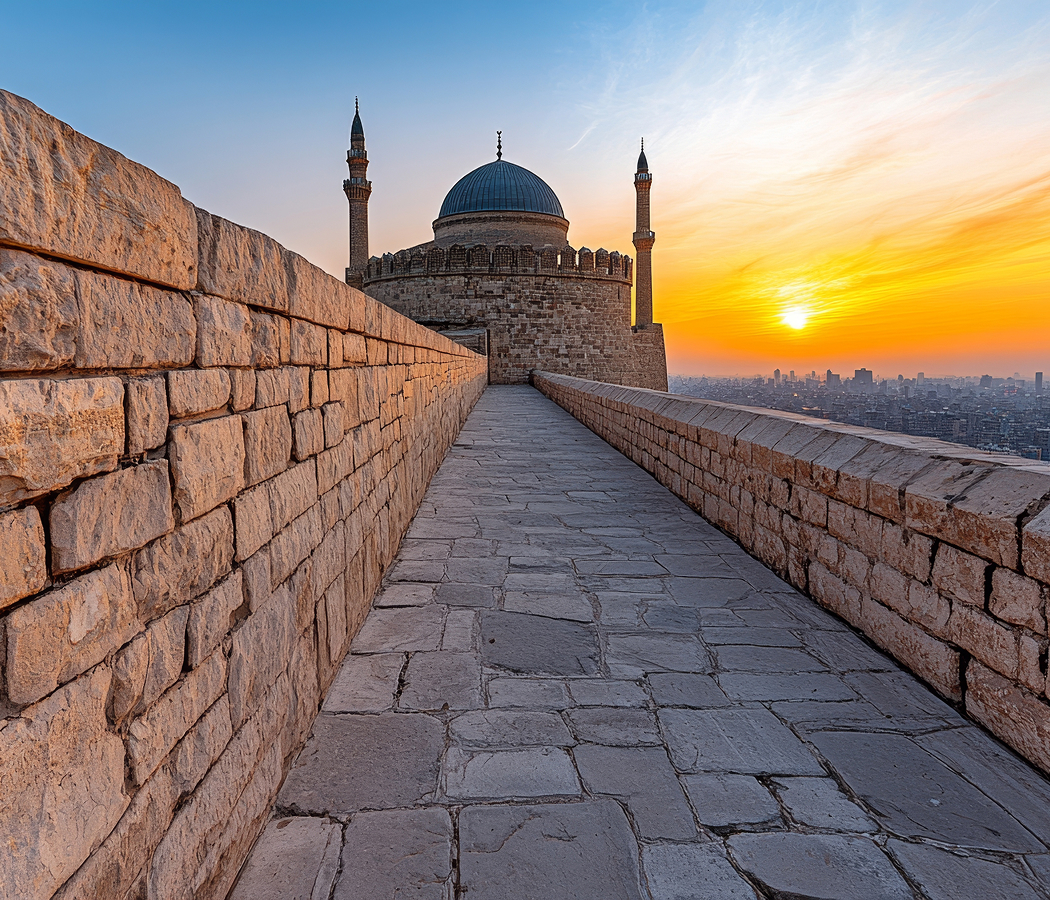
Al-Hakim Mosque stands like a patient giant at the northern edge of Cairo's Al-Muizz Street, its pale stone walls and towering minarets holding a millennium of the city's faith, silence, and endurance.
Step through its grand gate, and you cross a threshold between worlds: the noise of the city fades, replaced by the soft crunch of gravel and the echo of prayer beneath an ocean of light. The vast courtyard stretches outward in calm symmetry, framed by arcades whose arches breathe warmth and shadow. The minarets, once buried within the Fatimid city walls, now rise proudly against the sky, a reminder that even when time tries to erase what's sacred, devotion restores it. In its stillness, Al-Hakim Mosque feels less like a relic and more like a living memory of Cairo itself, austere, enduring, and luminous.
What you should know about Al-Hakim Mosque.
Completed in 1013 CE under Caliph Al-Hakim bi-Amr Allah, this mosque is among the oldest and most historically complex structures in Islamic Cairo.
It was originally conceived as the Friday Mosque for the Fatimid Caliphate, designed to rival the grandeur of Al-Azhar, and built just outside the northern city gates of the old Fatimid capital. Its architectural innovations were rebellious for the era: the mosque's rectangular plan spans over 13,000 square meters, with arcaded courtyards and two grand minarets encased in square stone towers, the earliest surviving example of this form in Islamic architecture. Over centuries, Al-Hakim Mosque was both sanctuary and survivor. It became a fortress during the Crusades, a prison under Ayyubid rule, and later, a storage depot for Napoleon's troops in the 18th century. When restoration began in the 20th century, it was nearly in ruins. The Dawoodi Bohra community undertook a massive reconstruction in the 1980s, reviving the mosque's form and function while preserving its ancient foundation stones, many marked with Fatimid inscriptions and reused fragments of Coptic masonry. The result is a structure that fuses resilience with reverence: every arch and stone bears the layered story of Cairo's transformation from Fatimid splendor to modern faith. The mosque's mihrab, simple yet elegant, still faces the same Qibla line established over a thousand years ago, a quiet axis connecting then and now.
How to fold Al-Hakim Mosque into your trip.
A visit to Al-Hakim Mosque is both an architectural pilgrimage and a meditative escape from Cairo's intensity.
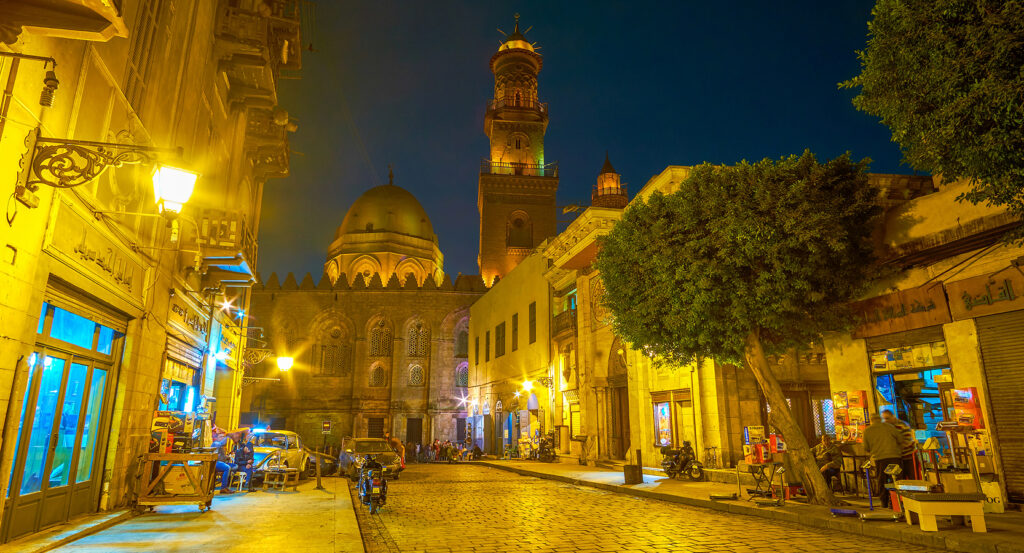
Begin your walk from Bab al-Futuh, among the old Fatimid gates, and let your first sight of the mosque's austere façade guide you forward. The best times to visit are early morning or sunset, when the courtyard fills with soft amber light and the sound of birds replaces the city's din. Enter barefoot, pause beneath the great archway, and feel the shift in air, cooler, quieter, almost suspended. Wander the central courtyard, where the rhythm of the colonnades draws your gaze to the sky, and take a moment to stand beneath the northern minarets, marveling at how their geometric strength softens in the glow of dusk. Allocate 45-60 minutes to absorb the scale and serenity, bringing modest attire and an open heart. From here, it's a short, beautiful walk south along Al-Muizz Street, where the living pulse of medieval Cairo unfolds, a corridor of mosques, sabils, and markets still bound by the same spirit that built Al-Hakim's walls. As you leave, turn once more toward the gate and notice how the sunlight frames it in quiet reverence, proof that faith, like light, always finds a way back.
Where your story begins.
Foresyte Travel reveals places that feel extraordinary long before you arrive.
Experience premium editorial crafted for luxury travelers.