Why Bab al-Futuh matters.
Bab al-Futuh stands like a stone sentinel at the northern entrance of Cairo's Al-Muizz Street, guarding the threshold between a living city and its eternal past.
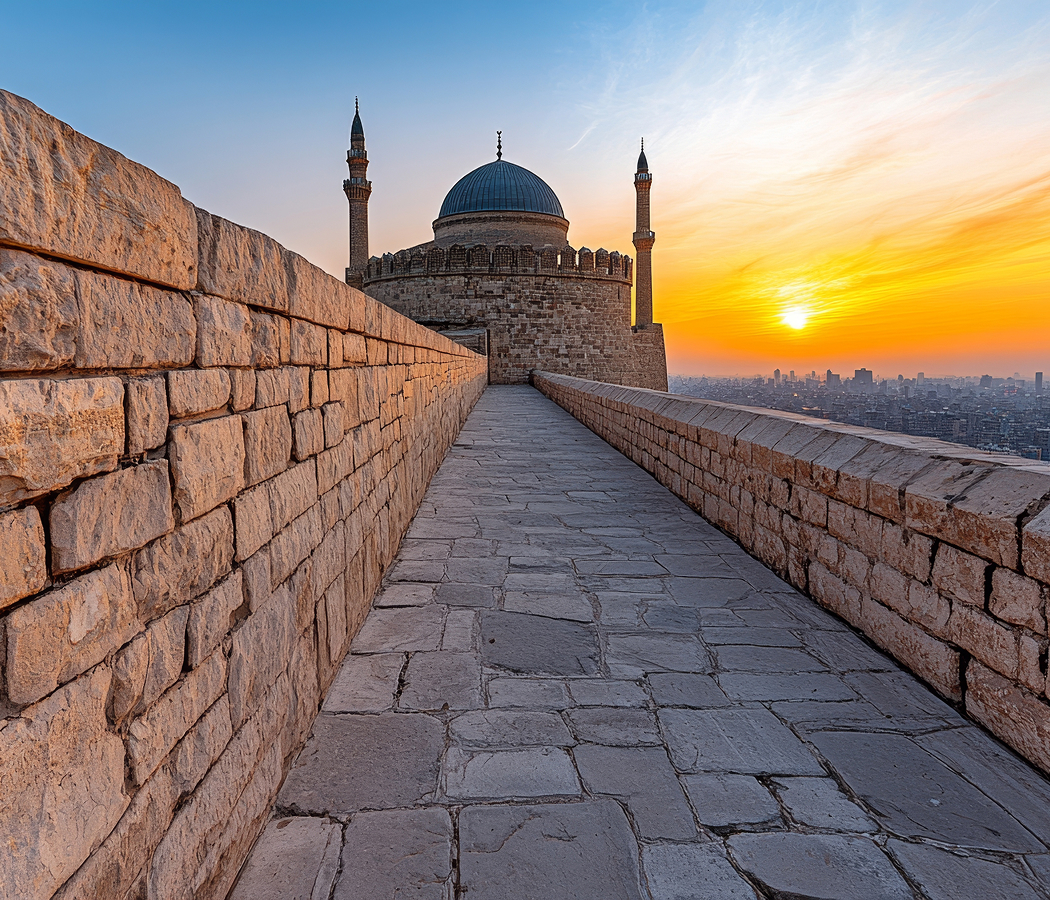
Approach its towering façade and you'll feel the centuries shift, limestone walls glowing honey-gold under the sun, their carvings worn smooth by time and touch. Above you, twin round towers rise like anchors of endurance, their arrow slits and battlements recalling an age when Cairo was the crown jewel of the Fatimid Caliphate. Pass beneath the gate's arch, and the air changes, quieter, cooler, reverent, as if the city itself inhales before revealing its secrets. This is not merely a portal; it's a promise. Every traveler who has entered through Bab al-Futuh, from merchants to scholars to modern wanderers, has stepped into the same continuous story, among faith, craftsmanship, and resilience that has defined Cairo for over a millennium.
What defines Bab al-Futuh.
Bab al-Futuh (“Gate of Conquest”) was constructed in 1087 CE during the Fatimid era by the Armenian architect Badr al-Gamali, who served as vizier to Caliph Al-Mustansir Billah.
Together, with its southern counterpart, Bab Zuweila, and the eastern Bab al-Nasr, it formed part of the original fortifications of al-Qahira, the Fatimid royal city. The gate replaced an earlier structure built of mud brick, reimagined in massive limestone to symbolize permanence and divine protection. Its design reflects the merging of Byzantine, North African, and Islamic military architecture, evident in its semi-circular flanking towers and barrel-vaulted passageway, innovations that allowed defenders to pour boiling oil or arrows on invaders below. The carved stone medallions on its façade, featuring interlaced rosettes and Kufic inscriptions, were among the earliest uses of decorative motifs in Islamic fortifications. Bab al-Futuh once marked the entrance to the Caliph's Processional Route, leading directly south through the heart of the Fatimid city. Its name, meaning “Gate of Openings” or “Conquests,” symbolized both divine victory and the welcoming of trade caravans that connected Cairo to the Mediterranean and Red Sea. For centuries, this was the gate through which rulers entered triumphantly and pilgrims departed for Mecca. Despite wars, earthquakes, and expansion, the structure remains astonishingly intact, a tribute to Cairo's architectural endurance. During modern restoration in the early 2000s, archaeologists uncovered ancient graffiti and mason's marks, revealing the fingerprints of those who built it nearly a thousand years ago.
How Bab al-Futuh fits.
Bab al-Futuh is the perfect place to begin your journey along Al-Muizz Street, setting the tone for the centuries of history that follow.
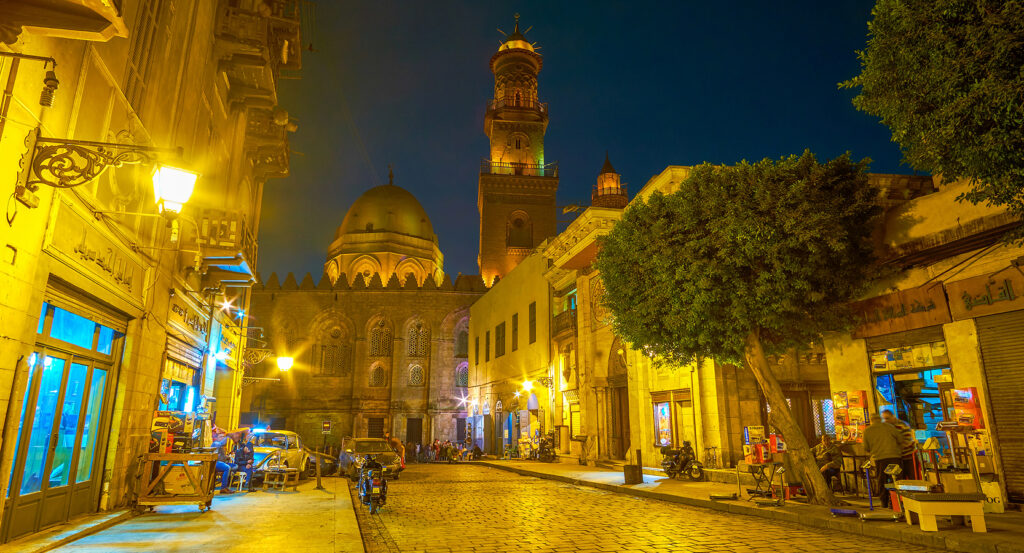
Arrive in the early morning, when the light hits the limestone towers in soft relief, revealing every groove and carving. Start outside the gate to appreciate its scale, the sheer mass of the walls, the balance of its two towers, and the intricate geometric patterns above the arch. Then walk slowly through the vaulted tunnel; as you emerge onto Al-Muizz Street, you'll feel the transition from fortress to civilization unfold around you. Spend 15-20 minutes at the gate itself, exploring its battlements and the small staircases tucked into its sides, often open during guided heritage tours. For the best perspective, circle to the exterior northern side, where the city walls stretch away into shadow, among the few places where medieval Cairo still feels untouched. Pair your visit with the Qalawun Complex and the Sultan Barquq Madrasa farther down Al-Muizz, tracing the street's evolution from defense to devotion. Return at sunset, when the gate glows amber under the lanterns, and imagine the caravans that once passed beneath its arch. Bab al-Futuh doesn't just frame the city, it frames Cairo's spirit: steadfast, storied, and forever open to those who seek to understand it.
Where your story begins.
Foresyte Travel reveals places that feel extraordinary long before you arrive.
Enjoy editorial crafted for luxury travelers.
Foresyte may earn a commission when you book.