
Why Aldehyde matters.
Aldehyde is a cerebral gastronomic restaurant where the Marais' creative character meets Youssef Marzouk's Tunisian memory, French haute-cuisine training and an intensely personal MICHELIN-starred tasting menu.
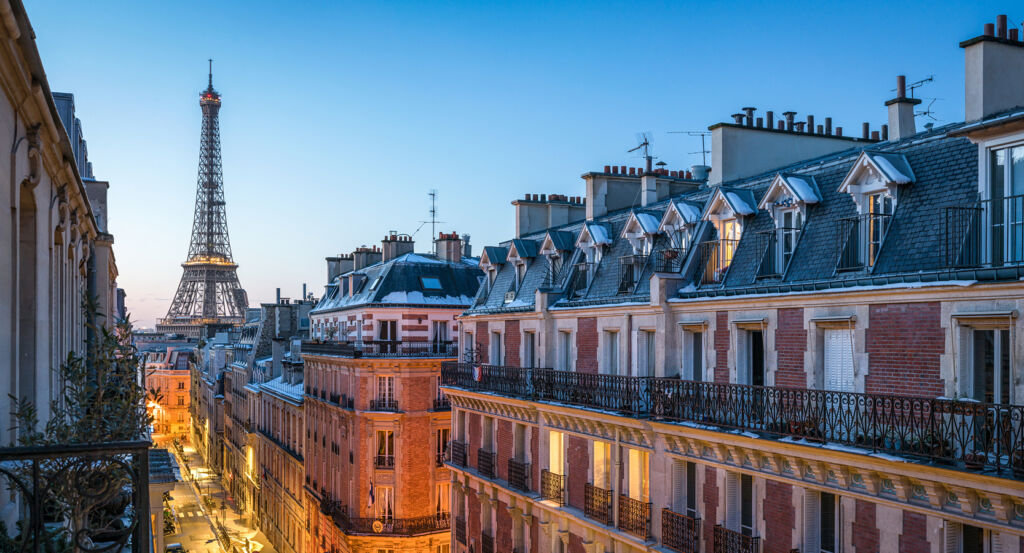
Set along Rue du Pont aux Choux near Boulevard des Filles du Calvaire and just steps from Rue de Turenne, the restaurant occupies a narrow Marais street within the tightly woven blocks connecting the neighborhood with the northern Bastille approaches. The intimate dining room pares its visual field down to stone, wood and carefully spaced tables, directing attention toward the kitchen's compact procession of courses. A counter facing the culinary work reduces the distance between preparation and service, reinforcing the personal character of Marzouk's menu. Restrained lighting and neutral surfaces allow the changing colors and forms of the plates to carry much of the room's visual intensity. The result is a small gastronomic address whose controlled setting gives unusual concentration to a cuisine built from memory, aroma and rigorous French technique.
What defines Aldehyde.
Aldehyde is best known for Youssef Marzouk converting a career inside MICHELIN-starred French kitchens and memories of his Tunisian family into an independent restaurant that earned its first MICHELIN star within months of opening. Born in Tunisia and raised partly in the Paris region, Marzouk entered hospitality education before developing his professional technique under chefs whose restaurants exposed him to markedly different forms of French gastronomy. Thierry Marx became one of the decisive figures in that formation at the Mandarin Oriental Paris, where Marzouk worked within the two-starred Sur Mesure and absorbed an approach joining technical precision with unconventional ideas about flavor and form. He subsequently worked with Guy Savoy, extending his training inside another three-starred Paris institution, and later became sous-chef at the Hôtel de Crillon. Marzouk also passed through the kitchens of Le Clarence, adding Christophe Pelé's highly improvisational cooking to a professional education already shaped by Marx and Savoy. Independence arrived with Aldehyde in 2024, created with his wife, Marine, in a compact Marais dining room where the chef could move autobiographical material to the center of the menu. The restaurant's name refers to aldehydes, aromatic organic compounds whose volatile character makes them closely associated with scent, giving Marzouk a scientific term for a cuisine deeply concerned with olfactory memory. Tunisia supplies the resonant foundation through recollections of family meals, spices and ingredients, yet the cooking resists a fixed national category by drawing equally on the French kitchens that formed his technique. MICHELIN awarded Aldehyde a star in 2024, an unusually rapid distinction for a newly opened independent restaurant. The Guide also recognized Marzouk with its Young Chef Award for France, placing his individual authorship beside the restaurant's first star. Those distinctions accelerated a project conceived on deliberately personal terms, where haute-cuisine training functions as the technical foundation for memories extending from Tunisia to Paris. Aldehyde compresses Marzouk's professional formation and family history into a restaurant whose central subject is the chef's own relationship with aroma, taste and recollection.
Marzouk develops that autobiographical cooking through concentrated sauces, spices, marine products and acidic counterpoints that repeatedly shift familiar French luxury ingredients toward North African and Mediterranean flavors. A preparation of red mullet draws on the fish's pronounced mineral character, using harissa and pepper-led accents to place Tunisian heat against carefully controlled cooking of the delicate flesh. Cuttlefish moves through another Mediterranean register, its firm texture carrying aromatic seasoning and deeply reduced accompaniments. Pigeon gives Marzouk a classical French product capable of supporting darker spices and concentrated jus, allowing precise roasting to meet flavors associated with his childhood table. Couscous enters in a refined form that preserves its Tunisian significance without treating the dish as a literal reproduction of a family recipe, connecting grain, broth and seasoning with the sequencing of a gastronomic menu. Preserved lemon supplies one of the kitchen's most effective sources of acidity, cutting through richer meat and seafood preparations with salt, bitterness and fermented citrus depth. Olive oil operates with similar importance, functioning as a primary flavor whose fruitiness can carry vegetables, fish and sauces beyond the conventional role of cooking fat. Desserts extend the same logic into ingredients such as orange blossom, citrus and nuts, shifting floral aromas from savory memories toward pastry. The menu repeatedly returns to aroma before richness, allowing spice, herbs, citrus and toasted ingredients to register before heavier sauces complete the plate. Aldehyde derives its culinary character from that sequence of aromatic triggers, giving Marzouk's Tunisian memories a precise gastronomic form without reducing them to replicas of traditional dishes.
How Aldehyde fits.
Aldehyde works as the meal within a Marais outing connecting Picasso's twentieth-century legacy, seventeenth-century French architectural experimentation and the transformation of a former market district into a major center for photography.
Begin at Musée Picasso-Paris, housed in the Hôtel Salé, constructed between 1656 and 1659 for the salt-tax farmer Pierre Aubert de Fontenay and designed by Jean Boullier of Bourges. Its elaborate staircase sculpture and richly modeled interiors made the residence one of the most ambitious hôtels particuliers of the seventeenth-century Marais, long before the French state selected it to house the Picasso collection. The museum opened in 1985 after Pablo Picasso's heirs settled inheritance tax through the dation system, allowing major paintings, sculptures, drawings, ceramics, prints and the artist's personal archive to enter the national collection. Continue to Hôtel de Sully, begun in 1625 for financier Mesme Gallet and attributed to architect Jean Androuet du Cerceau. Maximilien de Béthune, Duke of Sully and former minister to Henri IV, acquired the residence in 1634, and his descendants retained it into the eighteenth century. Its organization between courtyard and garden, sculpted seasonal figures and direct relationship with Place des Vosges preserve the aristocratic urban architecture that reshaped the Marais during the Bourbon period. Conclude at Maison Européenne de la Photographie, occupying the Hôtel Hénault de Cantobre, a residence built in 1706 for Hénault de Cantobre before entering successive private and institutional uses. The City of Paris acquired the property in 1914, and its conversion into a photography institution culminated with the museum's opening in 1996. Collections spanning tens of thousands of photographs, artist books and moving-image works established a permanent Paris center for photographic creation across the decades following 1950. The progression moves from Picasso's vast artistic estate inside a seventeenth-century mansion through Sully's Bourbon-era residence and culminates in an eighteenth-century hôtel particulier repurposed for photography, tracing three distinct ways the Marais has converted private architecture into public cultural memory.
Where your story begins.
Foresyte Travel reveals places that feel extraordinary long before you arrive.
Enjoy editorial crafted for luxury travelers.
Foresyte may earn a commission when you book.














































































































