
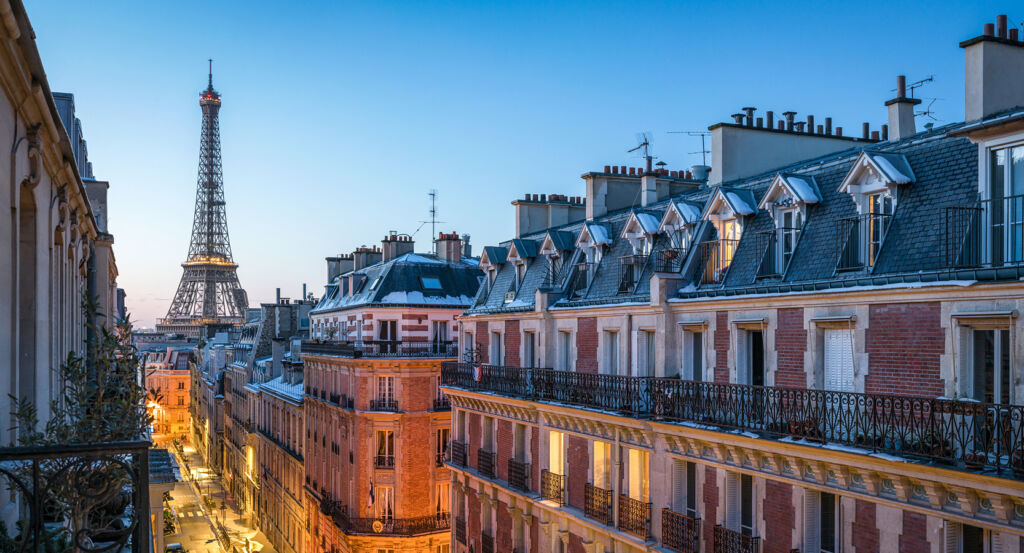
Why Hôtel de Crillon, A Rosewood Hotel matters.
Hôtel de Crillon, A Rosewood Hotel is a storied palace hotel where Place de la Concorde's royal provenance, neoclassical grandeur, diplomatic history and enduring culture of Parisian craftsmanship converge within an eighteenth-century architectural masterpiece reinvented for contemporary hospitality.
Set along Place de la Concorde near Rue Boissy d'Anglas and just steps from Jardin des Tuileries, the hotel occupies one of the twin palaces commissioned by Louis XV and designed by Ange-Jacques Gabriel as part of the grand square inaugurated during his reign. The building passed into private hands before the family of François Félix de Crillon established a residence there, giving the property the name it retained when Hôtel de Crillon opened as a hotel in 1909. More than a century later, a three-and-a-half-year restoration brought architect Richard Martinet together with Aline Asmar d'Amman, Chahan Minassian, Tristan Auer and Karl Lagerfeld to reinterpret its eighteenth-century fabric before the property reopened in 2017 under Rosewood. The result is a hotel where Ange-Jacques Gabriel's royal architecture, the Crillon family legacy and some of contemporary design's most exacting creative voices allow Place de la Concorde's extraordinary history to remain visibly alive.
What defines Hôtel de Crillon.
Hôtel de Crillon, A Rosewood Hotel is best known for occupying an Ange-Jacques Gabriel palace commissioned by Louis XV in the eighteenth century, becoming associated with the Crillon family before opening as a grand hotel in 1909 and undergoing a three-and-a-half-year restoration that culminated in its 2017 reopening under Rosewood. Architect Richard Martinet directed the architectural restoration while Aline Asmar d'Amman oversaw an interiors program involving Chahan Minassian, Tristan Auer and Cyril Vergniol, reducing the previous 147-key configuration to 124 rooms and suites while protecting the building's neoclassical character. Karl Lagerfeld independently conceived Les Grands Appartements on the fourth floor, incorporating carved woodwork, bespoke furnishings and extraordinary stonework, including a two-ton Carrara marble bathtub and an eighteenth-century marble fountain from the former hotel courtyard repurposed as a basin. Ten Signature Suites deepen the historical program, with Suite Duc de Crillon preserving eighteenth-century woodwork from the Crillon family's former private chapel and Suite Bernstein extending above Place de la Concorde through a private terrace named for composer Leonard Bernstein.
Executive Chef Alan Taudon now directs Hôtel de Crillon, A Rosewood Hotel's culinary character through a program centered on product, precise technique and coastal inspiration, extending his authorship from the intimate L'Herbier Secret toward the property's broader gastronomic future. Chef Paul Pairet contributes another distinctive voice through Nonos & Comestibles, bringing the French chef behind Shanghai's three-MICHELIN-starred Ultraviolet into the Crillon's contemporary restaurant collection and adding a deliberately convivial interpretation of French dining to its eighteenth-century surroundings. Pastry Chef Matthieu Carlin develops the sweeter counterpart at Butterfly Pâtisserie, where seasonal desserts, signature chocolates and sculptural cakes are presented within a setting conceived around the visual style of haute joaillerie. Together, Alan Taudon, Paul Pairet, Matthieu Carlin and Rosewood extend the creative plurality established by Richard Martinet, Aline Asmar d'Amman and Karl Lagerfeld, allowing architecture, gastronomy and individual authorship to continue shaping Hôtel de Crillon, A Rosewood Hotel more than a century after its 1909 debut.
How Hôtel de Crillon fits.
Hôtel de Crillon, A Rosewood Hotel works as the anchor for an afternoon tracing royal urbanism, Impressionist ambition and decorative craftsmanship through the institutions surrounding Place de la Concorde and the Tuileries.
Begin at Musée de l'Orangerie, where Claude Monet's grand Nymphéas cycle found its permanent architectural setting in 1927 before the museum absorbed the Jean Walter and Paul Guillaume collection, assembled principally by dealer Paul Guillaume between 1914 and 1934 and ultimately acquired by the French state in 1959 and 1963, creating a 148-work ensemble spanning Renoir, Cézanne, Picasso, Matisse, Modigliani, Derain and Soutine. Continue to Musée des Arts Décoratifs, where an institution descended from the 1864 Union centrale des beaux-arts appliqués à l'industrie established its museum in the Louvre's Pavillon de Marsan in 1905, bringing furniture, jewelry, fashion, graphic design and decorative objects into an encyclopedic collection devoted to the relationship between craftsmanship and artistic invention. Conclude at Petit Palais, created by Charles Girault for the 1900 Exposition Universelle as a permanent palace of fine arts, where an axial composition of grand entrance, vaulted galleries and semicircular garden established one of the defining Beaux-Arts ensembles of the exhibition before the building became the Musée des Beaux-Arts de la Ville de Paris in 1902. The progression moves from Monet's transformation of painting into an immersive environment through France's institutional celebration of decorative craftsmanship into Girault's synthesis of architecture and fine art, revealing the continuum of artistic patronage and exacting execution that surrounds Hôtel de Crillon, A Rosewood Hotel.
Where your story begins.
Foresyte Travel reveals places that feel extraordinary long before you arrive.
Enjoy editorial crafted for luxury travelers.
Foresyte may earn a commission when you book.














































































































