Why Amalienborg Square matters.
Amalienborg Square in Copenhagen is the heart that keeps Denmark's royal story beating, an architectural symphony of elegance, discipline, and light.
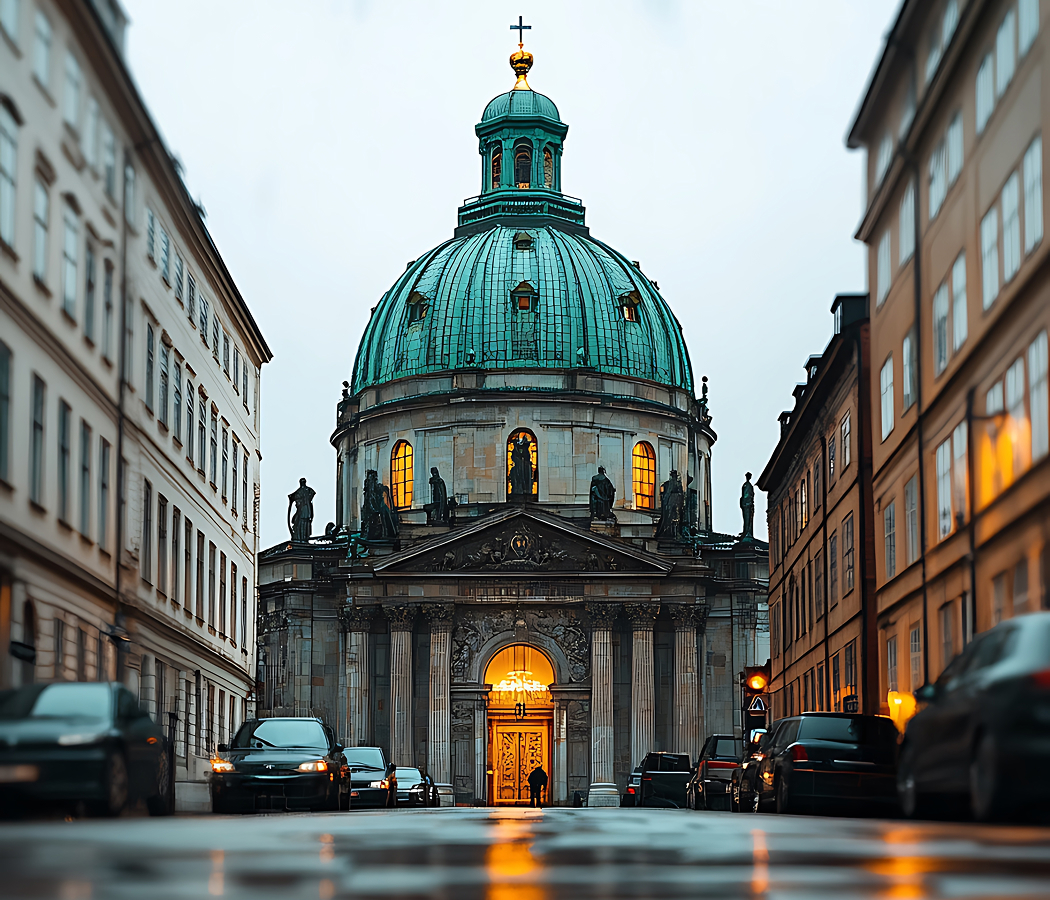
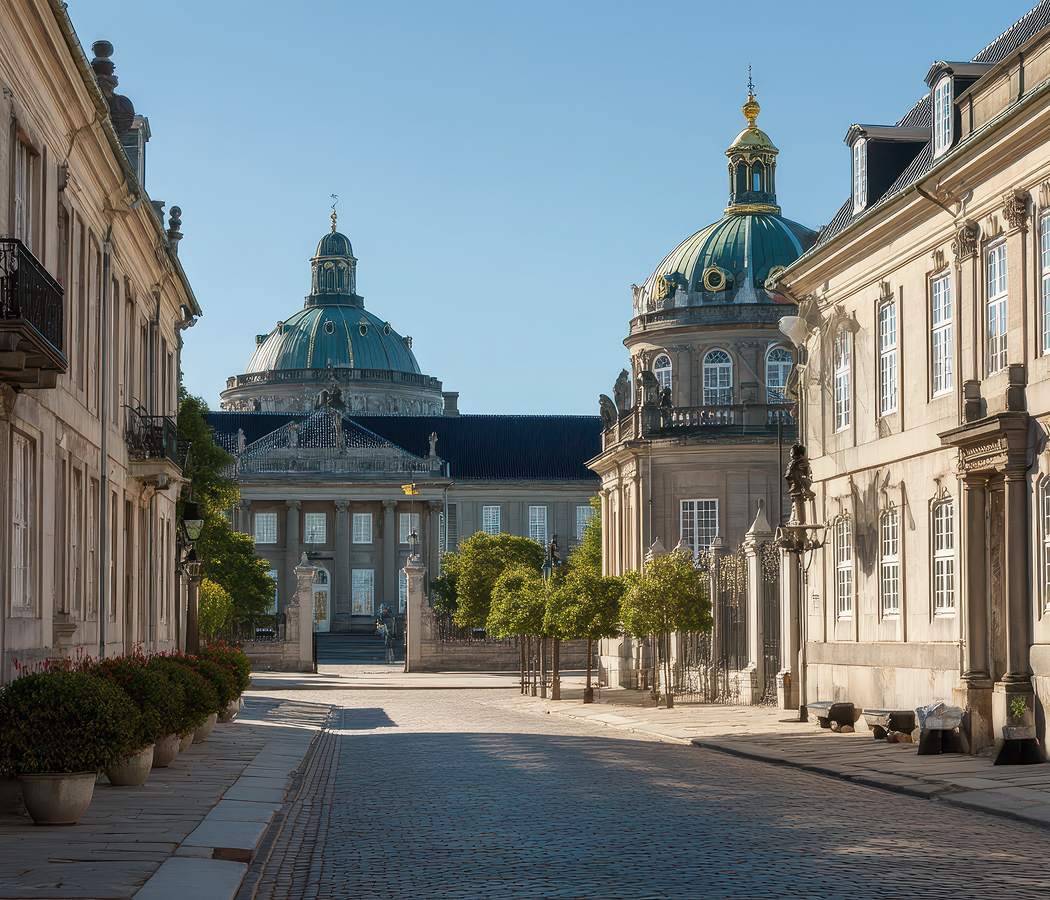
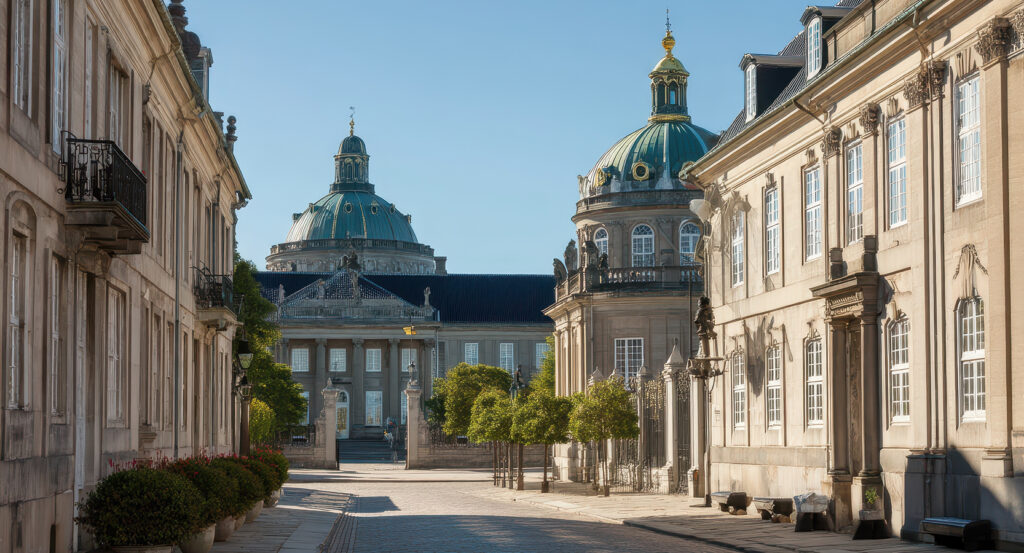
Standing here, in the grand octagonal plaza surrounded by four mirror-image palaces, you feel time fold in on itself. The symmetry is hypnotic, each façade facing inward like players in a silent waltz, centered around the equestrian statue of King Frederik V. The air carries a hush of reverence, broken only by the rhythmic cadence of boots on cobblestone as the Royal Guard passes by. Yet for all its grandeur, Amalienborg Square feels open and human. Locals stroll through on bicycles, children chase pigeons beneath centuries-old stone, and tourists stand in quiet awe as sunlight glances off gilded windows. Look one way, and the copper dome of the Marble Church rises like a celestial crown; look the other, and the harbor glimmers just beyond. It's not just a royal courtyard, it's Copenhagen's beating heart, where monarchy and modern life share the same rhythm.
What defines Amalienborg Square.
Amalienborg Square is more than an architectural marvel, it's the physical example of Denmark's social contract between monarchy and people.
Commissioned in the 1750s by King Frederik V as part of the Frederiksstaden district, the square was designed by Nicolai Eigtved in the Rococo style, intended to celebrate both royal authority and civic openness. The result was revolutionary: a royal square without walls, inviting citizens to share space with their sovereign. When Christiansborg Palace burned in 1794, the four noble residences surrounding the square, Christian VII's, Christian VIII's, Frederik VIII's, and Christian IX's Palaces, became royal homes. The central statue of King Frederik V, sculpted by Jacques-François-Joseph Saly, took twenty years to complete and was, at its unveiling, the most expensive statue ever made in Denmark. Every detail of the square's geometry was meant to inspire harmony, the octagonal layout aligning with both the Marble Church and the waterfront, forming a perfect axis of divine symmetry. Few realize that beneath the square runs a hidden network of tunnels connecting the palaces, used during royal ceremonies and state occasions. And yet, for all its precision and secrecy, Amalienborg Square remains radically open, a reminder that power, here, was designed to be seen, not hidden.
How Amalienborg Square fits.
To experience Amalienborg Square fully, let it unfold through every sense, the sound of boots, the smell of the sea, the gleam of brass in sunlight.
Arrive before noon to witness the changing of the guard, a ritual of perfect precision performed daily by the Royal Life Guards marching from Rosenborg Castle. The ceremony culminates here, in the square, when the guards salute the reigning monarch's palace, a centuries-old ballet of loyalty and grace. Afterward, linger to admire the square's symmetry from every angle; each view frames a different story, the Marble Church's dome to the west, the royal façades to the north and south, and the harbor's glinting horizon to the east. Visit the Amalienborg Museum inside Christian VIII's Palace to step into recreated royal rooms that echo the lives once lived just beyond these walls. For a cinematic finale, return at dusk when lanterns flicker on and the palace windows glow with quiet light, the monarchy's pulse visible through the glass. Amalienborg Square in Copenhagen is not just a place you visit; it's a space you feel, the still point where beauty, history, and national soul stand perfectly balanced.
Where your story begins.
Foresyte Travel reveals places that feel extraordinary long before you arrive.
Enjoy editorial crafted for luxury travelers.
Foresyte may earn a commission when you book.