
Why Ameya-Yokocho matters.
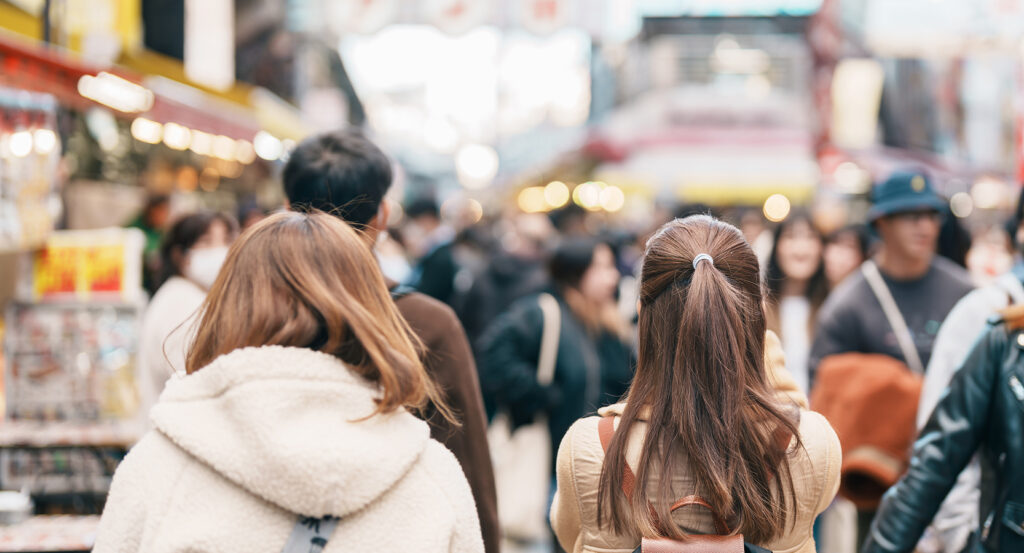
Ameya-Yokocho is a kinetic market corridor where Ueno's shitamachi character meets open-fronted specialist shops, railway infrastructure and a trading culture that compresses food, fashion and imported goods into one intensely layered stretch of Tokyo.
Set along the railway between Ueno Station and Okachimachi Station near Chuo-dori and just steps from Ueno Park, the shopping district threads through narrow streets and spaces beneath the elevated tracks, creating a dense pedestrian environment shaped by stalls, storefronts and overhead rail infrastructure. Seafood displays spill toward the pavement beside confectionery, cosmetics, clothing and imported-goods shops, producing abrupt changes in scale and merchandise within short distances. Shopkeepers still use vocal calls and face-to-face exchanges as part of the selling process, giving commercial interaction a conspicuous physical presence on the street. Late December pushes that mechanism to its greatest intensity as year-end food buying and discount selling fill the corridor with tightly packed displays and bargaining. The result is a commercial landscape experienced through compression, movement and direct exchange, retaining a street-market immediacy uncommon within Central Tokyo's increasingly enclosed retail environment.
What defines Ameya-Yokocho.
Ameya-Yokocho is best known for developing from the black market that formed beside the railway after the Second World War, when acute shortages created an informal trading zone south of Ueno Station. Its organization differed from many contemporary black markets controlled by tekiya groups: 400 demobilized soldiers returning from Manchuria formed a community association and regulated stall formation themselves. That collective organization helped turn emergency commerce into a durable shopping district as Tokyo moved through postwar recovery. The northern market became associated with stalls selling sweets at a moment when sugar was scarce, including candy produced from sweet potatoes, generating the name Ameya Yokocho, or Candy Shop Alley. A separate concentration near Okachimachi dealt in surplus goods released by the American occupation forces and became associated with the name America Yokocho. The two trading areas eventually converged under the abbreviated Ameyoko name, preserving both explanations inside the district's linguistic history. Ameya-Yokocho carries its postwar origins directly in its name: scarcity, returning soldiers, improvised confectionery and occupation-era imports all contributed to the commercial geography that survived after the emergency market itself disappeared.
The present district operates through a fragmented network of constituent shopping areas whose organization preserves the lateral complexity of street commerce. The official Ameyoko map distinguishes Ameyoko JOY, Ameyoko Welcome Mall Ueno Central Shopping Street, Ameyoko Welcome Mall Green, Ameyoko Plaza Shopping Street, Ueno Ameyoko Omotedori Shopping Street Promotion Association, Ameyoko Center Building and Ameya Yokocho as separate components within the larger whole. This arrangement allows individual commercial clusters to develop different concentrations. The Ameyoko Center Building adds a vertically concentrated component to that street network, with specialist food businesses occupying its basement and extending the district's trade beyond the conventional open-fronted shop. Noda-ko Shokuhin has sold fresh fish and seafood there since the Center Building's establishment, including products such as live softshell turtles and edible frogs that demonstrate the unusually specialized inventories sustained within the complex. The shopping association characterizes Ameyoko as a horizontal department store, a useful description of the underlying commercial structure: independent specialists collectively reproduce the diversity of a large retailer across streets, arcades and railway spaces. That decentralized organization explains how Ameya-Yokocho continues to support highly specific merchants alongside mass-market retail within one contiguous commercial district.
How Ameya-Yokocho fits.
Ameya-Yokocho works as the anchor for a Ueno route through three nearby institutions that move from the preservation of shitamachi domestic culture through Tokugawa religious patronage and into the establishment of modern Japanese Western-style painting.
Begin at Shitamachi Museum, created in 1980 as the Shitamachi Museum of Folklore to preserve the culture and traditions of Tokyo's low-city districts, with particular attention to Taito. A major renovation beginning in 2023 culminated in its reopening under the present name in March 2025, and the redesigned ground floor reconstructs the streetscape of Sakamoto, present-day Negishi 3-chome, during the Showa 30s through full-scale buildings and projected imagery. Continue to Ueno Toshogu Shrine, founded in 1627 within ground that later became Ueno Park and dedicated to Tokugawa Ieyasu. The shrine belongs to the wider network of Toshogu institutions created around the deified first Tokugawa shogun, carrying the political and religious order of early Edo into a district whose later history became dominated by museums, transportation and popular commerce. Conclude at Kuroda Memorial Hall, created through the final wishes of painter Kuroda Seiki, who died in 1924 and directed part of his estate toward the advancement of art. Architect Shinichiro Okada designed the building completed in 1928, giving institutional form to Kuroda's legacy as a central figure in the development of modern Japanese Western-style painting; its Kuroda Memorial Room and Special Room continue to hold his work within the cultural precinct north of Ueno Park. The progression moves from Shitamachi Museum's preservation of the domestic culture surrounding eastern Tokyo through Ueno Toshogu Shrine's connection with the Tokugawa order into Kuroda Memorial Hall's institutionalization of modern art, placing Ameya-Yokocho within the much longer cultural history surrounding Ueno.
Where your story begins.
Foresyte Travel reveals places that feel extraordinary long before you arrive.
Enjoy editorial crafted for luxury travelers.
Foresyte may earn a commission when you book.

















































































































