Why Amisfield Restaurant & Cellar Door matters.
Amisfield Restaurant & Cellar Door is a celebrated Lake Hayes culinary destination where Lake Hayes' alpine landscape meets John Darby's pioneering Central Otago wine enterprise, internationally acclaimed New Zealand cooking and one of the country's most ambitious expressions of regional gastronomy.
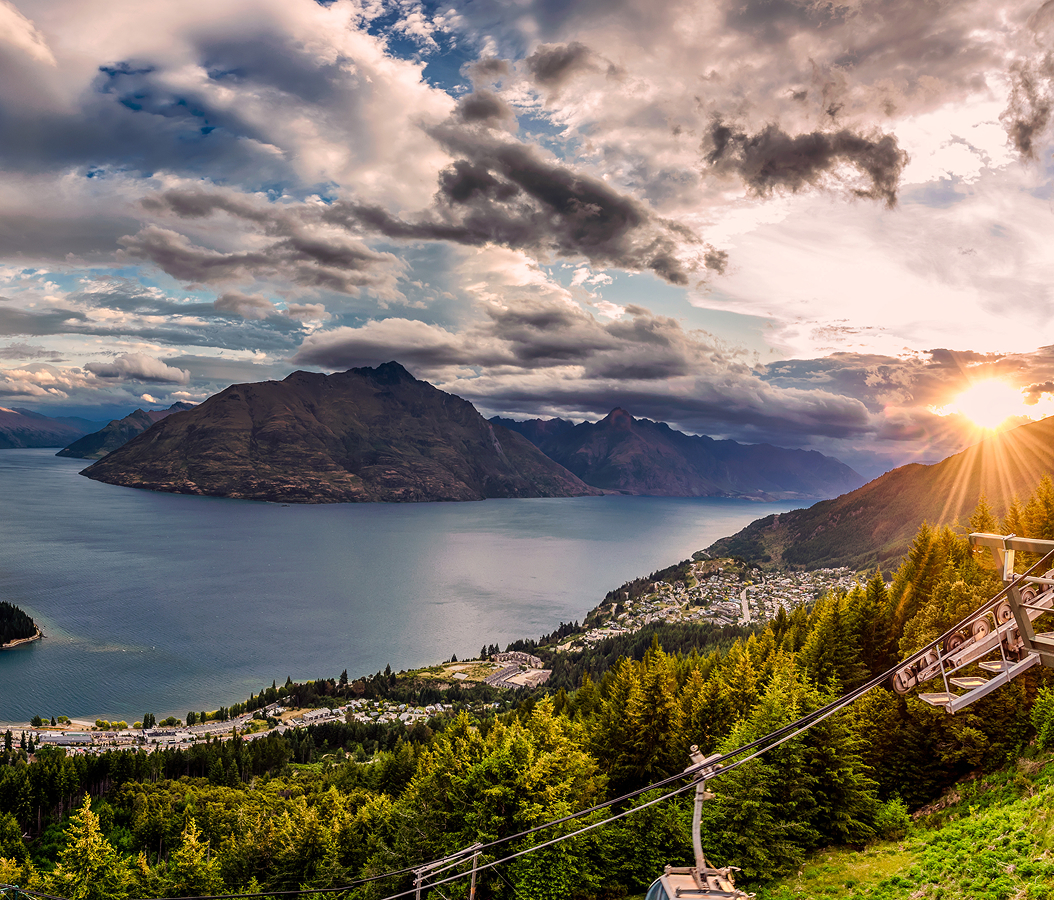
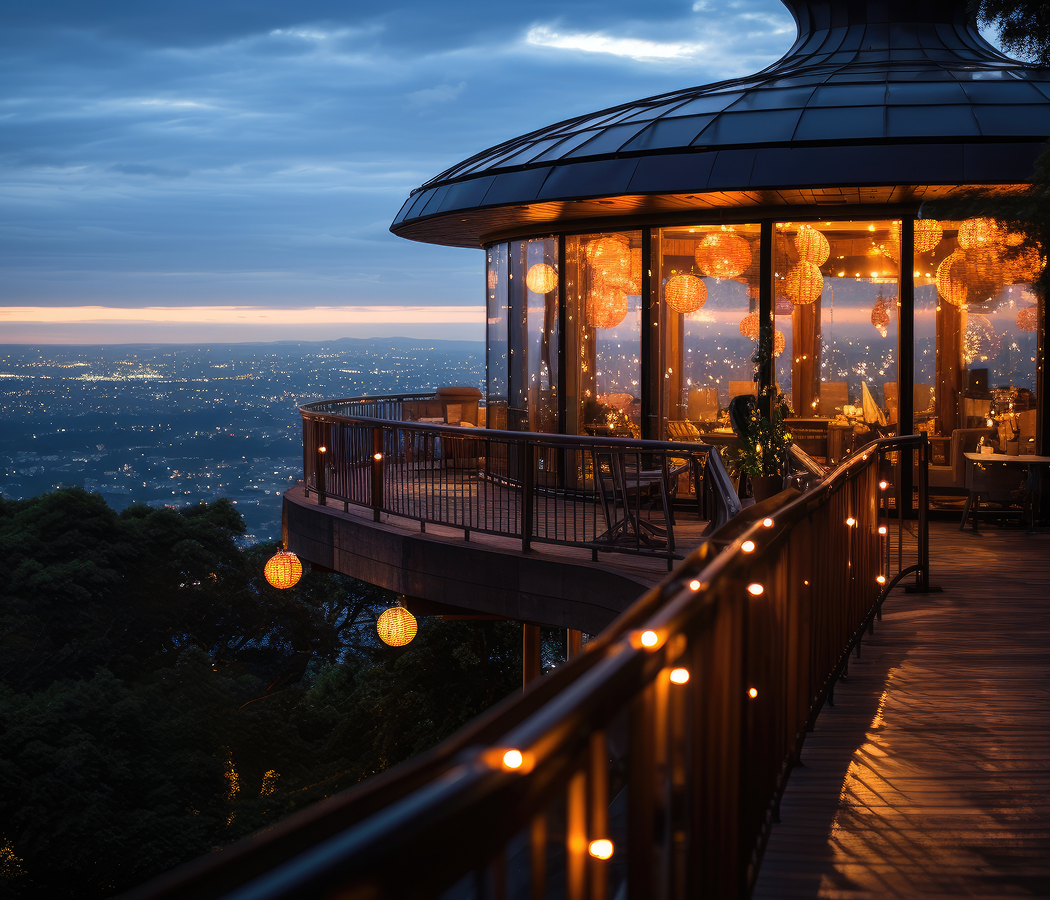
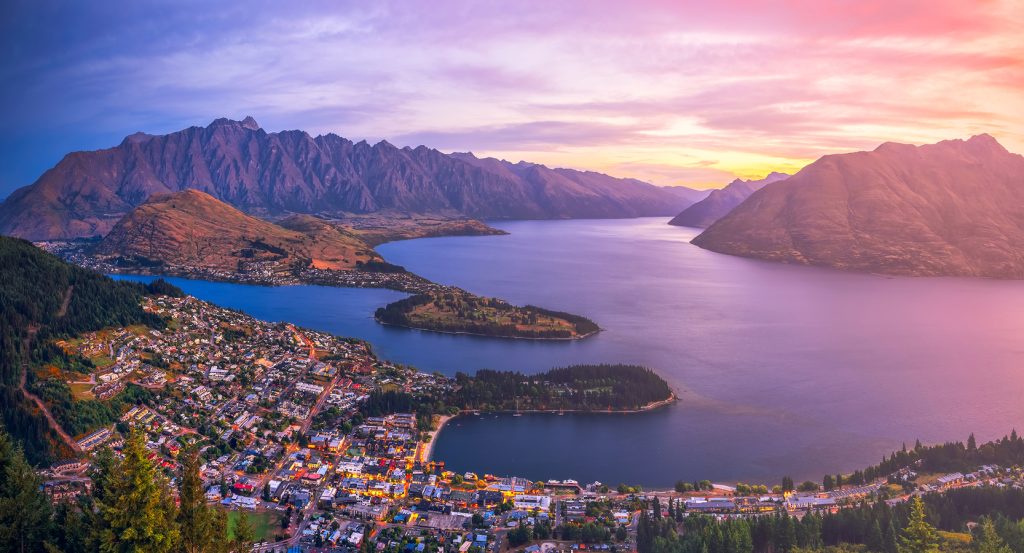
Occupying an elevated position near the eastern shore of Lake Hayes, fifteen minutes northeast of Central Queenstown and close to the junction of State Highway 6 and Arrowtown-Lake Hayes Road, the restaurant commands extensive views across the water toward the surrounding mountain ranges. Its substantial stone building incorporates local schist masonry, recycled timber beams and a steeply pitched copper roof, establishing an architectural relationship with the agricultural landscape of the Wakatipu Basin. A double-height interior features exposed structural timbers, substantial fireplaces and an expansive gabled window framing the lake and distant mountains. An enclosed courtyard introduces outdoor dining beside landscaped grounds, with sheltered seating connecting the restaurant to the surrounding countryside. The result is an architecturally distinctive hospitality destination whose substantial stone construction, intimate dining rooms and expansive alpine views establish an exceptional setting for contemporary New Zealand cuisine and Central Otago wine.
What defines Amisfield Restaurant & Cellar Door.
Amisfield Restaurant & Cellar Door is best known for transforming John Darby's pioneering Central Otago vineyard enterprise into an internationally recognized fine-dining destination whose culinary development has helped establish New Zealand's place within contemporary global gastronomy. Darby founded Amisfield in 1988, bringing his professional background in landscape architecture to a region whose modern commercial wine industry was still developing. His enterprise established a substantial vineyard beneath the Pisa Range near Lowburn, eventually developing ninety-three hectares of certified-organic vines devoted principally to Pinot Noir and aromatic white varieties. The company's early investment coincided with the emergence of Central Otago as a serious wine-producing district, supported by growers investigating the agricultural possibilities of its continental climate and distinctive schist-derived soils. Darby subsequently commissioned a substantial hospitality building near Lake Hayes, establishing a public destination for the winery's products within the expanding Queenstown tourism market. Architect Kerry Mason developed the building's design, drawing on traditional rural construction and substantial natural materials to create a distinctive architectural presence within the Wakatipu Basin. The restaurant and cellar-door operation opened in 2005, introducing a dining program that connected regional produce to the company's growing reputation for premium wine. Its early culinary achievements included Best Winery Restaurant recognition at the Cuisine Restaurant of the Year Awards in 2006 and 2007, establishing national prominence during the operation's formative years. Chef Vaughan Mabee subsequently became central to the restaurant's development, bringing international experience gained at Martin Berasategui in Spain and Noma in Copenhagen. His appointment introduced increasingly elaborate tasting menus built around wild New Zealand ingredients, advanced cooking techniques and presentations connected to the country's natural environments. Mabee received the Cuisine Chef of the Year award in 2019, and Amisfield subsequently developed a sustained record of three-hat recognition within the Cuisine Good Food Awards. The restaurant won Cuisine Restaurant of the Year in 2020, 2021, 2022 and 2023, establishing an extended period of national culinary recognition. Mabee received the Cuisine Innovation Award in 2024 and the Dining Experience Award at The Best Chef Awards that year, extending the restaurant's reputation through international professional recognition. Amisfield also entered the extended World's 50 Best Restaurants list in 2025, bringing additional international attention to the restaurant's distinctive culinary program. Malaysian-born chef Sun Peng Er joined the kitchen as head chef in 2022, contributing professional experience from Au Petit Salut and MICHELIN-starred Rhubarb Le Restaurant in Singapore, Clooney in Auckland and restaurants led by Nobu Lee in Taipei. His development under Mabee established an important continuity of technical knowledge and ingredient-focused cooking within the kitchen. A substantial leadership change followed Mabee's resignation in 2026 amid allegations concerning workplace conduct, prompting an independent investigation and the restaurant's removal from the Cuisine Good Food Guide. Amisfield subsequently closed temporarily for renovations, reopening in July under a culinary program led by Sun Peng Er. The restaurant received one MICHELIN star in the inaugural MICHELIN Guide New Zealand selection announced on June 30, 2026, establishing a major international distinction during this period of transition. Its contemporary operation combines an evening tasting-menu restaurant with a daytime à la carte bistro and cellar-door program, maintaining the connection between Darby's original wine enterprise and the increasingly ambitious culinary direction developed by successive kitchen teams.
Sun Peng Er's cooking develops Amisfield's distinctive culinary character through the transformation of wild New Zealand ingredients into an extended tasting sequence governed by seasonality, precise preparation and the relationship between food and the natural environments from which it originates. His early training in Singapore and subsequent work in Auckland and Taipei established a technical foundation that supports the restaurant's elaborate treatment of ingredients gathered from the South Island's forests, mountains, rivers and coastal waters. The kitchen works with hunters, fishermen, growers and specialist suppliers whose ingredients arrive with pronounced differences in texture, fat content, freshness and natural flavor concentration. Wild game forms an important part of this approach because the mighty structure and distinctive flavor of animals living in New Zealand's varied landscapes demand careful preparation. Venison develops exceptional tenderness through controlled cooking, and concentrated reductions introduce additional depth by drawing flavor from bones, connective tissue and carefully prepared stocks. The kitchen balances this richness through acidic components, aromatic herbs and preserved ingredients, allowing the natural character of the meat to remain prominent throughout the preparation. Foraged vegetation contributes another important element, introducing native plants and seasonal herbs whose distinctive bitterness, acidity and fragrance create a direct connection to New Zealand's botanical landscape. These ingredients become particularly effective when used in concentrated preparations, allowing small quantities to influence the aroma and flavor of a complete course. Fermentation develops further complexity through controlled transformations that produce acidity and savory depth, extending the kitchen's ability to work with ingredients across changing seasons. Preservation techniques also allow carefully selected produce to retain its culinary importance after its immediate harvest period, an especially consequential practice in Central Otago's demanding continental climate. Seafood introduces a different technical challenge through delicate flesh and natural sweetness that can be overwhelmed by excessive heat or heavily concentrated accompaniments. The kitchen responds through precise temperature control and preparations that develop the marine character of the ingredient through broths, aromatic oils and carefully balanced acidic elements. Shellfish contribute concentrated salinity and sweetness, creating opportunities for sauces whose richness is balanced by the freshness of the underlying seafood. The progression between courses becomes central to the evening meal, with changes in temperature, texture and flavor intensity establishing a carefully controlled movement through the tasting menu. Individual presentations incorporate sculptural serving pieces and natural forms that connect the physical appearance of a course to the landscapes associated with its ingredients. Tableside finishing introduces another dimension, allowing aromas, sauces and final preparations to develop immediately before a course is eaten. Amisfield's organic wine portfolio provides a complementary progression through Pinot Noir, Chardonnay, Riesling and other aromatic varieties grown on the company's Mount Pisa estate. Pinot Noir contributes acidity, red-fruit character and tannin structure to preparations involving game, and the winery's aromatic whites provide contrasting pairings for seafood, herbs and ingredients with pronounced acidity. Older vintages introduce the effects of bottle development, creating additional opportunities to examine how changing fruit character and structure interact with successive courses. The daytime Cellar Door & Bistro follows a separate culinary format, presenting seasonal New Zealand ingredients through à la carte preparations accompanied by guided wine tastings and selections from the estate's cellar. This distinction allows the restaurant to maintain two complementary approaches to hospitality, with the evening tasting menu developing the most elaborate expression of the kitchen's technical capabilities. Amisfield's culinary achievement emerges from the sustained coordination of wild ingredients, careful preservation, advanced cooking methods and estate-grown wines within a dining sequence that connects the natural character of New Zealand produce to the precision of contemporary fine dining.
How Amisfield Restaurant & Cellar Door fits.
Amisfield Restaurant & Cellar Door works as the concluding destination for an outing exploring the ecological character of Lake Hayes, the preservation of nineteenth-century agricultural architecture and the development of independent vineyard hospitality within the Wakatipu Basin.
Begin at Lake Hayes Walkway, the eight-kilometer circuit following the shoreline of Waiwhakaata, a glacially formed lake whose sheltered basin occupies the countryside between Queenstown and Arrowtown. The route incorporates gravel paths, wooden boardwalks and small bridges that connect open grassland with reed beds and wetland vegetation. Its shoreline supports the Australasian crested grebe, a native diving bird whose breeding population has become an important focus of conservation activity around the lake. Seasonal changes in water levels influence the surrounding wetland habitats, creating varied conditions for aquatic vegetation and birdlife. The circuit also preserves views of historic rural properties and the agricultural slopes surrounding the basin, connecting the lake's natural ecology to the development of the surrounding countryside. Continue to The Homestead at Lake Hayes, the historic residence constructed in 1909 by Robert McDowell, a prominent local carrier whose business supplied provisions to Arrowtown, Macetown and surrounding settlements. McDowell used beech timber sourced from Kinloch at the head of Lake Wakatipu, creating a substantial sixteen-room residence during a period when large private houses remained relatively uncommon in the district. Its original acetylene lighting system represented an advanced domestic installation before the widespread availability of electricity in the surrounding communities. The Lee family acquired the property in 1910, beginning a long association with the agricultural development of the surrounding estate. Its surviving architecture preserves the scale and material character of prosperous early twentieth-century rural settlement. Conclude at Stoneridge Estate, the vineyard and hospitality property developed through the artistic ambitions of Da'Vella Gore and successive generations of her family. Gore began collecting salvaged architectural materials in 1981 after encountering a demolished Catholic church on New Zealand's North Island, initiating an extensive program of reconstruction and landscape design. The estate incorporates recycled timber, stone masonry, historic architectural elements and ornamental gardens assembled through decades of family involvement. Its stone chapel, vineyard and former residence preserve the relationship between Gore's artistic work and the surrounding agricultural landscape. The property subsequently expanded under Wayne Gore into boutique accommodation and hospitality, introducing an additional expression of the region's development as a destination for wine and rural tourism. The progression moves from Lake Hayes Walkway's preservation of the basin's natural ecology through The Homestead at Lake Hayes' surviving agricultural architecture and culminates in Stoneridge Estate's transformation of historic building materials into a contemporary vineyard destination, connecting the landscape's environmental character to successive generations of rural enterprise.
Where your story begins.
Foresyte Travel reveals places that feel extraordinary long before you arrive.
Enjoy editorial crafted for luxury travelers.
Foresyte may earn a commission when you book.