Why you should experience Best Western Plus Travel Inn Hotel in Melbourne, Australia.
Best Western Plus Travel Inn Hotel is a quietly purposeful address where Melbourne's academic gravity, garden-framed calm, and everyday urban movement coexist without theatrics, creating a stay that feels grounded, intelligible, and unusually steady in a city often defined by performance.
Positioned along Grattan Street at the seam between Carlton and the northern edge of the central business district, the hotel occupies a zone shaped less by nightlife and flash and more by knowledge, healthcare, and long-established residential rhythm. The surrounding streets are lined with university buildings, research institutions, medical precincts, and leafy parkland, giving the area a cadence that feels deliberate. From arrival, the hotel communicates clarity. The exterior is unpretentious, signaling function over flourish, while the interior spaces reinforce that message through composed design choices that prioritize orientation, ease, and flow. The lobby is arranged to move guests efficiently from street to room without friction, supported by warm materials, measured lighting, and seating that feels accommodating rather than decorative. There is no attempt to overwhelm or distract; instead, the environment feels calibrated for people who have come to Melbourne with intention. Guest rooms continue this sensibility with layouts that value proportion, usability, and light. Large windows invite daylight across calm interiors finished in neutral tones, allowing views of tree-lined streets, university façades, or the subdued geometry of the inner north to remain present. Furnishings are contemporary and practical, selected for durability and comfort rather than trend-driven drama, creating a space that adapts easily to different modes of use. Beds are generous and reliably comfortable, designed to support rest after days spent attending lectures, navigating hospital appointments, working remotely, or exploring the city at a measured pace. Work surfaces and seating are positioned with logic, supporting focus without crowding the room, while storage and circulation feel intuitive rather than compressed. Bathrooms reflect the same restrained approach, with clean lines, quality finishes, walk-in showers or baths depending on room type, and lighting that supports both early starts and evening routines. The overall impression is one of calm competence, a hotel that understands its role as a functional base. Public amenities extend this logic with a fitness center that supports routine rather than performance, on-site dining that prioritizes reliability and accessibility, and service that is attentive without excess. Staff interactions feel efficient and grounded, shaped by an understanding that many guests are here for reasons that require steadiness. Best Western Plus Travel Inn Hotel offers a form of comfort rooted in predictability, coherence, and quiet support, making it especially suited to travelers who value clarity, proximity, and a sense of everyday continuity while in Melbourne.
What you should know about Best Western Plus Travel Inn Hotel.
Best Western Plus Travel Inn Hotel derives much of its relevance not from branding or prestige signals, but from its operational alignment with Melbourne's academic and medical ecosystems, positioning it as a functional node within the city's intellectual and healthcare infrastructure.
The hotel's location places it within immediate reach of the University of Melbourne, major hospitals, research centers, and long-established residential neighborhoods, which significantly shapes the profile of its guest population and the way the property operates. Many guests are in the city for extended stays related to study, visiting scholars, medical treatment, conferences, or professional work tied to the surrounding institutions, and the hotel's design and service model reflect this reality. Rather than optimizing for short-term indulgence or experiential novelty, the property emphasizes stability, consistency, and operational clarity. This is evident in room layouts that prioritize usable space and storage, in furnishings selected for durability over trend appeal, and in public areas designed to absorb steady foot traffic. Economically, the hotel occupies a middle tier that balances affordability with upgraded comfort, allowing longer stays without the pressure of escalating costs that often accompany more design-forward properties closer to the city center. This positioning attracts guests who are cost-aware but unwilling to sacrifice baseline quality, reinforcing the hotel's character as a dependable option. Operationally, service culture here is best known for repeat visitation and longer guest tenures, which encourages a style of engagement that is practical, familiar, and responsive. Staff are accustomed to guests who return regularly, who maintain routines, and who require local knowledge related to transport, campus navigation, and nearby services more than nightlife recommendations. The hotel's proximity to Carlton Gardens, Lygon Street, and major tram corridors further integrates it into daily city life rather than isolating it as a destination unto itself. This embeddedness within Melbourne's working and learning landscape gives Best Western Plus Travel Inn Hotel a form of relevance that is subtle but durable, grounded in the rhythms of people who come to the city not to be dazzled, but to participate meaningfully in its institutions. Over time, this has positioned the hotel as a quiet constant within a changing urban environment, valued for its reliability and coherence rather than its ability to impress at first glance.
How to fold Best Western Plus Travel Inn Hotel into your trip.
Best Western Plus Travel Inn Hotel integrates naturally into itineraries that prioritize proximity, routine, and efficient movement through Melbourne's northern city corridors without sacrificing access to the cultural core.
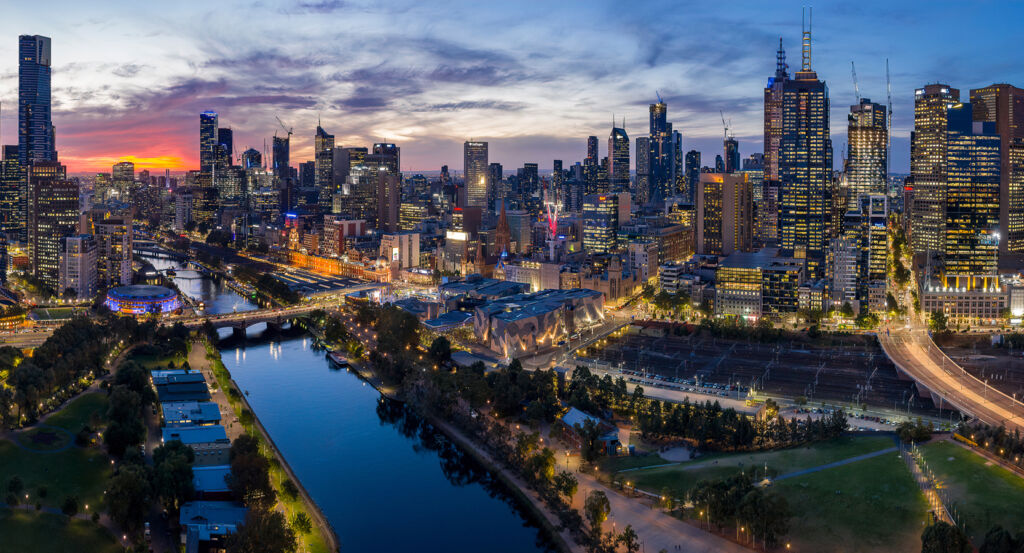
Begin the day with breakfast at the hotel or along nearby Lygon Street, where cafés open early and the pace feels grounded rather than rushed, then step out toward the University of Melbourne or Carlton Gardens for a morning walk that sets a measured tone. From there, tram routes along Swanston Street and surrounding arteries provide direct connections into the central business district, allowing easy access to Federation Square, Flinders Street Station, and the Yarra River. Midmorning can be spent moving between lectures, meetings, hospital appointments, or gallery visits in the city center, with the knowledge that returning north remains straightforward throughout the day. Around midday, the hotel's position makes it easy to pause and reset, whether that means returning briefly to your room, using the fitness facilities, or stepping into the surrounding neighborhood for a casual lunch. In the afternoon, the proximity to Carlton's cultural institutions, including the Melbourne Museum and surrounding parklands, offers options that do not require extensive travel or planning. As evening approaches, Lygon Street's dining corridor provides accessible choices for dinner within walking distance, while tram access keeps broader city neighborhoods reachable if plans extend outward. The day concludes with a simple return to the hotel, where the environment supports rest without physical overload, allowing the next day to begin with clarity rather than recovery. Best Western Plus Travel Inn Hotel functions best as a steady base, a place that supports continuity, focus, and movement through Melbourne with minimal friction, enabling the city to be experienced as a lived environment.
Where your story begins.
Foresyte Travel reveals places that feel extraordinary long before you arrive.
Experience premium editorial crafted for luxury travelers.