Why Blanket Bay, Queenstown matters.
Blanket Bay is an alpine lodge where Glenorchy's high-country heritage meets the Tusher family's stone-and-timber retreat on the shore of Lake Wakatipu.
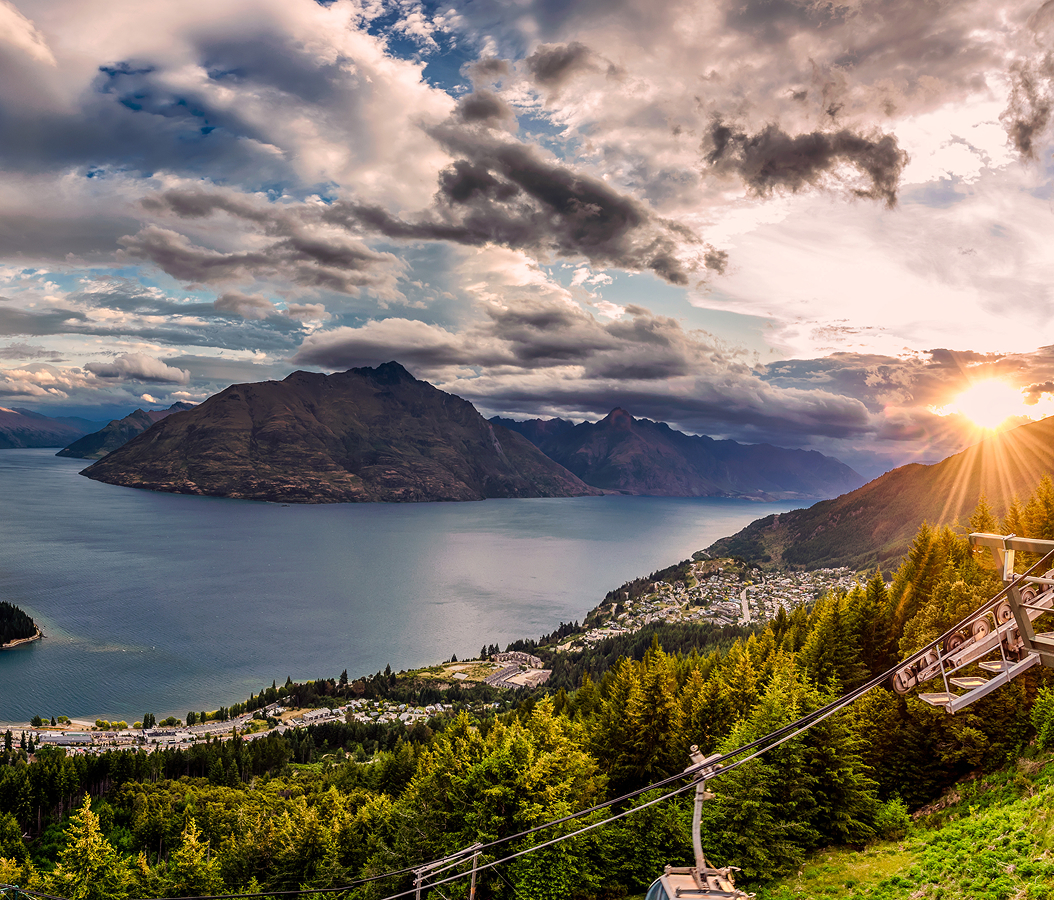
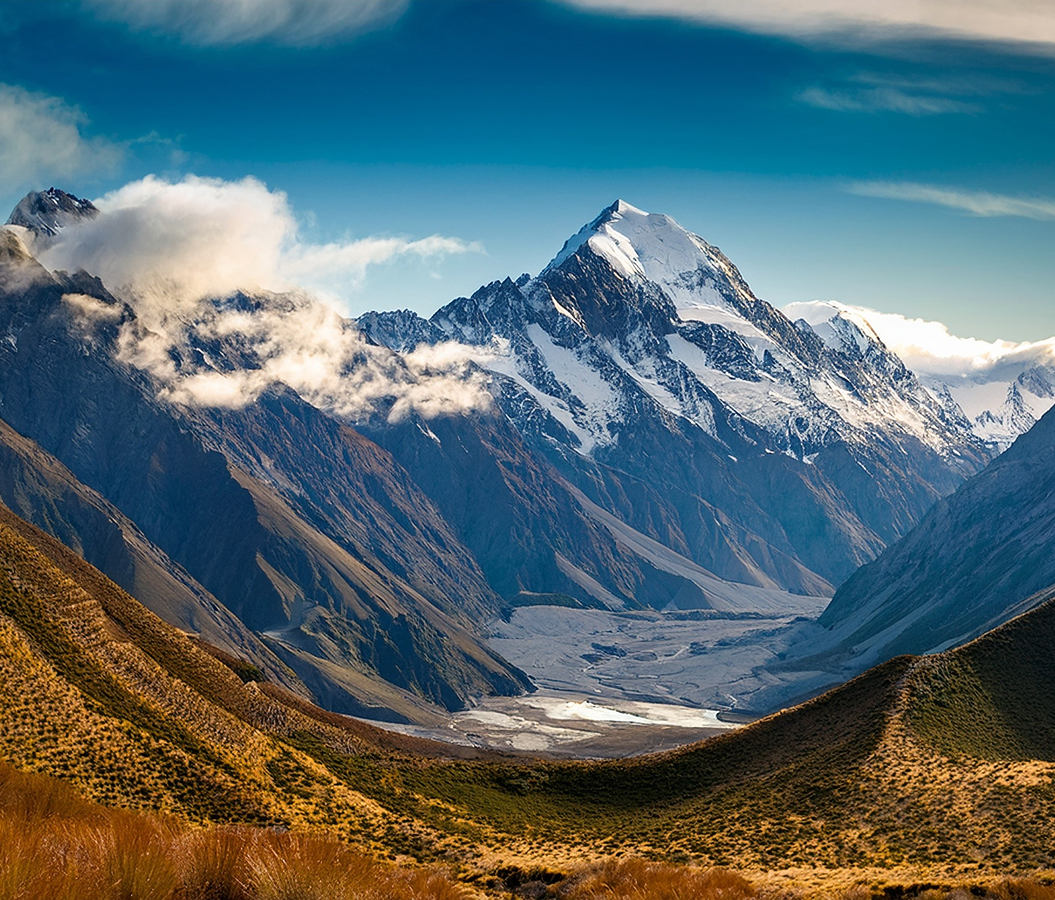
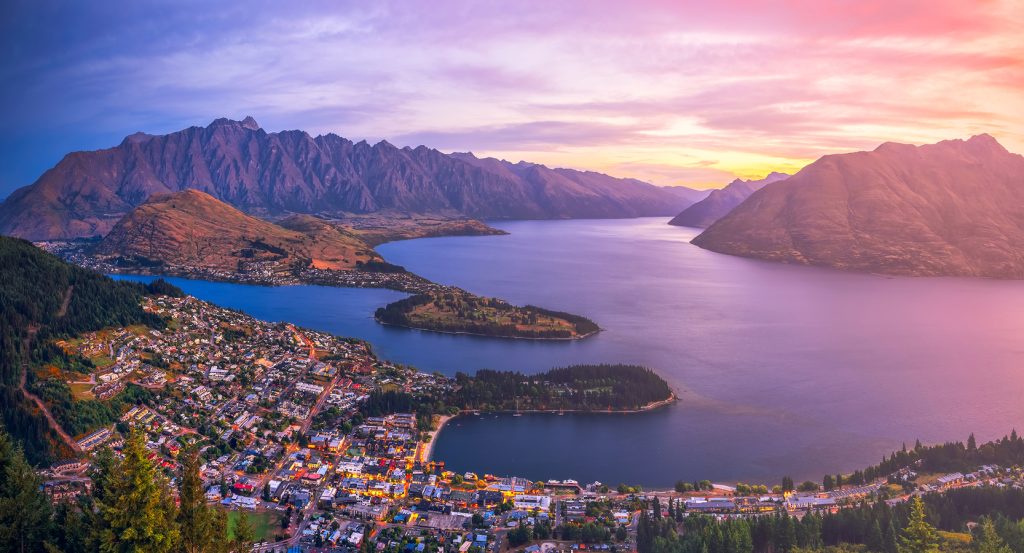
On Glenorchy-Queenstown Road near Stone Creek and south of Glenorchy, the lodge occupies the eastern shore of Lake Wakatipu beneath the Richardson Mountains, with the Humboldt Range, Rees Valley, Dart Valley and Pikirakatahi, or Mount Earnslaw, defining its wider alpine horizon. Native timber and local schist stone give the main lodge a strong relationship with the surrounding mountain country. Large windows open the public interiors toward the lake and the changing light across its surface. Stone fireplaces bring a sheltered focal point to the lodge's gathering spaces. The result is a high-country retreat whose architecture and lakefront grounds place its history within the landscape around Glenorchy.
What defines Blanket Bay, Queenstown.
Blanket Bay is best known for the long interval between Tom Tusher's purchase of the land in 1972 and the lodge's opening in 1999, and for the family's development of a private fishing retreat into a high-country lodge. Tusher acquired 55 hectares of overgrown land beside Lake Wakatipu while establishing Levi Strauss & Co.'s Australian operation. His original plan was to hold the property as a personal retreat for fishing. The land remained a long-term project for 27 years before the lodge opened. Pauline and Tom Tusher shaped the undertaking together, carrying it from a remote parcel of land to a hospitality enterprise. The lodge marked the completion of a project that had begun as a personal investment in the region. Its 25th anniversary in 2024 placed the opening in a quarter-century perspective, linking the family's original purchase with a mature alpine property. Blanket Bay joined Relais & Châteaux in 2020, adding an international hospitality affiliation to its history. The place name recalls a much earlier episode on the same shore: in 1861, sheep belonging to William Gilbert Rees were shorn in a bay south of Glenorchy. Eight Māori shearers used blankets to make temporary shelters that protected themselves and the wool from the elements. That event gave the bay its name, which the lodge later adopted. The property stands on Wyuna Station, a working sheep, cattle and deer farm historically connected with the original Rees Station. The lodge's history joins a late twentieth-century family development to a high-country landscape shaped by pastoral work and a local place name rooted in shearing.
How Blanket Bay, Queenstown fits.
Blanket Bay works as a base for an outing that follows the head of Lake Wakatipu from its steamship links through its early mountain hospitality and onward to the historic route into the Southern Alps.
Begin at Glenorchy Wharf Shed, a surviving link with the lake's former freight and passenger network. Elfin Bay Station built the corrugated iron shed to store goods brought by the TSS Earnslaw, which began service on Lake Wakatipu in 1912. The Earnslaw connected Queenstown, Glenorchy, Kinloch and high-country stations, carrying supplies and people along the lake before a road reached Glenorchy in 1962. The wharf shed later sheltered walkers and retained a practical place in the lakeside settlement. Its simple form makes the old transport system tangible at the water's edge. Continue to Kinloch Heritage Lodge, whose hospitality history reaches back to 1868, when Captain Richard Bryant established a tavern for nearby sawmill workers. As visitors reached the head of the lake, Bryant expanded the site into a guesthouse and hotel. The settlement's early tourism developed around boat travel, remote tracks and the hospitality required to support travel beyond Glenorchy. A bush fire in 1887 damaged the early tourism business, but the Kinloch site continued its association with lodging and travel. Its history links the region's timber economy with the first visitor journeys toward the Routeburn. Conclude at Routeburn Track, an old Māori travel route connecting the head of Lake Wakatipu with the Hollyford Valley and Martins Bay, where pounamu and moa drew early travellers. European exploration and tourism followed the gold era, and horseback journeys into Routeburn Flats developed into guided walking trips toward Harris Saddle. The track now crosses Mount Aspiring and Fiordland national parks, reaching Harris Saddle at 1,255 metres. The progression moves from the wharf's lake transport and Kinloch's early hospitality to Routeburn's passage through the Southern Alps, revealing how access, shelter and mountain travel shaped the head of Lake Wakatipu.
Where your story begins.
Foresyte Travel reveals places that feel extraordinary long before you arrive.
Enjoy editorial crafted for luxury travelers.