
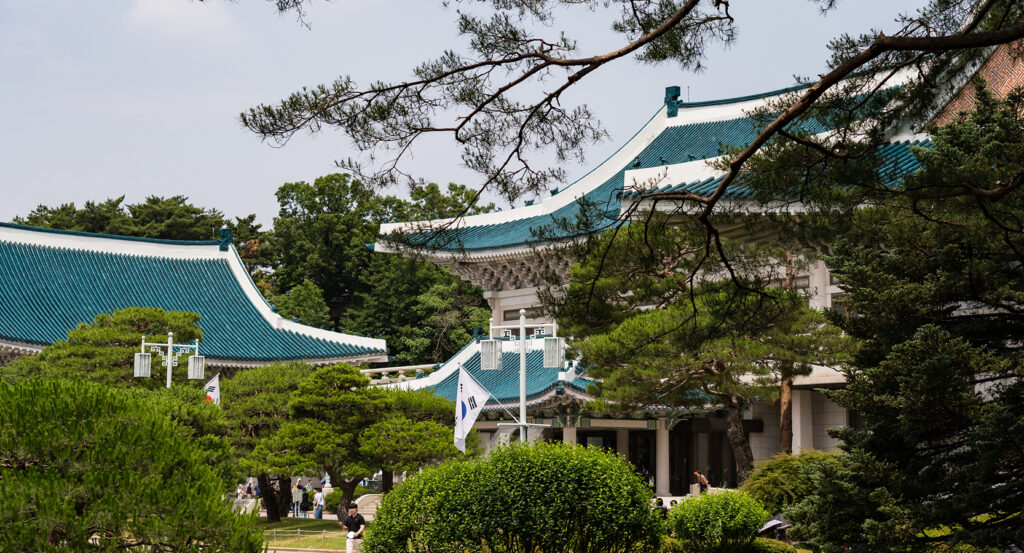
Why you should experience The Walking Trail at Cheong Wa Dae in Seoul, South Korea.
The Walking Trail at Cheong Wa Dae is Seoul's most symbolic path, a once-restricted corridor of power that now belongs to the people.
Stretching behind the Cheong Wa Dae complex and along the forested slopes of Bugaksan Mountain, the trail offers not only sweeping city views but also a profound sense of freedom. For decades, this route was closed to the public, guarded by soldiers and silence. Now, it's a peaceful sanctuary of pine, stone, and light, a space where history exhales. The moment your footsteps meet the gravel, you feel the shift: from the formality of the presidential compound to the calm pulse of nature. The blue-tiled roofs below shimmer like river water, and above, Bugaksan stands like a watchful guardian. The air is cleaner here, the mood quieter, a reminder that true power doesn't rest in walls, but in the landscapes we protect.
What you should know about The Walking Trail at Cheong Wa Dae.
The Blue House Walking Trail, officially opened in 2022, follows the historic Bugaksan Military Trail, which for over 50 years remained sealed to civilians.
After an assassination attempt on President Park Chung-hee in 1968, when North Korean commandos infiltrated the mountain's lower ridges, the entire area surrounding Cheong Wa Dae was fortified and declared off-limits. The reopening of the trail, alongside the public unveiling of the Blue House compound, marked one of the most symbolic gestures of transparency in Korean democratic history. The route extends 3.4 kilometers, beginning near the Cheong Wa Dae Fountain Plaza and winding along forest paths once patrolled by presidential guards. Along the way, visitors encounter restored stone walls from the Joseon-era Bugaksan Fortress, secret watchposts, and panoramic lookouts offering some of the best views of Gyeongbokgung Palace, Inwangsan, and the broader city basin. The trail's design honors both ecology and memory: wooden decking protects fragile root systems, interpretive panels explain the mountain's role in Seoul's geomantic defense, and rest pavilions resemble traditional jeongja, open-air shelters for contemplation. The air feels charged with symbolism, a quiet reclamation of public space once reserved for power. Few realize that the trail follows an ancient energy line in Pungsu-jiri, Korea's geomancy, linking Bugaksan's spiritual energy directly to the city's royal palaces. By reopening it, the government effectively restored not just access, but balance, returning Seoul's northern guardian mountain to its rightful role as a space for reflection and renewal.
How to fold The Walking Trail at Cheong Wa Dae into your trip.
The Blue House Walking Trail is best enjoyed in rhythm with nature's quieter hours, early morning or late afternoon, when the mountain's light softens and the city hums below.
Take Subway Line 3 to Gyeongbokgung Station (Exit 4) and walk north past the Gyeongbokgung rear gate toward Cheong Wa Dae. Entry to the compound is free, though trail access may require advance booking during peak seasons. Begin your walk near the Fountain Plaza, following the marked signs toward the Bugaksan Trail Entrance. The path alternates between stone steps, dirt lanes, and gentle wooden bridges, offering frequent resting points and observation decks overlooking the Blue House's blue-tiled rooftops. In spring, cherry blossoms frame the compound like lace; in autumn, the entire ridge burns crimson and gold. Bring water, sturdy shoes, and a camera, the vistas near the upper lookout platform are among Seoul's most breathtaking. For a meditative pause, stop at the Seoul Fortress Wall section midway up the trail, where moss-covered stones whisper the endurance of centuries. The full circuit takes around 90 minutes, but you'll want to linger, each turn reveals a new layer of city and history intertwined. End your walk by descending toward Samcheong-dong, a village of teahouses and galleries that perfectly complements the trail's tranquil finish. The Blue House Walking Trail at Cheong Wa Dae in Seoul isn't just a scenic route, it's a reclaimed narrative, a physical and spiritual bridge between past exclusivity and present openness, proving that even the most guarded paths can lead back to the people.
Where your story begins.
Foresyte Travel reveals places that feel extraordinary long before you arrive.
Experience premium editorial crafted for luxury travelers.

















































































































