
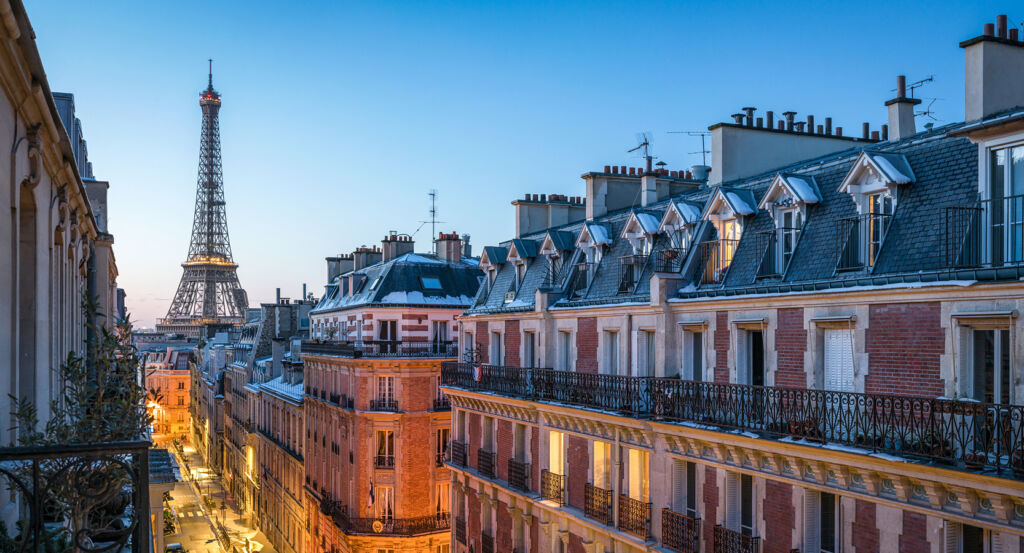
Why Boulevard Saint-Germain matters.
Boulevard Saint-Germain is a renowned Saint-Germain-des-Prés corridor where intellectual brilliance, literary heritage, architectural grandeur, and Left Bank sophistication converge along one of the world's most celebrated boulevards.
Running through Saint-Germain-des-Prés between Pont de Sully and Pont de la Concorde, this grand boulevard unfolds through historic cafés, prestigious institutions, elegant Haussmann architecture, renowned bookstores, celebrated galleries, and distinguished cultural landmarks that have shaped Parisian life for more than a century. Broad tree-lined sidewalks, refined terraces, grand façades, and energetic neighborhood life create an atmosphere where philosophers, artists, writers, politicians, and students have influenced generations of European thought. Every section of the boulevard reveals another chapter in the remarkable evolution of the Left Bank as a global center of culture and ideas. The result is a corridor defined by intellectual prestige, architectural distinction, and one of Paris' most iconic urban avenues.
What defines Boulevard Saint-Germain.
Boulevard Saint-Germain is best known as Baron Haussmann's grand transformation of the medieval Left Bank, constructed between 1855 and 1867 to create the first continuous east-west boulevard south of the Seine while fundamentally reshaping the urban fabric of Paris. Named after the ancient Abbey of Saint-Germain-des-Prés, founded by King Childebert I in 558, the avenue became the symbolic heart of modern French intellectual life through its extraordinary concentration of universities, publishing houses, literary cafés, and cultural institutions. Renowned establishments including Café de Flore and Les Deux Magots became the gathering places of Jean-Paul Sartre, Simone de Beauvoir, Albert Camus, Pablo Picasso, Ernest Hemingway, James Joyce, Boris Vian, and countless other writers, philosophers, artists, and political thinkers whose ideas profoundly influenced twentieth-century literature, existentialism, modern art, and global intellectual history. The boulevard also passes nationally significant institutions including the Assemblée Nationale, the École des Beaux-Arts, Sciences Po, and the Church of Saint-Germain-des-Prés, while preserving one of Paris' finest collections of Second Empire architecture integrated into Haussmann's visionary urban plan. Together, these academic, literary, political, architectural, and artistic achievements established Boulevard Saint-Germain as one of the world's defining cultural corridors and an enduring symbol of the Parisian Left Bank.
Historic cafés, internationally renowned educational institutions, elegant Haussmannian façades, and generations of independent booksellers continue expressing the boulevard's remarkable ability to unite scholarship, political debate, artistic innovation, and everyday Parisian life. The enduring relationship between medieval religious foundations, nineteenth-century urban planning, and the extraordinary intellectual movements that emerged during the twentieth century demonstrates why the avenue remains synonymous with creative freedom and cultural influence. Few boulevards anywhere in the world combine architectural excellence, literary achievement, philosophical history, and civic importance with such extraordinary international significance.
How Boulevard Saint-Germain fits.
Boulevard Saint-Germain works as an exploration through Saint-Germain-des-Prés' celebrated intellectual landmarks and historic Left Bank institutions.
Begin at Café de Flore, where generations of philosophers and writers established one of the world's most influential literary meeting places before strolling along Boulevard Saint-Germain beneath its elegant rows of trees. Continue to the Church of Saint-Germain-des-Prés, whose sixth-century origins preserve the oldest surviving church in Paris and the remarkable history that gave the boulevard its name. Conclude at the Musée d'Orsay, where one of the world's greatest collections of Impressionist art provides a memorable finale celebrating the extraordinary relationship between literature, philosophy, architecture, and artistic achievement that continues defining the Left Bank. The progression moves naturally from literary history to medieval heritage before culminating in artistic mastery, revealing why Boulevard Saint-Germain remains one of the world's most celebrated cultural corridors.
Where your story begins.
Foresyte Travel reveals places that feel extraordinary long before you arrive.
Experience premium editorial crafted for luxury travelers.
Foresyte Travel may earn a commission when you book through the link on this page.














































































































