Why Café Loki matters.
Café Loki is a family-owned Icelandic restaurant where Skólavörðuholt's distinctive cultural character meets Reykjavík's traditional home cooking, the preservation of Icelandic food customs and a family's commitment to introducing the country's culinary heritage through familiar dishes prepared with care.
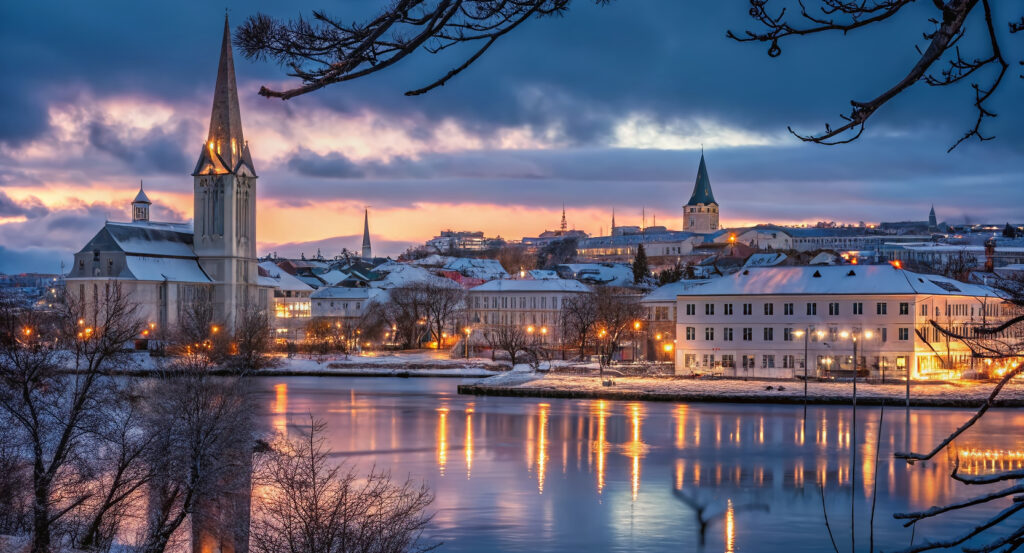
Set along Lokastígur near its junction with Skólavörðustígur and directly opposite Reykjavík's principal hilltop church, the café occupies a prominent position above the capital's historic commercial center, surrounded by colorful residential buildings, independent galleries and the ascending streets connecting Laugavegur with the Skólavörðuholt district. Its street-facing windows establish a direct visual relationship with the surrounding square, bringing the distinctive architecture of Central Reykjavík into the dining rooms. The interior extends across two floors, accommodating informal tables within a modestly furnished setting that preserves the character of a family-operated neighborhood restaurant. Upper-floor seating provides elevated views across the surrounding streets, complementing the café's understated furnishings and practical dining arrangements. The result is a restaurant whose intimate proportions, distinctive hilltop setting and close relationship with Reykjavík's residential architecture create an accessible introduction to traditional Icelandic hospitality.
What defines Café Loki.
Hrönn and her husband Þórólfur developed Café Loki around the preservation of Icelandic home cooking, bringing traditional family recipes into a restaurant devoted to the foods that shaped domestic life across the country. Hrönn's background in textile design contributed a creative perspective to the business, connecting her appreciation of Icelandic craftsmanship with an interest in preserving familiar culinary practices. Þórólfur assumed responsibility for producing the restaurant's traditional breads, establishing a central role for baking within the family's approach to food preparation. His rye bread follows a slow method requiring eight hours at a low temperature, developing the dense texture and natural sweetness associated with Icelandic rúgbrauð. The family also prepares traditional flatbread, preserving another important component of the country's domestic baking heritage. These preparations connect the restaurant with a culinary culture shaped by Iceland's historical dependence on grain imports, limited agricultural resources and the practical demands of food preservation. Rye became an important ingredient in Icelandic households through trade with continental Europe, and the development of dense, slowly cooked loaves provided a dependable foundation for meals accompanied by fish, meat and dairy products. Traditional flatbread developed through a complementary practice of preparing thin rounds of dough that required modest cooking equipment and suited the practical circumstances of rural households. Café Loki brings these established customs into Reykjavík's contemporary restaurant culture through a menu organized around familiar combinations of bread, preserved fish, lamb and dairy products. The restaurant's name references Loki, the complex figure of Norse mythology associated with cunning, transformation and the events surrounding the gods of Ásgarðr. Its culinary repertoire similarly draws upon traditions that developed across centuries of Icelandic settlement, preserving preparations associated with rural households, fishing communities and seasonal agricultural work. The business maintains a distinctly domestic approach to hospitality, emphasizing food prepared on the premises and dishes associated with the cooking of earlier generations. Its reputation has developed particularly through the introduction of traditional Icelandic ingredients to an international audience, allowing unfamiliar preparations to be encountered alongside recognizable soups, sandwiches and desserts. The restaurant's rye bread ice cream has become a defining specialty, extending the family's bread-making traditions into a contemporary dessert that connects the sweetness of dark rye with Iceland's enthusiasm for ice cream. Café Loki occupies a distinctive position within Reykjavík's restaurant culture, preserving the practical foundations of Icelandic home cooking through an independent family business devoted to familiar ingredients and inherited methods.
Hrönn's approach to Icelandic food develops the relationship between traditional preservation methods, domestic baking and the simple combinations that sustained households through the country's demanding northern climate. The kitchen places particular importance on rúgbrauð, the dark rye loaf whose dense crumb and gentle sweetness develop through prolonged cooking. Icelandic geothermal baking traditions historically used the natural heat of the earth to cook covered loaves slowly, producing the moist texture associated with the bread's distinctive character. Café Loki's preparation preserves the importance of time and low-temperature cooking, allowing the grain's natural sweetness to develop through a carefully controlled process. Plokkfiskur provides a complementary expression of Icelandic domestic cooking, combining cooked white fish, potatoes and a creamy sauce into a substantial preparation associated with the practical use of available ingredients. Served with rye bread, the dish connects the country's marine resources with its established grain-based accompaniments, creating a balanced relationship between delicate fish and dense, sweet bread. Smoked trout and smoked lamb extend the menu into traditional preservation techniques, whose development helped Icelandic households maintain dependable food supplies through long winters. The lamb's concentrated flavor acquires additional complexity from smoking, pairing naturally with flatbread and familiar accompaniments. Dried fish, or harðfiskur, preserves another essential relationship between Iceland's fishing economy and domestic food traditions, with butter providing richness to its concentrated texture. Fermented Greenland shark introduces a more demanding preservation practice, developed through methods that render the flesh suitable for consumption after an extended period of processing and drying. Its distinctive flavor is traditionally accompanied by Brennivín, the Icelandic caraway-flavored spirit whose sharp character provides a familiar pairing. The kitchen also prepares kjötsúpa, the traditional lamb soup that combines meat, root vegetables and broth into one of Iceland's most recognizable home-cooked meals. Thin Icelandic pancakes contribute a sweeter expression of domestic baking, served with sugar, cream, jam or skyr according to familiar household traditions. The signature rye bread ice cream transforms the restaurant's slow-baked loaf into a dessert incorporating creamy vanilla, small pieces of rye bread, whipped cream and rhubarb syrup. Rhubarb contributes a distinctive connection with Icelandic gardens, where its tolerance for the northern climate made it an important ingredient in homemade preserves and desserts. The menu's assembled Icelandic plates bring these preparations into carefully balanced combinations, allowing the relationships between bread, fish, meat and preserved ingredients to emerge through a single meal. Café Loki's cooking preserves the essential character of Icelandic domestic food through traditional preparation, familiar pairings and the resourceful use of ingredients that have sustained the country's households for generations.
How Café Loki fits.
Café Loki works as the concluding destination for an outing connecting Reykjavík's early public swimming culture, the emergence of Icelandic sculpture as a national artistic discipline and the development of expansive religious architecture in the modern capital.
Begin at Sundhöll Reykjavíkur, the historic swimming complex whose construction helped establish public bathing and organized swimming instruction as important elements of Reykjavík's civic development. Architect Guðjón Samúelsson designed the building, and construction began in 1929 following government proposals to finance a permanent indoor swimming facility through contributions from the state and municipality. Financial difficulties interrupted the project, delaying completion until March 23, 1937, when the complex opened as the city's first purpose-built indoor swimming hall. The building incorporated a substantial indoor pool supplied through Reykjavík's developing geothermal heating infrastructure, connecting public recreation with Iceland's growing ability to use naturally heated water. Swimming instruction subsequently became central to the institution's activities, and an extension designed by VA arkitektar opened in December 2017, expanding the facilities while preserving the original building's architectural significance. Continue to The Einar Jónsson Sculpture Museum, the institution dedicated to Iceland's pioneering professional sculptor and his development of a distinctive artistic language grounded in Nordic mythology and spiritual symbolism. Einar Jónsson offered his works to the Icelandic nation in 1909 on the condition that a permanent museum be constructed to preserve them, establishing an important foundation for public artistic patronage. He designed the museum building himself, incorporating exhibition galleries, a studio and residential accommodation that he subsequently shared with his wife, Anna Marie Mathilde Jørgensen. The museum opened on June 24, 1923, becoming Iceland's first public art museum housed in its own dedicated building. Its collection preserves more than 350 works from Jónsson's six-decade career, and the surrounding sculpture garden contains 26 bronze casts that extend his artistic contribution into the surrounding urban landscape. Conclude at Hallgrímskirkja, the expansive Lutheran church whose construction became one of the most ambitious architectural undertakings in twentieth-century Iceland. Guðjón Samúelsson began designing the building in 1937, developing a composition inspired by Icelandic columnar basalt, mountains and glaciers that connected national architectural ambitions with the country's geological character. Construction began in 1945, and successive portions entered religious use before the completed church was consecrated on October 26, 1986. The building honors Hallgrímur Pétursson, the seventeenth-century poet and clergyman whose fifty Hymns of the Passion became foundational works of Icelandic religious literature. Its musical significance expanded in December 1992 with the inauguration of an expansive concert organ built by Johannes Klais of Bonn, incorporating 5,275 pipes and establishing the church as a major center for organ performance. The progression moves from Reykjavík's development of geothermal public bathing through the establishment of Iceland's first dedicated sculpture museum and culminates in a church whose architecture and musical traditions connect the country's natural landscape with its religious and cultural heritage, establishing a distinctive introduction to the capital before a traditional Icelandic meal.
Where your story begins.
Foresyte Travel reveals places that feel extraordinary long before you arrive.
Enjoy editorial crafted for luxury travelers.
Foresyte may earn a commission when you book.