
Why Tokyo Character Street matters.
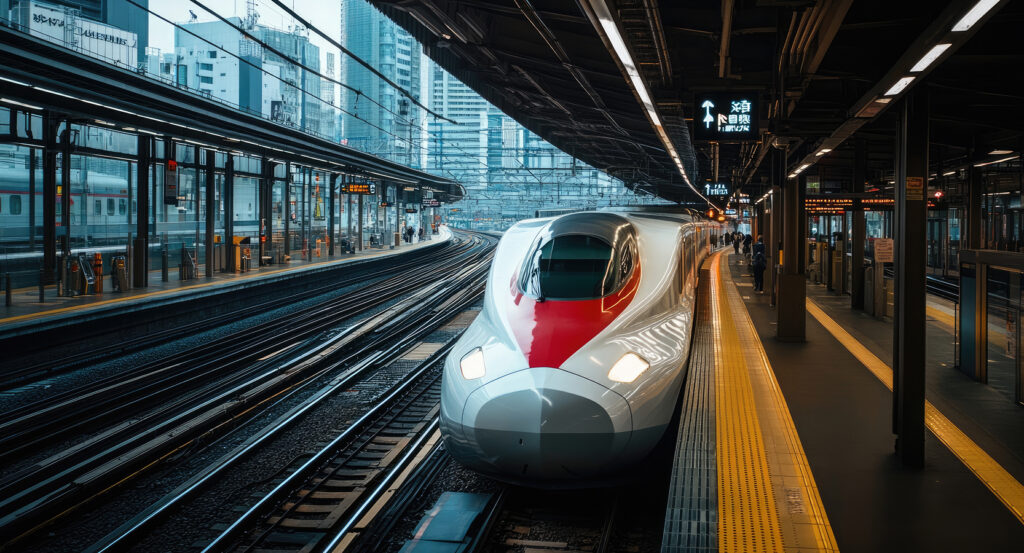
Tokyo Character Street is a vivacious pop-culture corridor where Tokyo Station's immense transportation network meets Japanese television, animation, toys and character franchises gathered beneath the Yaesu side of the city's central rail terminal.
Set beneath the Yaesu side of Tokyo Station near Yaesu-dori and just steps from the Yaesu North Exit, the shopping street occupies the lower level of First Avenue Tokyo Station within the dense commercial infrastructure surrounding the railway concourses. A long pedestrian passage concentrates character storefronts into a continuous sequence, placing brightly differentiated worlds for Pokémon, Ultraman, Kamen Rider, Kirby, Crayon Shin-chan and other properties within the same underground route. Official broadcaster shops add another layer through characters and programs associated with NHK and Tokyo's commercial television networks, giving the corridor a breadth extending across multiple generations of Japanese screen culture. Ichiban Plaza and smaller temporary retail spaces interrupt the permanent storefronts with short-run collaborations, character appearances and rotating pop-ups that continually change portions of the street. The result is a concentrated pop-culture precinct where the enormous circulation of Tokyo Station becomes the setting for an unusually broad cross-section of Japanese character creation and merchandising.
What defines Tokyo Character Street.
Tokyo Character Street is best known for turning a successful cluster of character retailers inside Tokyo Station into a dedicated destination that united Japan's major broadcasters with some of its most recognizable entertainment properties. 1st Avenue already contained close to ten character-goods stores before Tokyo Station Development reorganized them during wider station improvement work and invited five additional businesses into a dedicated 80-meter corridor. The resulting district opened on March 8, 2008 with 15 shops, creating an unusual concentration of character retail directly beneath one of Japan's principal railway terminals. NHK joined all five commercial key television networks operating in Tokyo, giving the original lineup six broadcaster shops alongside nine additional character businesses. Ultraman World M78 represented Tsuburaya Productions' tokusatsu lineage, Hello Kitty brought Sanrio into the mix, and Jump Shop connected the new street with Shueisha properties from Weekly Shonen Jump and Jump SQ. Donguri Garden extended the opening roster into Studio Ghibli works, and Tomica brought Takara Tomy's miniature vehicle culture into the same corridor. More than 500 people formed a queue immediately before the 10 a.m. debut, an early indication that consolidating these properties had created a destination distinct from the individual stores that preceded it. Ichiban Plaza was embedded at the center as an event venue, allowing character appearances and promotional programs to operate alongside permanent retail from opening day. A 2017 renewal refreshed the store composition and introduced station and railway-themed exclusive merchandise that connected character products directly with their Tokyo Station location. The tenth anniversary followed on March 8, 2018, when Tokyo Station Development placed annual attendance at 2.5 million people and marked the milestone with a multi-character film and five days of appearances at Ichiban Plaza. The original 15-shop experiment had developed into a permanent Tokyo Station institution whose concentration of broadcasters, publishers, toy companies and entertainment franchises made character culture itself the organizing principle of an urban shopping street.
Kamen Rider Store Tokyo added another chapter in July 2020 as the first official permanent store anywhere devoted exclusively to the Kamen Rider franchise, giving a television property dating to 1971 its own dedicated retail institution. Crayon Shin-chan Official Shop introduced a different form of immersion through a store modeled on Action Department Store, the fictional shopping destination frequented by the Nohara family in Yoshito Usui's series. Contemporary character culture continues through Chiikawa, Kirby and mofusand, placing internet-era and game-derived properties within a commercial environment initially built around television, manga and long-running toy franchises. Gashapon Bandai Official Shop extends that range into Bandai's capsule-toy system, where collectible characters are distributed through the vending-machine format that became a major branch of Japanese toy culture. Shochiku Kabukiya Honpo widens the definition further by connecting Kabuki performance with character merchandise, Japanese crafts and Kabukinyantaro, the character created through Shochiku's theatrical world. Temporary spaces deepen the same mechanism: Ichiban Plaza, Street Wagon and One Spot allow emerging properties and short-run collaborations to enter Tokyo Station. The coexistence of Kamen Rider, Crayon Shin-chan, capsule toys, Kabuki-derived characters and rapidly changing pop-ups has turned the street into a physical index of how Japanese character creation moves among television, manga, games, toys, theater and contemporary illustration.
How Tokyo Character Street fits.
Tokyo Character Street works as the anchor for a daytime route through three nearby institutions connecting Tokyo Station's architectural history, Japan's modern graphic culture and the University of Tokyo's scientific collections.
Begin at Tokyo Station Gallery, established inside the Marunouchi Station Building in 1988 with exhibition rooms exposing structural brick from Tatsuno Kingo's 1914 railway terminus. The gallery closed in 2006 during the station's preservation project and reopened in 2012 inside the restored North Dome, where its circulation reveals the boundary between surviving early twentieth-century construction and the reconstructed third floor. Original structural walls contain part of the 8.33 million bricks used in the station, and the gallery's historical displays preserve architectural fragments uncovered during the 2007 to 2012 work. Continue to Mitsubishi Ichigokan Museum, which occupies a reconstruction of Josiah Conder's 1894 office building for Mitsubishi in Marunouchi. The British architect's Queen Anne composition belonged to the early development known as Iccho London, when Mitsubishi transformed former government land into Japan's first modern office district; the original building disappeared in 1968 before Mitsubishi Estate reconstructed it on the same ground and opened the museum in 2010. Conclude at Intermediatheque, created in 2013 through a partnership between Japan Post and The University Museum, the University of Tokyo inside preserved portions of the former Tokyo Central Post Office. Its 2,996-square-meter museum combines scientific and cultural holdings accumulated by the university since 1877 with educational furniture surviving from the Imperial University era, and Yoshiaki Nishino led a design collaboration involving the University Museum, TANSEISHA and SIMPLICITY. The progression moves from Tatsuno Kingo's railway architecture through Josiah Conder's formative Marunouchi office design into the University of Tokyo's nineteenth-century scientific inheritance, expanding a visit beneath Tokyo Station into the architectural, commercial and intellectual history surrounding the terminal.
Where your story begins.
Foresyte Travel reveals places that feel extraordinary long before you arrive.
Enjoy editorial crafted for luxury travelers.
Foresyte may earn a commission when you book.

















































































































