Why Reykjavík City Hall matters.
Reykjavík City Hall is where Iceland's minimalist design meets the elemental poetry of its landscape.
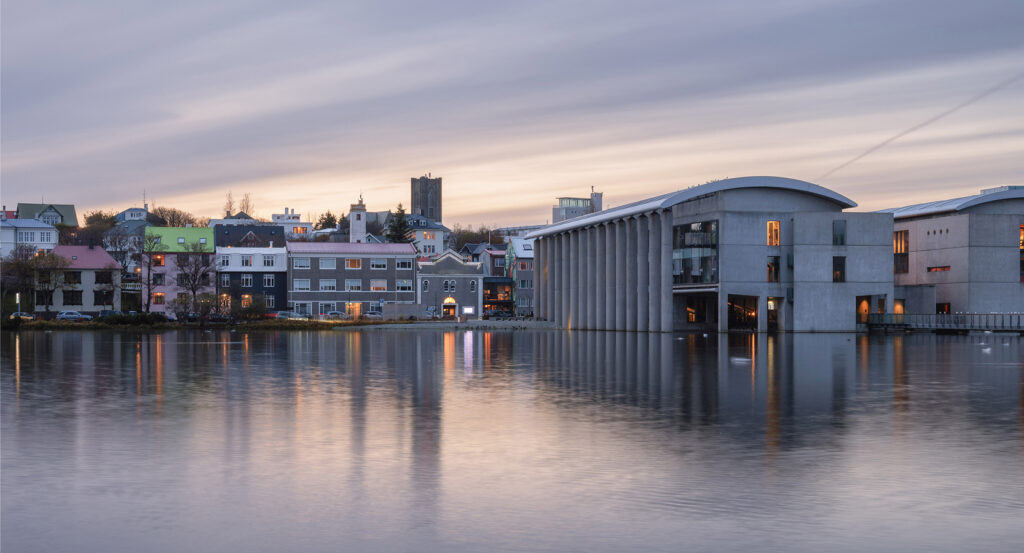
Completed in 1992 and designed by the architectural firm Studio Granda, this sleek, modern structure anchors the northern edge of Tjörnin Lake, blending architecture and nature in a way that feels almost mythic. Its concrete façade, softened by moss and water reflections, seems to rise directly from the lake's surface, a deliberate gesture toward harmony between city and environment. Step closer, and you'll notice how the building dissolves the boundary between indoors and outdoors: large glass walls frame sweeping views of the water and the distant Esja mountain range, while the sound of ducks and swans filters gently through the air. Inside, the atmosphere is bright and meditative, sunlight pouring through wide windows onto polished concrete and birchwood interiors that echo Iceland's design philosophy of simplicity and texture. The building's layout is equally inviting, housing both the mayor's offices and an open civic space that welcomes the public with art exhibits, cultural installations, and local gatherings. Unlike traditional city halls designed to impose authority, Reykjavík's feels human, democratic in the truest sense, a place that embraces transparency, beauty, and belonging. It's less a monument to power and more a conversation between people and place, between the manmade and the natural.
What defines Reykjavík City Hall.
The story of Reykjavík City Hall mirrors the Icelandic spirit, inventive, elegant, and profoundly connected to nature.
When Studio Granda won the design competition in the late 1980s, their vision broke sharply from the old European model of grand, intimidating civic buildings. Instead, they imagined a structure that belonged to Reykjavík, one that reflected the city's modest scale and its people's deep respect for the natural world. The result was a design that feels almost geological: the rough-textured concrete, produced from Icelandic volcanic aggregate, gives the exterior the same gray-black tone as the surrounding lava fields, while water literally laps against its walls. This connection to nature is more than aesthetic, it's philosophical. The architects intentionally preserved the lake's ecosystem, embedding walkways and terraces that allow visitors to experience the shifting reflections and seasonal changes up close. Inside, the lobby often doubles as a cultural hub, hosting art shows, musical performances, and political discussions that reflect Iceland's energetic civic life. One of the building's most iconic features is the massive three-dimensional relief map of Iceland displayed on the ground floor, a 1:50,000 scale model created from satellite data, inviting visitors to trace every fjord, glacier, and volcano with their fingertips. This model captures the essence of Icelandic identity, small in population but vast in imagination. Over the years, City Hall has become more than a government office; it's a gathering place where locals and travelers alike engage with Reykjavík's living culture. The structure's integration with Tjörnin Lake also turns it into a seasonal spectacle: in winter, the frozen lake becomes a natural skating rink reflecting the city's lights, while in summer, it teems with birds and wildflowers, turning the entire area into a natural amphitheater for civic life. Its sustainability-driven design, long before “green architecture” became mainstream, now stands as a quiet blueprint for cities that want to coexist gracefully with the natural world.
How Reykjavík City Hall fits.
To experience Reykjavík City Hall fully, think of it not as a destination, but as a rhythm in the city's daily heartbeat.
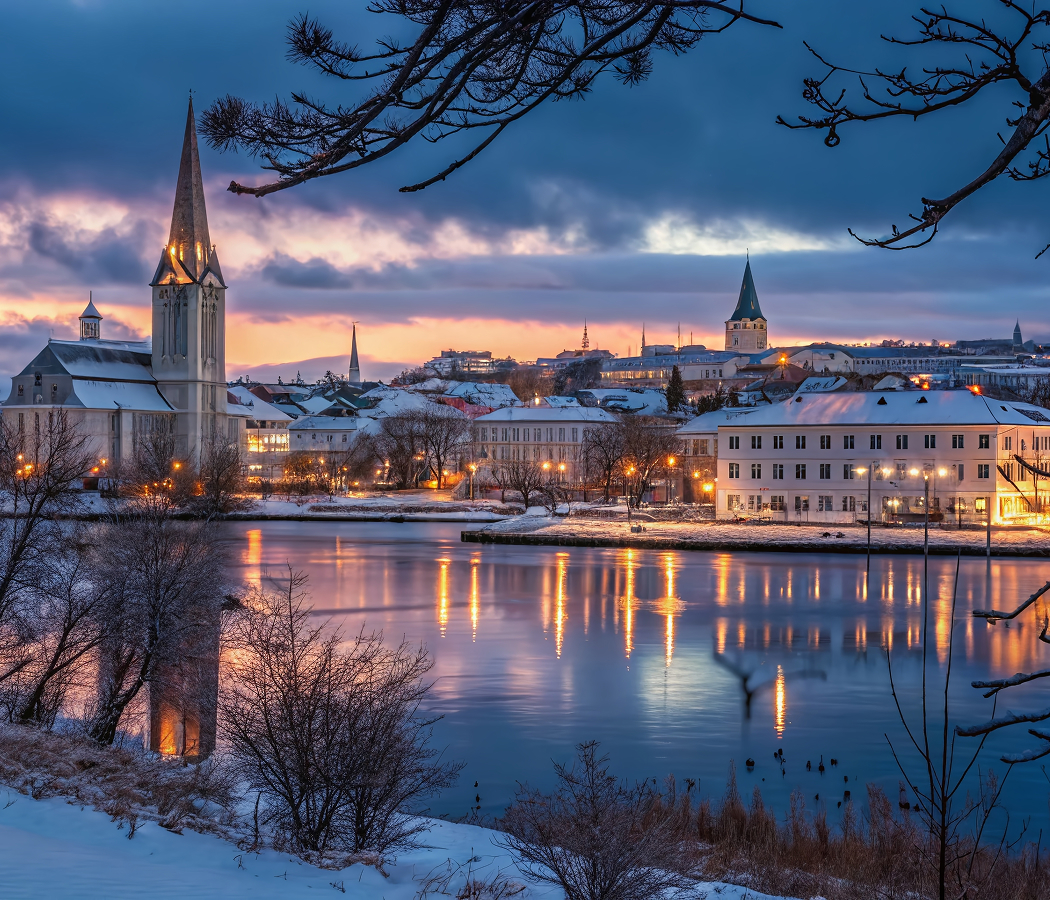
Start by approaching from the paths that wind around Tjörnin Lake, where the reflections of the building shimmer like glass over water. Take a moment to pause on the pedestrian bridge, the sightlines from here capture Reykjavík's blend of modernity and intimacy, the city's low skyline set against snow-dusted peaks in the distance. Step inside the main entrance and let your eyes adjust to the blend of concrete, glass, and light. The vast interior space opens up like a gallery, with contemporary art exhibitions that change throughout the year, often showcasing local Icelandic artists whose work channels the island's raw, elemental beauty. Make your way to the giant 3D relief map of Iceland, an extraordinary piece that encourages exploration and curiosity, a tactile introduction to the country's geography that makes you want to see every mountain and fjord in person. From there, grab a coffee at the small café inside or sit by the windows overlooking the lake, where swans glide by in slow motion. It's one of the most peaceful spots in Reykjavík, a front-row seat to the city's everyday poetry. Step outside afterward to stroll around Tjörnin's edge, where walking paths connect to nearby landmarks like the National Gallery of Iceland and Fríkirkjan church. In winter, bundle up and return at dusk, when City Hall's warm interior light glows like a lantern against the snow and the frozen lake reflects the aurora overhead. Few urban experiences capture the balance of civic life and natural wonder quite like this.
Where your story begins.
Foresyte Travel reveals places that feel extraordinary long before you arrive.
Enjoy editorial crafted for luxury travelers.
Foresyte may earn a commission when you book.