Why Zona Arqueológica de Cobá matters.
Zona Arqueológica de Cobá is an ancient Maya ceremonial city where Cobá's tropical forest and freshwater lagoons meet the political authority of a powerful Classic-period kingdom, an extensive network of elevated stone roads and the architectural achievements of one of the northern Yucatán Peninsula's largest pre-Hispanic settlements.
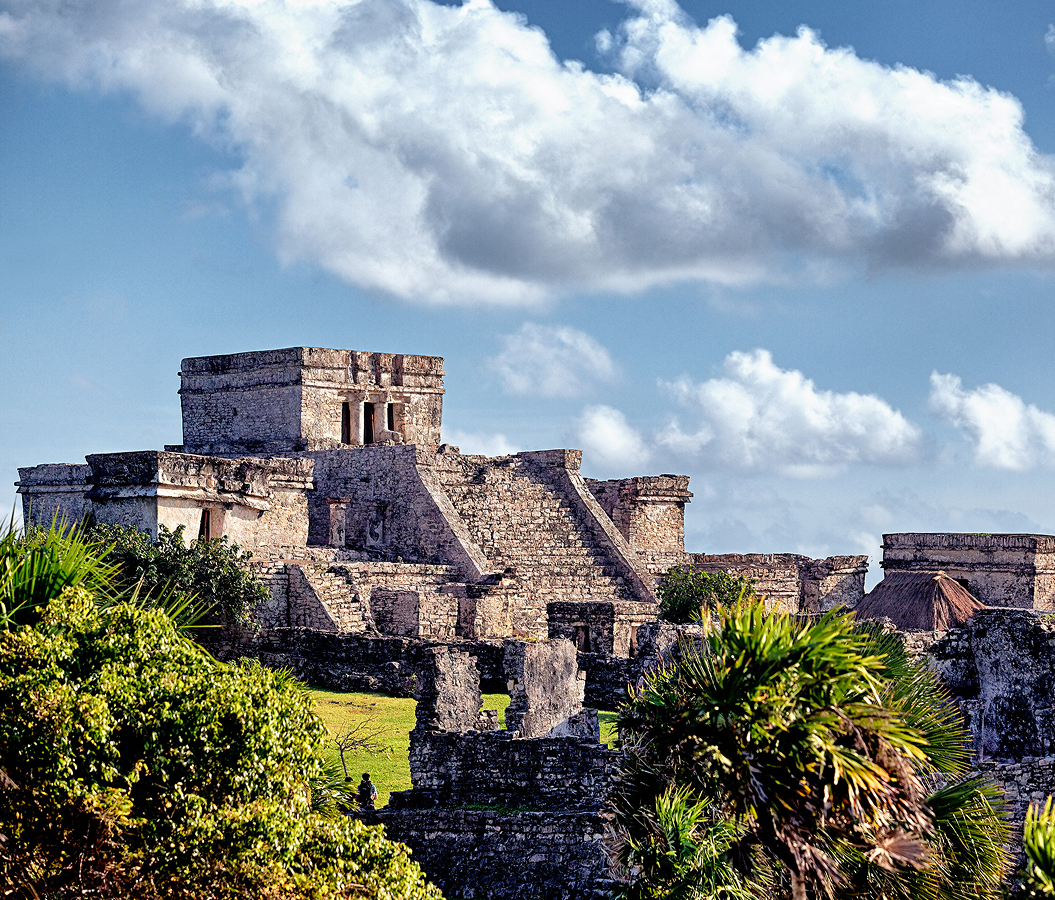
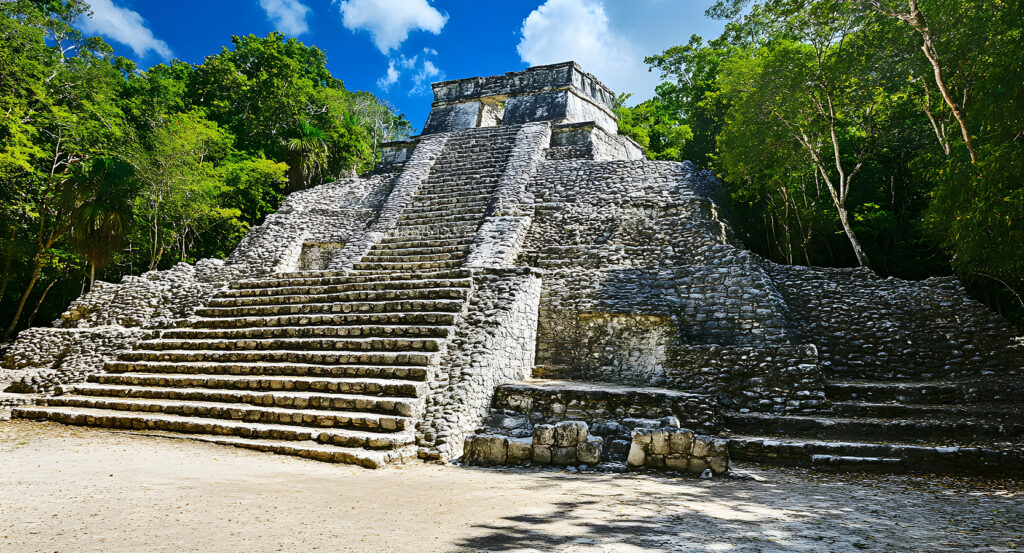
Situated inland from the Caribbean coast northwest of Tulum, the archaeological zone occupies a forested limestone landscape between Laguna Cobá and Laguna Macanxoc, with ancient ceremonial complexes distributed across an extensive network of raised stone roads connecting plazas, pyramids and residential groups beneath the tropical canopy. Steep temple staircases rise above clusters of vaulted masonry buildings, their weathered limestone surfaces emerging from dense vegetation that conceals substantial portions of the ancient settlement. Broad ceremonial plazas connect smaller platforms and residential structures, preserving the spatial organization of a city whose principal architectural groups extend across several kilometers. Seasonal wetlands, shallow depressions and surrounding lagoons establish a distinctive environmental setting within the otherwise porous limestone terrain of the northeastern Yucatán Peninsula. The result is an extensive archaeological landscape whose expansive architecture, sophisticated transportation network and intimate relationship with the surrounding forest preserve the material achievements of a major Maya political center.
What defines Zona Arqueológica de Cobá.
Zona Arqueológica de Cobá is best known for its extensive system of sacbeob, or elevated limestone roads, its imposing Nohoch Mul pyramid and its importance as a regional political power during the Classic period of Maya civilization. Archaeological evidence places the settlement's origins within the Late Preclassic period, with substantial urban development occurring during the early centuries of the Common Era. The city expanded significantly between 500 and 900 CE, establishing political and commercial connections across the northeastern Yucatán Peninsula. Its position near freshwater lagoons provided access to essential resources within a region where surface water is comparatively scarce. The surrounding landscape supported agricultural production, residential settlement and the movement of goods between inland communities and coastal trading routes. Cobá developed a complex political organization associated with dynastic rulers whose authority extended across a substantial network of dependent settlements. Carved stone monuments preserve dates, royal imagery and inscriptions associated with the city's political history. One of its most consequential rulers was Lady K'awiil Ajaw, a female sovereign associated with the city's seventh-century dynastic history and represented in its surviving sculptural record. Her prominence demonstrates the capacity of elite Maya women to exercise substantial political authority within certain Classic-period kingdoms. Cobá's rulers commissioned an extensive network of sacbeob linking ceremonial centers, residential districts and distant communities. The longest known route, Sacbe 1, extended 100 kilometers westward toward Yaxuná, establishing one of the most ambitious transportation connections constructed in the ancient Maya world. These roads consisted of elevated stone foundations finished with compacted limestone surfaces, creating durable routes across irregular terrain and seasonal lowlands. Their construction required substantial labor organization and demonstrated the political capacity of the city's ruling institutions. The road system facilitated the movement of people, goods and ceremonial processions across the surrounding region. Cobá maintained connections with major Maya centers, including Tikal, through broader political and commercial relationships during the Classic period. The growth of Chichén Itzá and changing regional political conditions subsequently altered the balance of power across the northern peninsula. Cobá's political influence diminished during the Terminal Classic and Postclassic periods, although portions of the settlement continued to be occupied and used for ceremonial purposes. Modern archaeological investigation gradually exposed the city's architectural complexes and inscriptions, establishing its importance for understanding Maya political organization, transportation infrastructure and regional history.
Nohoch Mul, whose name is commonly interpreted as great mound, forms the most imposing architectural complex within the archaeological zone. Its principal pyramid rises 42 meters above the surrounding terrain, making it among the tallest surviving Maya structures on the Yucatán Peninsula. The building incorporates a steep central staircase ascending toward a summit temple, with successive construction phases contributing to its present form. Its elevated position above the surrounding forest establishes a striking relationship between ceremonial architecture and the extensive lowland landscape. The Cobá Group contains substantial architectural remains associated with the city's principal ceremonial and administrative activities. Its structures include the Iglesia pyramid, a steep temple platform whose successive construction phases preserve evidence of prolonged religious use. Nearby plazas and smaller buildings demonstrate the organization of public ceremonial spaces within the urban center. The Macanxoc Group contains numerous carved stelae associated with dynastic commemoration and calendrical inscriptions. These monuments depict royal figures and preserve evidence of ceremonies, political authority and the historical events recorded by Maya scribes. Several stelae stand within arrangements of platforms and open spaces that supported public ritual activities. The Conjunto de las Pinturas preserves architectural remains associated with painted decoration and ceremonial practices, including structures containing traces of original surface treatments. Ballcourts within the archaeological zone demonstrate the importance of the Mesoamerican ballgame as a ceremonial and political institution. Their elongated playing alleys and surrounding masonry structures provided settings for ritual competition associated with elite authority and religious symbolism. Residential groups extend across the surrounding forest, revealing a settlement pattern considerably larger than the principal ceremonial precincts alone suggest. The city's architecture employed locally available limestone, with masonry cores, plastered surfaces and corbel-vaulted chambers characteristic of Maya construction techniques. Dense vegetation continues to surround substantial portions of the archaeological remains, creating a distinctive setting in which expansive buildings appear among mature tropical trees. Zona Arqueológica de Cobá's continuing significance rests in its preservation of Classic Maya political history, extensive infrastructure and the architectural organization of a major inland kingdom.
How Zona Arqueológica de Cobá fits.
Zona Arqueológica de Cobá works as the historical anchor for an eastern Yucatán outing connecting the region's ancient Maya settlements, freshwater geological formations and the protected tropical environments that shaped human occupation of the peninsula.
Begin at Cenote Choo-Ha, a subterranean freshwater pool situated near the Cobá settlement within the limestone terrain of the eastern Yucatán Peninsula. The cenote occupies an enclosed cavern reached by a descending staircase, with clear water extending beneath a ceiling decorated with stalactites and other mineral formations. Its underground chamber developed through the dissolution of limestone by groundwater, followed by prolonged mineral deposition during changing hydrological conditions. The enclosed setting preserves a striking example of the peninsula's extensive freshwater systems, whose underground reservoirs supported Maya communities in areas lacking permanent surface rivers. Continue to Cenote Tamcach-Ha, a deeper underground freshwater chamber located within the same regional network of limestone caverns. The cenote occupies a substantial enclosed space reached by a steep wooden staircase, with clear water filling the lower portion of the chamber. Its exposed rock surfaces and mineral formations preserve evidence of the geological processes that shaped the peninsula's underground drainage systems. The depth of the pool and the chamber's enclosed configuration distinguish it from shallower open-air cenotes. The surrounding landscape retains the tropical vegetation characteristic of the inland Cobá region, connecting the underground freshwater environment with the forested terrain above. Conclude at Punta Laguna Nature Reserve, the protected forest landscape situated northeast of Cobá near a freshwater lagoon. The reserve encompasses tropical woodland, wetlands and limestone terrain supporting a diverse assemblage of native wildlife. Its forests provide habitat for spider monkeys, whose movements through the upper canopy demonstrate the ecological importance of maintaining connected woodland environments. Local Maya communities participate in conservation and visitor activities, supporting the protection of the surrounding landscape and its cultural traditions. The lagoon and adjoining forest also contain archaeological remains associated with ancient Maya occupation, establishing a direct connection between the region's natural resources and its long settlement history. The progression moves from Cenote Choo-Ha's enclosed limestone chamber through Cenote Tamcach-Ha's deeper freshwater environment and culminates at Punta Laguna Nature Reserve's protected tropical forest, connecting Zona Arqueológica de Cobá with the geological and ecological landscapes that sustained the ancient Maya city.
Where your story begins.
Foresyte Travel reveals places that feel extraordinary long before you arrive.
Enjoy editorial crafted for luxury travelers.
Foresyte may earn a commission when you book.