Why you should experience Coptic Manuscripts at Coptic Museum in Cairo, Egypt.
Coptic Manuscripts at Coptic Museum in Old Cairo is a treasury of light and ink, where the earliest voices of Egyptian Christianity still whisper across the centuries.
Step inside its hushed chamber and you feel it immediately: the air itself hums with reverence. The manuscripts, resting behind glass in low amber light, are more than books, they are living relics, hand-lettered in black and red, each stroke shaped by devotion. Fragile parchment glows like candle flame; the scent of old vellum lingers in the stillness. Many of these works were written by monks in desert monasteries, their quills guided by faith and silence. Gospels, hymns, psalters, and apocryphal texts line the cases like constellations of thought, tracing the moment when the Egyptian language transformed into its Christian form, Coptic, the last echo of the ancient tongue of the Pharaohs. To walk this gallery is to listen to history breathe.
What you should know about Coptic Manuscripts at Coptic Museum.
Coptic Manuscripts at Coptic Museum at the museum holds one of the world's largest and most complete archives of early Christian writings, dating from the 4th to the 18th centuries CE.
It preserves over 1,200 manuscripts, written on papyrus, parchment, and leather, many of them illuminated with delicate miniatures in red, blue, and gold. These texts were copied in monastic scriptoriums such as those of Wadi al-Natrun, Bawit, and Saint Catherine's Monastery, where monks worked for months or years on a single volume. Among the collection's crown jewels are fragments of the Nag Hammadi codices, discovered in Upper Egypt in 1945, which include Gnostic writings like The Gospel of Thomas and The Apocryphon of John, once considered lost to time. Other treasures include early translations of the Gospels into Coptic dialects, psalters bound in leather and sewn with linen thread, and a complete 9th-century Book of Proverbs inscribed in black ink with ruby-red annotations marking sacred pauses. The manuscripts reveal not only theology but art: their illuminations fuse pharaonic lotus motifs with Byzantine iconography, bridging two worlds in color and form. Each bears the fingerprints of history, ink smudged by monastic hands, margins filled with notes and prayers in the flowing Sahidic and Bohairic scripts. The museum's conservation labs maintain a delicate balance of temperature and humidity to protect the fibers, ensuring that texts written under desert light will endure far beyond their authors' dreams. Together, they form an unbroken chain of memory, the intellectual and spiritual DNA of Christian Egypt.
How to fold Coptic Manuscripts at Coptic Museum into your trip.
Visiting Coptic Manuscripts at Coptic Museum is less like touring a museum and more like entering a monastery of words.
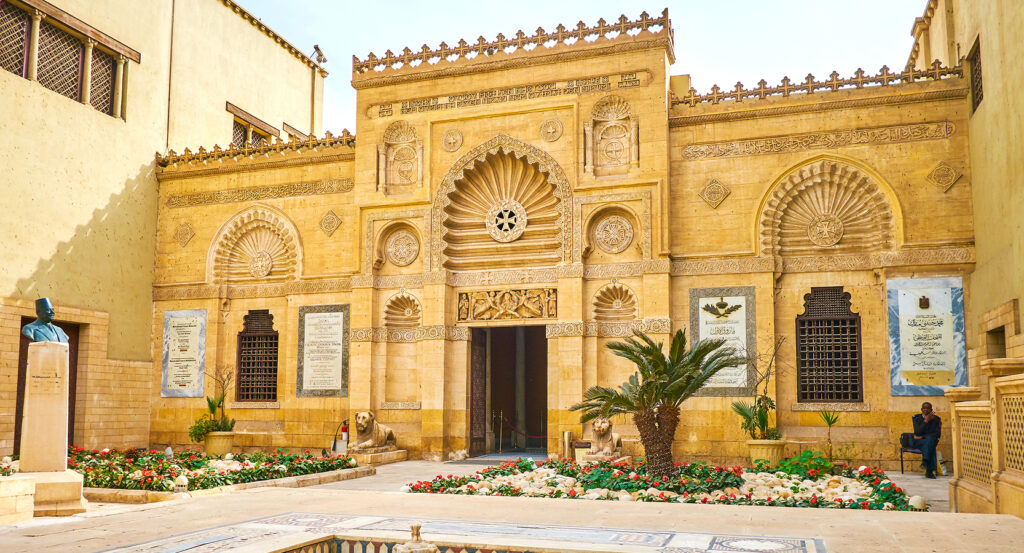
Plan the visit for the early morning, when the galleries are still and quiet, allowing time to move slowly through the display cases. Begin with the early papyrus fragments, whose faint letters reveal the birth of the Coptic script, then continue toward the richly illuminated parchment codices that trace the evolution of Egypt's Christian art. Allocate 45-60 minutes to truly absorb the depth of the collection, it's not about volume, but attention. Pause before the Nag Hammadi display, where the story of the desert monks who hid their books from heresy hunters unfolds in the dim light. Bring curiosity but also humility; photography is limited to preserve the fragile inks. Afterward, step into Coptic Museum's central courtyard, where palm fronds sway above carved wooden balconies, and let the sunlight reset your senses. From there, explore the nearby Church of the Holy Virgin (The Hanging Church) or Abu Serga, completing a circle that links scripture, sanctuary, and survival. When you leave, you'll carry something weightless yet indelible, the quiet awe of realizing that words, once inked by candlelight, can still illuminate the soul after a thousand years.
Where your story begins.
Foresyte Travel reveals places that feel extraordinary long before you arrive.
Experience premium editorial crafted for luxury travelers.