
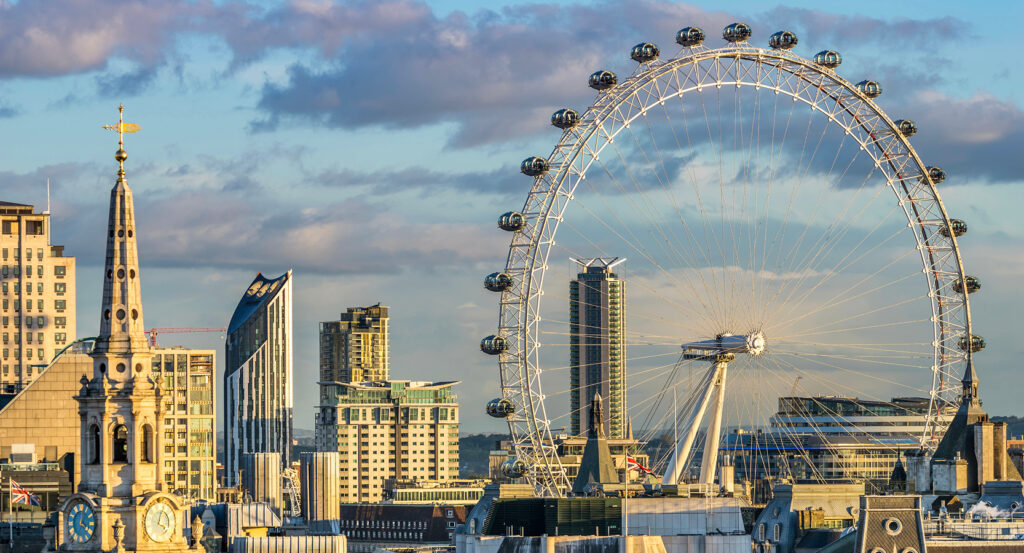
Why you should experience Crossharbour in London, England.
Crossharbour is a contemporary waterfront quarter where the Isle of Dogs' dockland heritage, financial transformation, residential growth, and Thames setting have reshaped one of East London's most distinctive riverside communities.
Positioned between Canary Wharf, Millwall, and Cubitt Town, this evolving enclave unfolds through waterfront promenades, modern residential buildings, dock basins, public squares, and transport connections that reflect the remarkable reinvention of London's former commercial docks. Historic waterways, landscaped public spaces, and striking skyline views continue defining a district where maritime history and contemporary city living exist side by side. The result is a London quarter where regeneration, engineering, and riverside life remain closely connected.
What you should know about Crossharbour.
Crossharbour is best known for occupying land once forming part of the West India Docks, opened in 1802 to designs by civil engineer William Jessop with consulting engineer Ralph Walker, creating one of the world's first enclosed commercial dock systems serving Britain's expanding maritime trade. The surrounding dock estate handled millions of tons of sugar, rum, coffee, spices, and other imports throughout the nineteenth century before commercial shipping declined after the Second World War and the docks closed in 1980. Regeneration accelerated following the establishment of the London Docklands Development Corporation in 1981, introducing extensive residential construction, new commercial districts, public waterfront access, and transport investment across the Isle of Dogs. Crossharbour DLR station opened in 1994 on the Docklands Light Railway extension to Lewisham, providing direct connections with Canary Wharf, Bank, Stratford, Greenwich, and London City Airport, while nearby Millwall Dock remains one of the largest surviving dock basins in London, preserving the maritime layout that defined the peninsula for almost two centuries.
Dock basins, pedestrian bridges, waterside walkways, and contemporary residential developments continue reflecting the district's transition from global port infrastructure to a thriving riverside community. Office districts, educational facilities, neighbourhood retail, and leisure amenities have expanded steadily alongside new housing while maintaining uninterrupted public access to the historic waterfront. Surviving dock geometry, engineering works, and riverfront landscapes preserve the physical structure of the former Port of London, allowing Crossharbour's maritime origins to remain visible throughout the district.
How to fold Crossharbour into your trip.
Crossharbour works as an exploration of London's dockland heritage, waterfront landscapes, and contemporary urban design.
Begin at Millwall Dock, where expansive dock waters, historic quays, and modern residential architecture introduce the maritime foundations of the Isle of Dogs. Continue along the Thames Path, where river panoramas, restored waterfronts, and views toward Greenwich and Canary Wharf reveal the scale of London's dockland transformation. Conclude at Mudchute Park and Farm, where open pasture, working farm buildings, and one of Europe's largest urban farms provide a peaceful finale contrasting with the surrounding skyline. The progression moves naturally from historic dock infrastructure to the Thames before concluding amid preserved open space, revealing why Crossharbour continues expressing the enduring relationship between London's river and its evolving urban landscape.
Where your story begins.
Foresyte Travel reveals places that feel extraordinary long before you arrive.
Experience premium editorial crafted for luxury travelers.














































































































