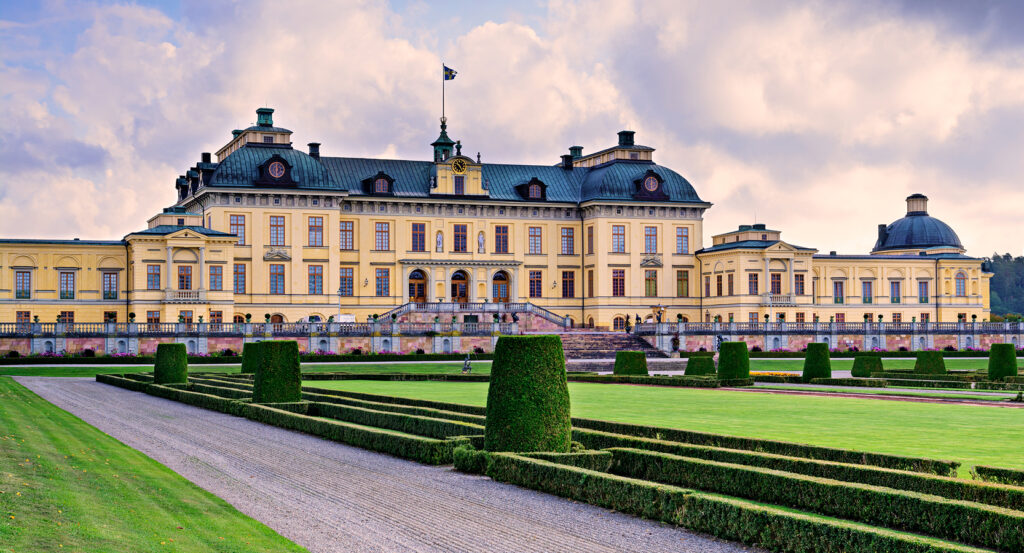
Why you should experience Drottningholm Palace Garden in Stockholm, Sweden.
The Baroque Gardens at Drottningholm Palace in Stockholm are a living symphony of symmetry and splendor, a royal vision rendered in green, marble, and air.
Stretching from the palace's grand terrace toward the shimmering waters of Lake Mälaren, these gardens are a triumph of 17th-century artistry, designed to reflect not just beauty but order, the harmony of nature shaped by the human hand. As you step onto the central axis, framed by rows of lime trees, the world seems to align with itself. Fountains leap skyward, mythological statues glimmer in the sun, and the intricate geometry of clipped hedges leads the eye toward infinity. This is where Sweden's royal court once strolled in powdered elegance, and yet it remains timeless, alive with the same serenity that inspired generations of kings, queens, and artists alike. Every path whispers the language of Baroque perfection, where control and grace meet in quiet equilibrium.
What you should know about Drottningholm Palace Garden.
Commissioned by Queen Hedvig Eleonora in the late 1600s, the gardens were designed by Nicodemus Tessin the Elder and his son, echoing the grandeur of Versailles while infusing a distinctly Swedish sensibility.
The layout follows a rigid axial plan, symbolizing the divine order that shaped both art and monarchy. The garden's sculptures, many cast in bronze from originals by French artist Adriaen de Vries, were seized as war trophies during Sweden's 17th-century campaigns and later displayed here as emblems of royal might. The cascading terraces and marble balustrades were intended to mirror the majesty of Drottningholm itself, creating a discussion between architecture and landscape. Few realize that beneath this precision lies resilience, through wars, neglect, and harsh winters, the gardens have endured, restored again and again by generations who refused to let their beauty fade. Today, they stand not as a fossil of aristocratic taste but as a living tribute to endurance and balance, each season reinterpreting the same divine geometry that first inspired their creation.
How to fold Drottningholm Palace Garden into your trip.
The best way to experience the Baroque Gardens is not to rush, they were designed to be walked, felt, and absorbed slowly.
Begin at the palace terrace, where the view stretches endlessly along the central axis, a perspective so perfect it feels painted. Move down the marble steps toward the Hercules Fountain, whose bronze figures gleam against the sky, then follow the gravel paths that fan outward through manicured hedges. Visit in late spring when the fountains flow and the air hums with life, or in autumn when the symmetry glows gold beneath the fading sun. If time allows, continue on toward the English and Chinese Gardens that frame the Baroque section, revealing how royal tastes evolved from formality to freedom over the centuries. Bring a picnic or simply pause by the reflecting pools to watch the clouds drift in mirrored harmony. The Baroque Gardens at Drottningholm Palace aren't merely a backdrop for beauty, they're an invitation to inhabit it, to stand in stillness within a landscape where time itself feels composed by design.
Where your story begins.
Foresyte Travel reveals places that feel extraordinary long before you arrive.
Experience premium editorial crafted for luxury travelers.