
Why Museo del Duomo matters.
Museo del Duomo is an absorbing cathedral museum where Duomo's ceremonial character meets six centuries of sculpture, architectural experimentation and craftsmanship preserved at close range inside Palazzo Reale.
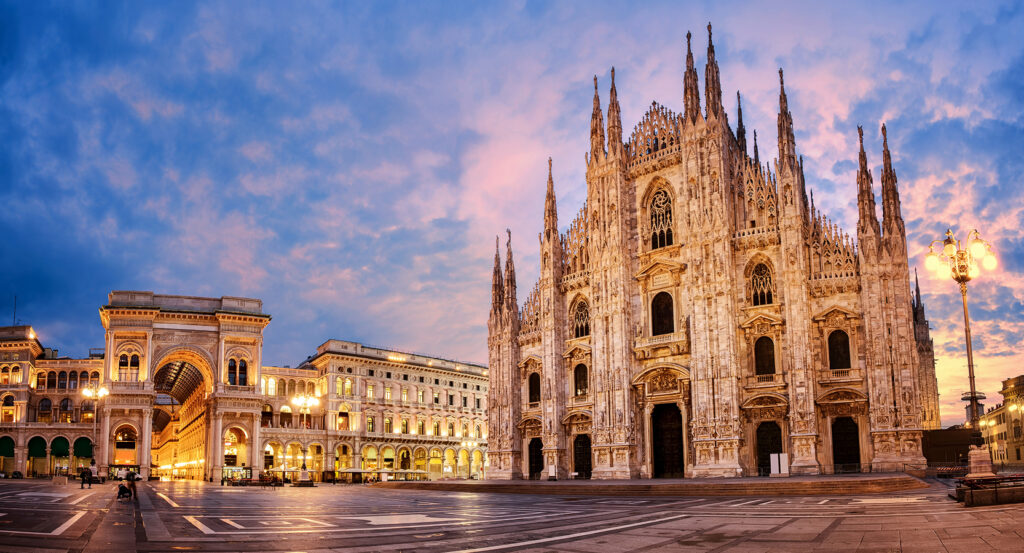
Set within Palazzo Reale along Piazza del Duomo near Via Carlo Maria Martini and just steps from Piazzetta Reale, the museum occupies the palace's ground-floor rooms where the cathedral's southern flank, Piermarini's Neoclassical court and the dense architectural ensemble surrounding the Duomo create one of Central Milan's most concentrated historic precincts. Galleries extend through more than 2,000 square meters inside rooms whose subdued interiors place medieval marble figures, stained glass and architectural models within direct view. The chronological route shifts repeatedly in scale, moving between intimate goldsmith work, full-size cathedral sculpture and the enormous wooden model developed across centuries of construction. Access through Palazzo Reale also places the collection within a building physically joined to San Gottardo in Corte, preserving connections between ducal Milan, the cathedral works and the later royal complex. The result is an unusually intimate encounter with a building otherwise experienced at immense scale, translating the Duomo's centuries of construction into individual objects whose carving, engineering and changing designs become visible from only a few feet away.
What defines Museo del Duomo.
Museo del Duomo is best known for preserving the artistic and architectural inheritance accumulated by the Veneranda Fabbrica del Duomo during more than six centuries of construction, replacement and restoration at Duomo di Milano. Gian Galeazzo Visconti established the Fabbrica in 1387 to direct the cathedral project and placed the Candoglia marble quarries at its disposal that October, creating the institution that still maintains both the monument and museum. Plans for a dedicated museum emerged during the late nineteenth century as sculpture and architectural components removed from the cathedral required a permanent setting. Palazzo Reale supplied that setting after the Second World War, when Ugo Nebbia worked with Fabbrica architect Adolfo Zacchi and Ferruccio Maspero of the Soprintendenza to organize the first rooms inside the palace's war-damaged ground floor. The museum opened on November 28, 1953, placing objects removed from the cathedral beside models and works that had guided or accompanied its construction. Expansion followed as conservation campaigns brought further sculpture into the collection, and Ernesto Brivio directed a larger historical and chronological installation opened in 1974. The museum closed during the early twenty-first-century renovation of Palazzo Reale before architect Guido Canali completely reconceived its galleries, with Cesare Joppolo directing the associated systems project. Reopening in 2013 introduced an installation that treated Palazzo Reale itself as part of the architectural encounter, creating sightlines intended to recover aspects of the palace's older form. The collection has continued growing through the replacement of deteriorated cathedral works, making the museum an extension of the restoration process carried out by the Fabbrica on the building outside. Its present holdings span sculpture, stained glass, paintings, tapestries, terracottas, plaster casts and architectural models, joining objects made for the cathedral with working instruments that reveal how successive generations conceived its changing form.
The Modellone provides the clearest physical account of how that centuries-long construction process translated design into three dimensions. Work on the vast wooden model began in 1519 and continued through 1891, allowing successive architects and the Fabbrica to test architectural proposals as the cathedral itself evolved. Built from linden, walnut and Swiss pine with fir additions, the structure reaches 5.25 meters in height, 4.18 meters in width and 7.90 meters in depth at a scale of 1:22. Giuseppe Bellora dismantled the entire structure during restoration between 1841 and 1846, repaired damaged portions and added the first two bays from the facade, the major spire, smaller spires, flying buttresses and other components. Its facade preserves Giuseppe Brentano's unrealized Neo-Gothic proposal of 1888, giving the model a configuration that diverges from the cathedral standing outside Palazzo Reale. The Modellone entered the museum with the 1953 opening and remains in the room devoted to wooden models. Other holdings extend the same design process across 335 sculptural models and five architectural models, alongside 181 sculptures, 38 stained-glass works, 34 objects from the cathedral treasury, paintings and textiles represented in the museum's digital catalogue. Sculpture removed from exposed positions on the cathedral enters this sequence beside preparatory works created before stone carving began, allowing finished, displaced and experimental objects to occupy the same chronological account. The Modellone anchors that relationship as a working object enlarged and revised for more than three and a half centuries, preserving architectural decisions that both entered the Duomo and disappeared from its eventual form.
How Museo del Duomo fits.
Museo del Duomo works as the anchor for a daytime exploration through the southern historic center using three nearby sites that move from Milan's medieval seat of government through a Visconti palatine chapel into Federico Borromeo's seventeenth-century union of library and art collection.
Begin at Palazzo Reale, whose long development places the museum inside architecture that predates its collection by centuries. The medieval Palazzo del Broletto functioned as Milan's governmental center before Visconti rule enlarged the residence, and Spanish governors later added a court theater in 1594. Habsburg reconstruction brought Giuseppe Piermarini to the palace during the 1770s after Luigi Vanvitelli's proposal for complete replacement proved too costly. Piermarini demolished the entrance wing, opened the former principal courtyard toward the cathedral, rebuilt the facade and created the Scalone d'Onore, working with figures including Giocondo Albertolli and Giuseppe Maggiolini as the complex acquired its Neoclassical form. Napoleonic occupation brought further work by Luigi Canonica and Giacomo Tazzini, extending a palace whose changing architecture followed successive governments of Milan. Continue to San Gottardo in Corte, built in 1336 as Azzone Visconti's palatine chapel from a design by Francesco Pecorari. Its pink terracotta campanile carries white marble corner columns and once held Milan's first public clock, whose bell marked the twenty-four hours and gave the surrounding territory the name Contrada delle Ore. Azzone's funerary monument survives inside alongside Cerano's Saint Charles in Glory, and a Crucifixion connected with the Giotto school was discovered at the campanile base in 1926 before transfer into the church in 1953. Piermarini's transformation of Palazzo Reale sacrificed the original facade and absorbed the chapel more tightly into the palace complex, leaving Pecorari's tower as the strongest exterior survival of the Visconti court. Conclude at Pinacoteca Ambrosiana, founded in April 1618 when Cardinal Federico Borromeo donated his paintings, sculptures and drawings to the Pinacoteca Ambrosiana he had established in 1607 and opened to the public in 1609. Borromeo conceived the art collection as an educational complement to the library, bringing paintings by Caravaggio, Raphael, Botticelli and Titian into an institution intended to connect visual art with scholarship. Raphael's immense preparatory cartoon for The School of Athens and Leonardo da Vinci's Portrait of a Musician now join the Federiciana hall housing the Codex Atlanticus, extending the institution from Borromeo's original collection into one of Milan's deepest concentrations of Renaissance art and scholarship. The progression moves from Piermarini's reconstruction of Milan's governmental palace through Pecorari's surviving Visconti chapel into Federico Borromeo's union of books, drawings and paintings at the Ambrosiana, connecting three institutions that preserve successive concentrations of political, religious and artistic patronage around the cathedral district.
Where your story begins.
Foresyte Travel reveals places that feel extraordinary long before you arrive.
Enjoy editorial crafted for luxury travelers.
Foresyte may earn a commission when you book.




















































































































