
Why Enfants-Rouges matters.
Enfants-Rouges is an intimate enclave where the northern Marais meets old Temple territory through courtyard houses, inherited commercial streets and a dense urban fabric shaped by charitable institutions, neighborhood trade and centuries of construction beyond medieval Paris.
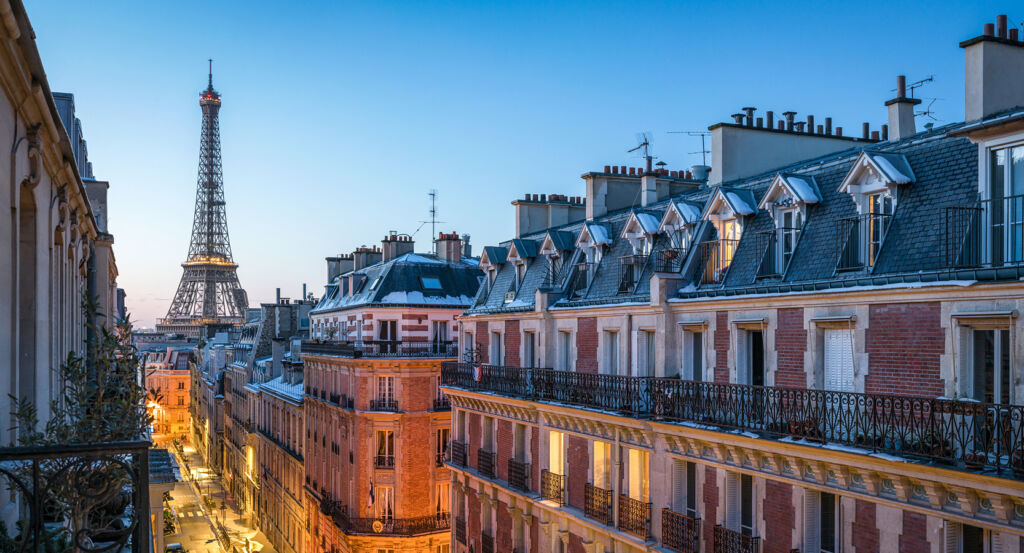
Positioned between République, Arts-et-Métiers, and the Central Marais, the neighborhood occupies a compact Right Bank pocket where Rue de Bretagne, Rue Charlot and Rue de Turenne cross the historic territory extending south from the former Temple enclosure. Narrow streets and deep parcels produce repeated sequences of stone facades, carriage entrances and interior courts, with seventeenth and eighteenth-century houses woven into later residential construction across blocks that retain an unusually fine grain. Rue de Bretagne establishes the primary encounter through a broad commercial spine where food shops, cafés and street activity concentrate around one of the oldest surviving market sites in Paris. Rue Charlot deepens the physical character through quieter facades and former private residences that preserve the residential scale acquired as the Marais expanded northward during the seventeenth century. Smaller streets including Rue de Beauce and Rue Dupetit-Thouars tighten the geography again, creating abrupt transitions between market activity, former institutional ground and the edges of the old Temple domain. The result is a neighborhood where charitable history, commerce and inherited urban form remain compressed within a remarkably walkable pocket, preparing an account that begins with the sixteenth-century institution whose red-clad children supplied Enfants-Rouges with its enduring name.
What defines Enfants-Rouges.
Enfants-Rouges is best known for taking its name from the hospice founded in 1536 by Marguerite de Navarre, sister of François I, for orphaned children who wore red clothing as a sign of Christian charity. The institution occupied ground on present-day Rue des Archives and gave the surrounding territory a durable association with the children long after the hospice closed in 1772. A second institution emerged nearby in 1615 when a food market opened under the name Petit Marché du Marais, serving a quarter whose population was expanding as aristocratic and residential development pushed north through the Marais. The market also became known as Marché de Beauce before adopting the Enfants-Rouges name in memory of the vanished hospice toward the end of the eighteenth century. Its covered stalls sustained neighborhood commerce across subsequent changes to the district, and the City of Paris acquired the property in 1912. Closure during the 1990s placed the site under threat from a parking project before preservation returned it to market use. The market had already received historic protection in 1982, giving the neighborhood a surviving commercial institution whose four centuries connect early Bourbon Paris with the present street pattern around Rue de Bretagne.
The Temple supplied a separate historical mechanism for shaping the territory immediately north and west of the neighborhood. The Knights Templar established themselves in this part of Paris by the early thirteenth century, developing an immense fortified enclosure beyond the denser medieval city. Its components eventually included conventual buildings, gardens, a cemetery, church, Tour de César, Grand Priory palace and the great keep erected 1265 under Louis IX, creating a semi-autonomous compound whose physical scale governed development around it. The order's suppression in the early fourteenth century transferred the domain to the Knights Hospitaller, allowing the enclosure to survive under a new institutional regime for centuries. Jacques de Souvré commissioned a new Grand Priory palace from plans by Delisle in 1630, inserting seventeenth-century architecture into the inherited medieval compound as surrounding streets grew denser. Revolutionary seizure broke that continuity, and plans from 1790 already show proposed streets and demolition across the enclosure. Rue des Archives was later extended north after destruction of the Enfants-Rouges hospice, further absorbing former institutional ground into the surrounding street network and helping create the dense northern Marais encountered around Enfants-Rouges.
How Enfants-Rouges fits.
Enfants-Rouges works as the anchor for an afternoon connecting a financier's seventeenth-century mansion, a Renaissance residence remade into Paris's historical museum and a princely estate whose architecture followed the rise of one of France's great aristocratic families.
Begin at Musée Picasso, occupying the Hôtel Salé built for Pierre Aubert de Fontenay after his work collecting the royal salt tax elevated his fortune and supplied the mansion with its enduring nickname. Aubert purchased a 3,700-square-meter property from the religious community of Saint-Anastase for 40,000 livres in 1656 and selected Jean Boullier de Bourges to design the residence; later occupants ranged from the Venetian embassy to the École centrale des arts et manufactures before the City acquired the building in 1962, and the Picasso collection arrived after the state selected the mansion in 1974 following the artist's death. Continue to Musée Carnavalet, where Jacques des Ligneris commissioned one of the Marais's earliest surviving Renaissance hôtels particuliers between 1548 and 1560 before François Mansart raised its Rue de Sévigné entrance and added two wings beginning in 1660. Madame de Sévigné lived there from 1677 into the 1690s, and the City purchased the property in 1866 for a museum devoted to Paris; opening followed in 1880, with later expansion incorporating architectural fragments salvaged from demolished buildings alongside the adjoining Hôtel Le Peletier de Saint-Fargeau. Conclude at Hôtel de Soubise, where François de Rohan-Soubise and Anne Chabot acquired the former Hôtel de Guise in 1700 and commissioned Pierre Alexis Delamair to build its sweeping cour d'honneur between 1705 and 1708. Germain Boffrand added the oval pavilion from 1735 and assembled François Boucher, Charles Natoire, Jean-Baptiste II Lemoyne and Jacques Verberckt for the rocaille interiors; Napoleon acquired the palace in 1808 for the Archives de l'Empire, and construction of the Grands Dépôts from 1838 to 1880 carried the property from aristocratic residence into a purpose-built national archival complex. The progression moves from Aubert and Boullier translating seventeenth-century financial ascent into private architecture through a Renaissance residence becoming Paris's historical museum into Delamair and Boffrand building a princely palace later absorbed by the state, tracing three distinct mechanisms through which the Marais converted private wealth and status into enduring cultural institutions.
Where your story begins.
Foresyte Travel reveals places that feel extraordinary long before you arrive.
Experience premium editorial crafted for luxury travelers.
Foresyte Travel may earn a commission when you book through the link on this page.














































































































