Why Ferraro's Restaurant & Bar matters.
Ferraro's Restaurant & Bar is an oceanfront Italian restaurant where Wailea's luxury hospitality culture meets the culinary traditions of coastal Italy, Maui's Pacific seafood and the architectural evolution of one of South Maui's established beachfront dining destinations.
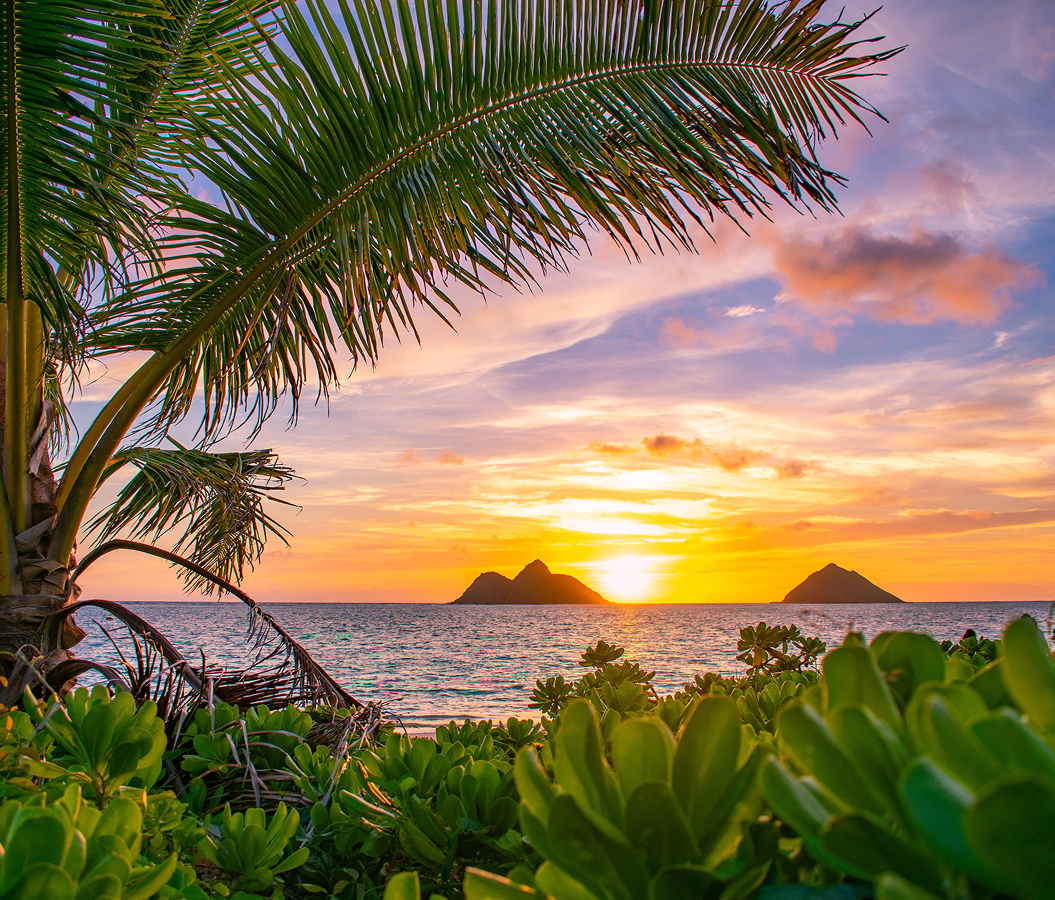
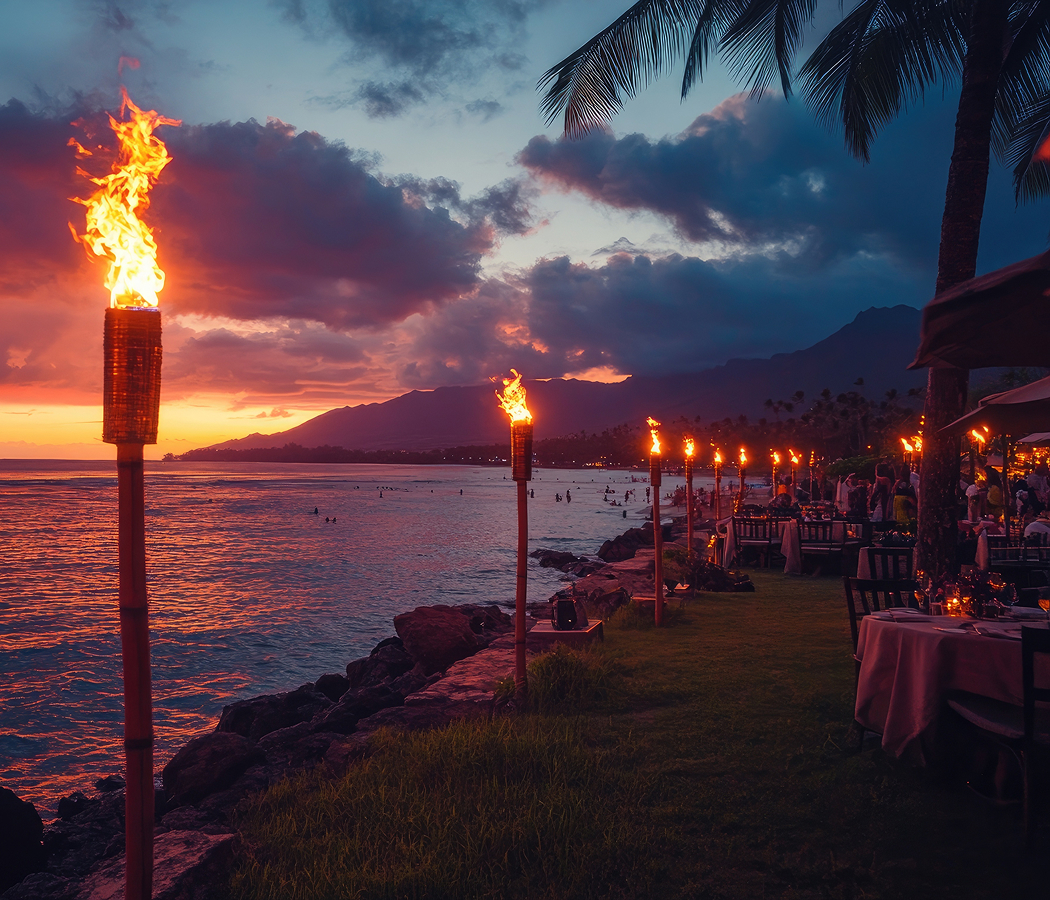
Occupying the oceanfront terrace of Four Seasons Resort Maui above Wailea Beach, Ferraro's stands between the resort's landscaped pool grounds and the Wailea Beach Path, south of Grand Wailea and north of Wailea Point, with Kahoʻolawe and Molokini across the Pacific. The open-air restaurant extends across several interconnected dining terraces, with a custom teak trellis linking the principal patio, bar and piazza. A three-sided bar incorporates a marble countertop, decorative tilework and an inset bronze mirror positioned to capture the changing light over the ocean. Handcrafted ivory and indigo ceramic tiles introduce colors associated with Maui's coastal landscape, and navy-upholstered seating establishes a residential character along the southern perimeter. Tropical planting softens the transitions between the dining spaces and surrounding resort gardens, and unobstructed western views connect the terraces to the offshore islands. The result is a sophisticated beachfront restaurant whose open architecture, carefully composed terraces and Pacific outlook establish a distinctive setting for contemporary Italian dining.
What defines Ferraro's Restaurant & Bar.
Ferraro's Restaurant & Bar is best known for its development as the signature oceanfront Italian restaurant at Four Seasons Resort Maui, whose opening in 1990 introduced a major international luxury hospitality property to the emerging Wailea resort district. The resort was developed by Four Seasons in partnership with Japanese investors during a period of substantial international investment in South Maui's hotel industry. Its beachfront restaurant became an established part of the property's dining program, developing a reputation for Italian cooking served in an open-air setting overlooking the Pacific. The restaurant operated for almost three decades before a comprehensive redesign introduced a new architectural and culinary direction in late 2023. Four Seasons commissioned Studio Collective, the Venice, California-based hospitality design practice, to undertake the transformation, bringing contemporary restaurant design expertise to the established oceanfront property. Adam Goldstein, a partner and design director at Studio Collective, led the design approach, emphasizing stronger connections between the dining terraces, surrounding resort and natural landscape. The project included a substantial reorganization of the restaurant's principal spaces, creating a more unified relationship between its outdoor dining areas and central bar. Studio Collective collaborated with local craftspeople and incorporated decorative elements inspired by Maui's coastal environment, establishing a contemporary interpretation of Italian seaside hospitality within the Hawaiian setting. The renovation required three months and concluded with the restaurant's reopening on December 16, 2023. A formal unveiling followed on January 18, 2024, establishing the redesigned restaurant as a major new chapter in the resort's culinary development. Chef Russell Rummer assumed responsibility for the restaurant's revised culinary direction, drawing on his professional background in American restaurants specializing in Italian cuisine. Born in Cleveland, Ohio, Rummer studied at Ohio State University and Johnson & Wales University before developing his cooking career in prominent kitchens across California. His professional experience included San Francisco's Delfina, the acclaimed Italian restaurant associated with Craig and Annie Stoll, and Absinthe, where he trained under chef Traci Des Jardins. Additional appointments at Seneca Trattoria and True Food Kitchen in San Diego expanded his experience across traditional Italian cooking and contemporary American restaurant operations. Rummer traveled repeatedly to Naples to study regional Italian cooking, developing a particular interest in the techniques and food culture of southern Italy. He joined Four Seasons Resort Maui in 2022, bringing that professional background to the property's restaurant team. Executive Chef Ryan Schelling, whose Four Seasons career began in Washington, D.C., in 2006, collaborated with Rummer on the revised culinary program. Their work established a coastal Italian menu centered on Hawaiian seafood, handmade pasta and seasonal produce, connecting the restaurant's established European culinary character to ingredients sourced from the surrounding islands. Beverage Director Aaron-Wood Snyderman developed a complementary Italian-inspired cocktail and spirits program emphasizing amaro, regional wines and contemporary aperitivo preparations. The renovation also introduced a redesigned 192-seat dining environment, providing additional flexibility for formal dinners, casual gatherings and bar service. In 2025, Ferraro's received Wine Spectator's Award of Excellence, recognizing the restaurant's wine program and its relationship with the broader culinary offering. The restaurant's development connects the international expansion of luxury hospitality in Wailea with contemporary American Italian cooking, specialized restaurant design and the continuing evolution of Maui's oceanfront dining culture.
Russell Rummer's culinary direction centers on the relationship between Italian coastal cooking techniques and the seafood, vegetables and agricultural products of the Hawaiian Islands. His approach begins with the natural flavor of fresh fish, using acidity, aromatic oils and carefully balanced seasonings to develop preparations that retain the character of their principal ingredients. Hawaiian kampachi provides an example through a crudo preparation that combines delicate raw fish with lemon salsa, watermelon radish and Calabrian chili. The citrus sharpens the fish's natural richness, and the chili introduces a measured warmth that develops after the initial brightness of the preparation. Cucumber acqua pazza adds a fresh, lightly seasoned element, connecting the crudo to the southern Italian tradition of preparing seafood with aromatic liquids. The kitchen extends this approach through its treatment of handmade pasta, where dough preparation and careful cooking determine the texture and ability of each shape to carry sauce. Squid ink pasta introduces a subtle marine character and distinctive dark color, establishing a foundation for Kona lobster and a concentrated tomato-based sauce. The lobster contributes natural sweetness, and the sauce develops a complementary acidity that prevents the seafood's richness from overwhelming the pasta. Whole Hawaiian fish preparations explore a different relationship between seafood and heat through roasting, allowing the skin to develop a firmer exterior as the flesh retains moisture. The resulting contrast between browned surface and tender interior demonstrates the importance of controlled cooking temperatures in the restaurant's seafood program. Rummer's treatment of vegetables follows the same attention to texture and concentrated flavor, with roasted Kula carrots developing natural sweetness through caramelization. The restaurant's bread program introduces another connection to southern Italy through puccia, a traditional bread associated with the Salento region of Puglia. Its crisp exterior and soft interior provide a foundation for accompanying preparations, including seaweed butter and roasted garlic, bringing a Hawaiian marine ingredient into a recognizable Italian bread service. The dining program also incorporates family-style service through Festa da Ferraro's, allowing several preparations to be shared across the table in the tradition of extended Italian meals. This arrangement gives contrasting dishes a complementary relationship, with seafood, vegetables, pasta and roasted preparations contributing different textures and intensities to the meal. Aaron-Wood Snyderman's beverage program develops the Italian aperitivo tradition through spritzes, herbal spirits and amaro, connecting the opening stages of a meal to the bittersweet flavors associated with Italian drinking culture. A dedicated amaro selection distinguishes herbaceous, bitter and sweet styles, demonstrating the range of botanical ingredients and production methods used in these traditional digestifs. The Pasta Water Martini introduces a distinctive technical variation by incorporating water from handmade pasta preparation, using its dissolved starch to create a smoother cocktail texture. A clarified Piemonte Sour develops another relationship between Italian wine and contemporary mixology through a float of Barbera d'Asti. The restaurant's Golden Hour service establishes a transition between afternoon aperitifs and evening dining, with the changing western light contributing to the gradual development of the meal. Ferraro's culinary distinction rests on this coordinated approach to coastal Italian cooking, Hawaiian ingredients, handmade pasta and specialized beverage preparation, creating a restaurant whose food and service sustain a clear connection to the leisurely dining traditions of the Mediterranean.
How Ferraro's Restaurant & Bar fits.
Ferraro's Restaurant & Bar works as the starting point for an exploration connecting Wailea's celebrated sandy shoreline, the volcanic geography of South Maui and the preservation of public coastal access within the island's principal luxury resort district.
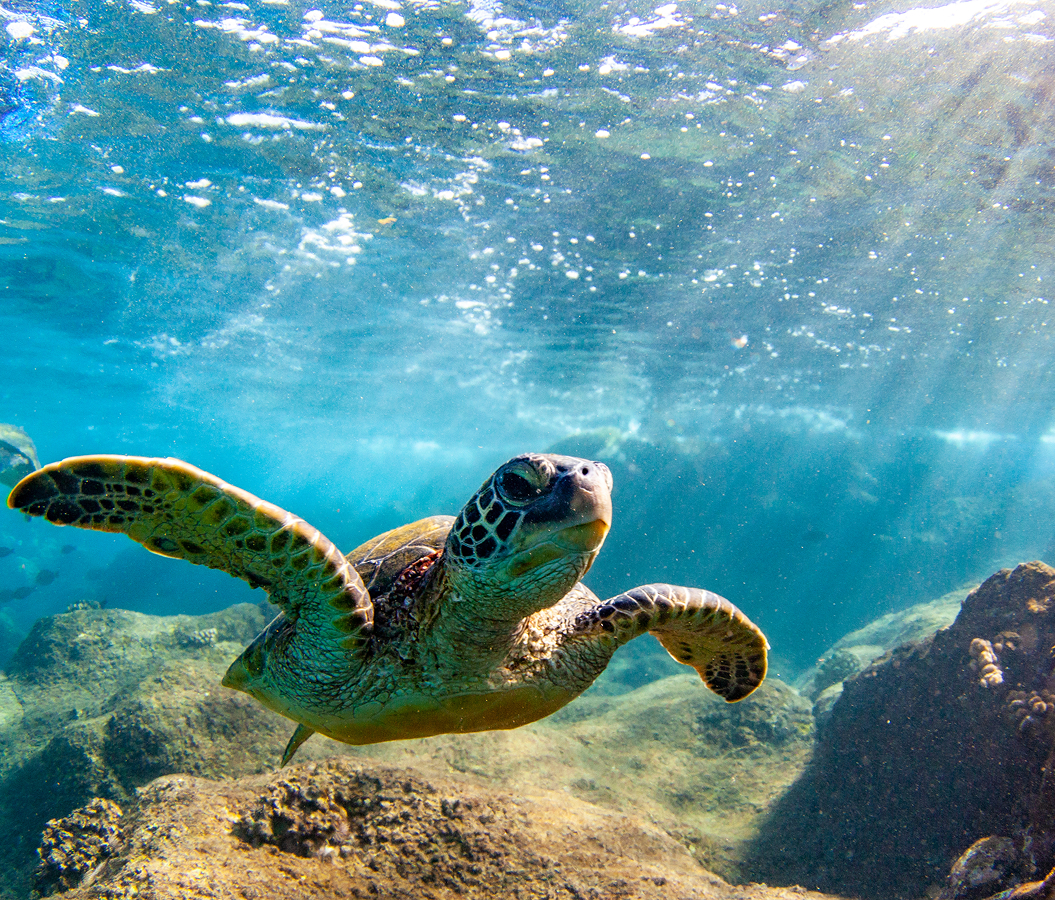
Begin at Wailea Beach, the broad crescent of pale sand extending between Grand Wailea and Four Seasons Resort Maui. Its shoreline occupies a sheltered bay enclosed by volcanic headlands, with clear Pacific waters extending toward offshore reef formations near the rocky margins. The sand contains fragments of coral, shells and other marine organisms, producing the pale coloration that contrasts with the surrounding basalt. The beach forms part of Hawaiʻi's public shoreline system, maintaining access independently of the adjacent hotel properties. Seasonal south swells change the character of the bay, introducing stronger surf and nearshore currents during periods of increased wave activity. Its western orientation provides extensive views toward Kahoʻolawe and the partially submerged volcanic crater of Molokini. Continue to Wailea Point, the rocky promontory separating the principal Wailea shoreline from the smaller bays extending south toward Polo Beach. Ancient lava flows created the exposed basalt formations that define the headland, with marine erosion subsequently shaping its irregular shoreline. The Wailea Beach Path crosses the elevated coastal terrain, connecting landscaped resort grounds with public oceanfront viewpoints. Offshore waters support reef fish and Hawaiian green sea turtles, whose feeding grounds include the rocky marine environments surrounding South Maui's volcanic headlands. During the winter breeding season, humpback whales migrate into the channels surrounding Maui, and the promontory provides a vantage point across their offshore habitat. The headland's position also establishes a clear geographical relationship between Wailea's adjoining beaches and the volcanic formations that separate them. Conclude at Polo Beach, the public sandy cove fronting Fairmont Kea Lani at the southern end of Wailea's central resort shoreline. The beach consists of adjoining sandy sections separated by a small rocky formation, with additional lava outcrops defining its outer boundaries. Its traditional Hawaiian name, Ke One o Polo, preserves an association with the coastal geography that preceded modern resort development. A public beach park provides parking, restrooms, outdoor showers and picnic facilities, supporting recreational use beyond the surrounding hotels. The sandy central sections provide access to swimming during favorable ocean conditions, and the rocky margins contain marine habitats supporting reef fish and other coastal organisms. The surrounding shoreline also demonstrates the importance of preserving public access within a developed resort district, connecting coastal recreation with the broader environmental character of South Maui. The progression moves from Wailea Beach's broad sandy crescent through Wailea Point's volcanic headland and culminates in Polo Beach's sheltered public shoreline, connecting the natural formations and coastal access traditions that distinguish southwestern Maui.
Where your story begins.
Foresyte Travel reveals places that feel extraordinary long before you arrive.
Enjoy editorial crafted for luxury travelers.
Foresyte may earn a commission when you book.