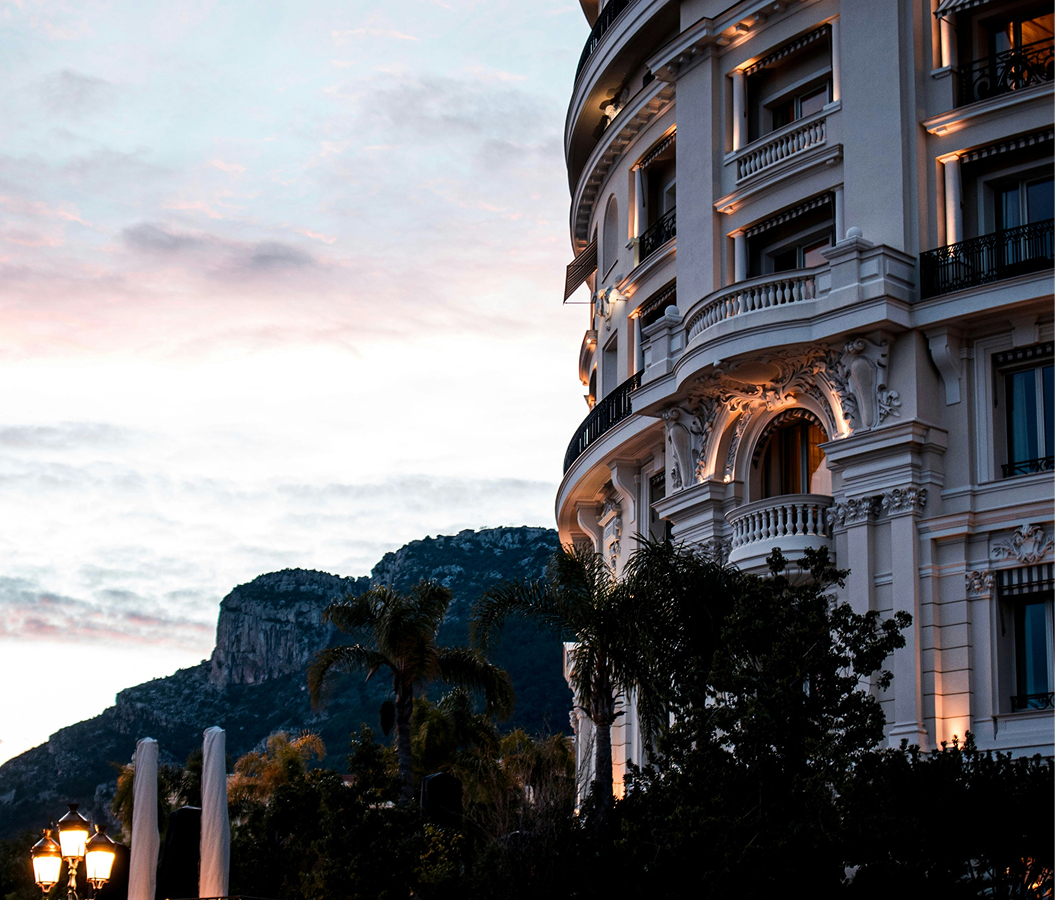
Why Fondazione Luigi Rovati matters.
Fondazione Luigi Rovati is an inventive art museum where Porta Venezia's patrician architecture, Milanese collecting culture, Etruscan antiquity and contemporary design converge inside a nineteenth-century palazzo radically extended beneath the ground.
Set along Corso Venezia near Via Palestro and just steps from Giardini Indro Montanelli, the museum occupies an aristocratic corridor developed beside Milan's first public gardens, where Giuseppe Piermarini's late eighteenth-century landscape helped draw villas and palazzi toward the former eastern edge of the city before successive generations transformed Corso Venezia into a showcase of Neoclassical and Liberty architecture. A stone stair descends into curving subterranean chambers lined with blue-gray Tuscan stone, placing Etruscan objects inside spaces whose domed geometry recalls ancient tomb architecture. Upstairs, restored woodwork, gilded doors, marble fireplaces and tall mirrors return the experience to the nineteenth-century residence before ancient objects meet works by artists including Pablo Picasso, Lucio Fontana and William Kentridge. The result is an art museum where the descent from Corso Venezia into an imagined Etruscan underworld and the ascent into a restored Milanese palazzo turn architecture itself into part of the encounter between antiquity and modern art.
What defines Fondazione Luigi Rovati.
Fondazione Luigi Rovati is best known for converting Palazzo Bocconi-Rizzoli-Carraro into an art museum centered on one of Milan's significant collections of Etruscan and Italic antiquities. The collection reached the scale required for a museum after the Rovati family acquired the Cottier Angeli collection in 2016, a group assembled in Geneva over four decades and containing 700 pieces of impasto pottery and bucchero. Further acquisitions brought the Cambi collection, which combines objects descending from several Etruscan collections formed during the eighteenth and nineteenth centuries, followed by the Cremonini collection of more than 700 objects and other groups that expanded the holdings to 5,000 antiquities. Among its exceptional objects is a nearly life-size terracotta Hercules from the fifth to fourth century BCE retaining traces of original polychromy, alongside a marble figured cippus from the first half of the second century BCE that had already appeared in Thomas Dempster's De Etruria Regali in 1723. The collection also contains a sixth-century BCE canopic urn from Chiusi and the Cernuschi Warrior, a votive bronze once owned by Enrico Cernuschi, the banker, economist and collector who participated in Milan's Five Days uprising of 1848. More than 250 ancient, modern and contemporary works occupy 850 square meters of exhibition space, with Etruscan objects joined by Picasso, Giacometti, Fontana and other twentieth-century artists. A private collection assembled through several distinct collecting histories became the foundation for a museum spanning Etruscan civilization, nineteenth-century antiquarianism and modern art.
Mario Cucinella transformed the collection's architectural setting through a seven-year project that culminated with the museum's public opening on September 7, 2022. The palazzo itself dates to 1871, when the Prince of Piombino replaced earlier structures on the site, and subsequently belonged to Donna Javotte Manca di Villahermosa, widow of Senator Ettore Bocconi, before Giuseppina Rizzoli acquired it in 1958. Ferdinando Reggiori and Filippo Perego undertook a major reconstruction for the Rizzoli family in 1960, with Reggiori changing the building's morphology and internal facade as Perego restored its nineteenth-century character and redesigned selected rooms. Cucinella's intervention began in 2016 and preserved the protected street facade while excavating beneath the standing palazzo to create a new hypogeum and another subterranean level, at one stage supporting the historic superstructure on temporary foundations above the excavation. Three circular chambers and one elliptical chamber were formed beneath the residence and lined with pietra forte fiorentina from Firenzuola, translating the spatial character of the Etruscan tombs at Cerveteri into a distinctly contemporary architecture. The completed project received the 2024 Compasso d'Oro ADI for exhibition design after earlier architecture distinctions and nominations, placing the museum itself among the most decorated recent cultural interiors in Milan. An 1871 residence, a 1960 reconstruction and Cucinella's subterranean intervention now coexist as three architectural eras wrapped around a collection whose own chronology extends back more than two millennia.
How Fondazione Luigi Rovati fits.
Fondazione Luigi Rovati works as the anchor for a daytime progression through Milan's first public gardens, an aristocratic Neoclassical residence shaped by Napoleonic rule and the building that announced the arrival of Liberty architecture on Corso Venezia.
Begin at Giardini Indro Montanelli, where Habsburg suppression of the San Dionigi and Carcanine monasteries released land for Milan's first public garden and Giuseppe Piermarini created a geometrically ordered landscape between 1782 and 1786. Giuseppe Balzaretto expanded the grounds during the nineteenth century with a landscape garden of water, artificial rock formations and irregular planting, then Emilio Alemagna reworked the park after the major exhibitions held there between 1871 and 1881. Continue to Villa Reale, commissioned by Count Ludovico Barbiano di Belgiojoso and constructed by Leopoldo Pollack between 1790 and 1796 with a sculptural program devised by Giuseppe Parini. The French government subsequently acquired the villa, Gioacchino Murat occupied it, Napoleon received it and Eugène de Beauharnais made it his residence in 1806 with Augusta of Bavaria, initiating another major decorative campaign across the piano nobile. Conclude at Palazzo Castiglioni, where Giuseppe Sommaruga broke sharply with the avenue's aristocratic restraint in 1903 through rough rock-like stonework, asymmetry, iron decoration and a vivacious sculptural program commissioned by Ermenegildo Castiglioni. Ernesto Bazzaro's two partially nude female figures beside the entrance provoked such a public scandal that the building acquired the nickname Ca' di ciapp; Castiglioni removed them after satirical attacks, and Sommaruga later reused the sculptures at Villa Faccanoni. The progression moves from Piermarini creating public landscape under Habsburg rule through Pollack constructing an aristocratic residence absorbed into Napoleonic court culture into Sommaruga and Bazzaro detonating Milanese architectural convention, tracing the transformations of Corso Venezia that culminate in the architectural experimentation of Fondazione Luigi Rovati.
Where your story begins.
Foresyte Travel reveals places that feel extraordinary long before you arrive.
Enjoy editorial crafted for luxury travelers.
Foresyte may earn a commission when you book.