
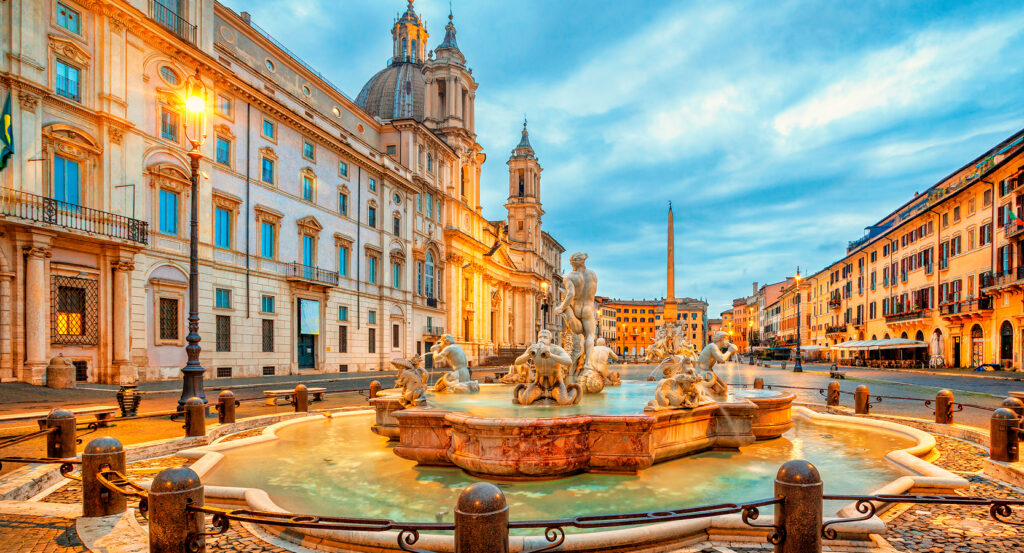
Why you should experience Fontana dei Quattro Fiumi in Rome, Italy.
Fontana dei Quattro Fiumi is a masterful Baroque fountain where Piazza Navona's theatrical urban design, papal ambition, sculptural brilliance, and hydraulic artistry converge around one of Gian Lorenzo Bernini's greatest achievements.
Set within Piazza Navona near Sant'Agnese in Agone and just steps from Palazzo Pamphilj, this grand fountain commands the square through soaring travertine rock formations, cascading water, exotic animals, towering allegorical figures, lush carved vegetation, and an ancient Egyptian obelisk rising dramatically above the composition. Dynamic sculpture, flowing water, dramatic movement, and extraordinary engineering transform the piazza into an immersive work of art where architecture, mythology, and public space function as a unified artistic vision. Every perspective reveals new layers of symbolism, craftsmanship, and theatrical composition that define the Baroque fascination with movement, illusion, and performance. The result is a civic masterpiece defined by artistic innovation, grand sculpture, and enduring cultural influence.
What you should know about Fontana dei Quattro Fiumi.
Fontana dei Quattro Fiumi is best known for being commissioned in 1648 by Pope Innocent X Pamphilj and completed by Gian Lorenzo Bernini in 1651 as the grand centerpiece of Piazza Navona, symbolically celebrating papal authority through four colossal river gods representing the Nile, Ganges, Danube, and Río de la Plata, each embodying one of the major continents known to seventeenth-century Europe. Rising above the sculptural ensemble, the 16.5-meter ancient Egyptian granite Obelisk of Domitian was originally carved during the reign of Emperor Domitian for the Temple of Isis before being rediscovered in the Circus of Maxentius and ingeniously re-erected atop a hollow travertine grotto using pioneering structural engineering that astonished contemporary Rome. Bernini collaborated with accomplished sculptors including Antonio Raggi, Claude Poussin, Francesco Baratta, and Giacomo Antonio Fancelli to create a composition filled with symbolic flora, fauna, heraldic references to the Pamphilj family, and allegorical imagery ranging from a lion and horse to a crocodile, armadillo, serpent, dolphin, palm tree, and flowering plants representing the geography and natural wealth of the four great rivers. Completed during the height of the Roman Baroque, the fountain established a revolutionary integration of sculpture, architecture, hydraulics, and urban planning that profoundly influenced public fountain design throughout Europe while remaining one of Bernini's defining masterpieces.
Expressive marble carving, dramatic contrasts between solid stone and open voids, carefully engineered water movement, and masterful manipulation of light continually reinforce Bernini's ambition to dissolve the boundaries between architecture and sculpture. The grand river gods appear to emerge naturally from rugged rock formations supporting the immense obelisk, creating an illusion of effortless balance that concealed extraordinary engineering ingenuity. Centuries of careful conservation have preserved intricate sculptural details, hydraulic systems, inscriptions, and ornamental carving, allowing Fontana dei Quattro Fiumi to remain one of the world's most influential achievements in Baroque public art.
How to fold Fontana dei Quattro Fiumi into your trip
Fontana dei Quattro Fiumi works as the centerpiece of an exploration through Piazza Navona's celebrated Baroque monuments and historic streets.
Begin at Sant'Agnese in Agone, where Francesco Borromini's architectural vision establishes the artistic grandeur of Piazza Navona before continuing to Fontana dei Quattro Fiumi to admire Bernini's sculptural masterpiece. Continue to Palazzo Pamphilj, whose seventeenth-century papal residence deepens appreciation of the Pamphilj family's influence on the square's transformation. Conclude at Church of San Luigi dei Francesi, where Caravaggio's celebrated paintings provide a memorable finale celebrating the extraordinary artistic achievements of Baroque Rome. The progression moves naturally from grand church to sculptural fountain before concluding through two defining artistic landmarks, revealing why Fontana dei Quattro Fiumi remains one of Rome's greatest public masterpieces.
Where your story begins.
Foresyte Travel reveals places that feel extraordinary long before you arrive.
Experience premium editorial crafted for luxury travelers.




















































































































