Why you should experience Balch Canyon in Portland, Oregon.
The Balch Canyon at Forest Park in Portland is a quiet, green corridor that feels like stepping into the lungs of the city, a hidden ravine where water, stone, and forest move in eternal rhythm.
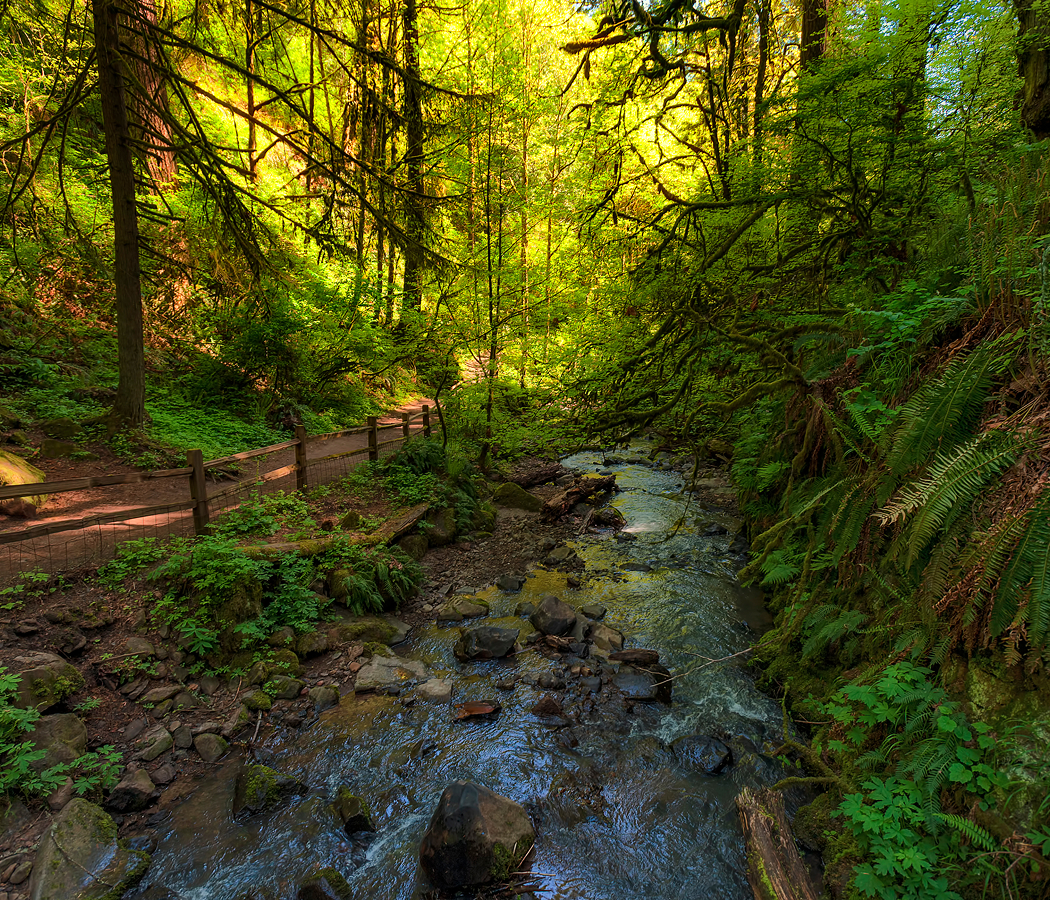
Just minutes from downtown, the canyon begins near Lower Macleay Park, where Balch Creek winds beneath moss-covered bridges and towering Douglas firs. The air here is heavy with the scent of wet earth and cedar; sunlight flickers through ferns that rise waist-high along the banks. Follow the path, and the city disappears behind you almost instantly, replaced by the sound of rushing water echoing through narrow cliffs. The creek itself, among Portland's last free-flowing urban streams, cuts a winding path through basalt rock, its cold, clear surface reflecting shades of emerald and gold. It's a place that feels enchanted in its simplicity, not vast or dramatic, but deeply alive. Every ripple, root, and fallen leaf reminds you that nature doesn't need grandeur to command reverence; sometimes, all it takes is a trickle of water carving persistence into stone.
What you should know about Balch Canyon.
Balch Canyon carries a complex history, one that mirrors Portland's own evolution from wilderness to city.
Named after Danford Balch, an early settler who owned land along the creek in the mid-1800s, the area became infamous when Balch was executed in 1859 for murdering his son-in-law, the first legal hanging in Oregon's history. Yet time softened the legend, and the land eventually returned to peace, becoming one of Portland's most beloved natural sanctuaries. The canyon is geologically significant, carved over millions of years by glacial melt and rainfall erosion, it reveals layers of Columbia River Basalt capped by rich alluvial soil that nurtures an incredible diversity of flora. Beneath the forest floor, Balch Creek still flows into an underground culvert, eventually feeding the Willamette River, making it among the few surviving above-ground waterways in Portland. Its ecosystem supports a rare population of native cutthroat trout, protected under restoration programs led by Portland Parks & Recreation. The surrounding slopes, blanketed in sword ferns and bigleaf maples, form part of Forest Park's oldest reforestation efforts, some trees here are over a century old. The area also houses remnants of early infrastructure: stone bridges, the remains of a ranger station destroyed in the 1962 storm, and the mossy foundation of what locals call the “Witch's Castle,” now an icon of the park's folklore.
How to fold Balch Canyon into your trip.
Exploring Balch Canyon is the ideal way to begin your journey into Forest Park, especially if you want to experience Portland's wild beauty.
Start the walk at the Lower Macleay Trailhead near NW Upshur Street, an easy entry point that immediately immerses you in forest stillness. The main trail follows the creek for about 0.8 miles to the Stone House, where the canyon narrows and deepens, creating a microclimate that stays cool and misty even in summer. Continue along the Balch Creek Trail or merge onto the Wildwood Trail if you'd like a longer, more scenic climb toward Pittock Mansion. Plan for about 45 minutes to 2 hours, depending on your pace and route. The best time to visit is morning or late afternoon, when the canyon is bathed in soft light and the creek's reflection dances on the leaves. Bring sturdy shoes, the trail can be muddy after rain, and pause often to take in the details: the shimmer of water over stones, the sudden hush of wind through firs, the scent of pine rising from the earth. When you emerge, you'll feel as though you've surfaced from a dream, one written in moss, water, and time itself.
Where your story begins.
Foresyte Travel reveals places that feel extraordinary long before you arrive.
Experience premium editorial crafted for luxury travelers.