
Why Sinan Mansions matters.
Sinan Mansions is where Shanghai's golden age still breathes, a pocket of 1920s glamour reborn as a modern sanctuary of art, dining, and design.
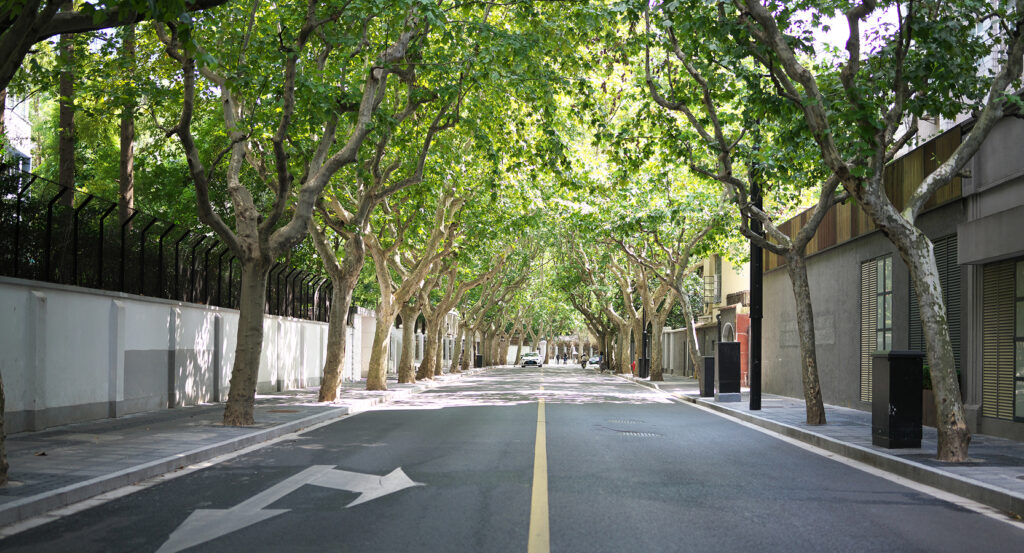
Tucked within the Former French Concession, this tree-lined enclave of restored villas feels like a living time capsule, where jazz-age architecture meets cosmopolitan sophistication. Each mansion glows in soft ochre and brick red, its wrought-iron balconies draped in ivy, its interiors now home to chic restaurants, boutique hotels, and curated galleries. The rhythm of Sinan Mansions is unlike anywhere else in Shanghai, poised, leisurely, quietly confident. You can sip a glass of Bordeaux under magnolia trees while listening to the distant hum of Huaihai Road, or step inside a restored townhouse that once hosted writers and diplomats. It's a world suspended between eras, part Paris, part Shanghai, entirely timeless. To experience Sinan Mansions is to feel the city's heritage not as nostalgia, but as a living, breathing luxury.
What defines Sinan Mansions.
Sinan Mansions complex began as a cluster of 51 European-style villas built between 1920 and 1940, primarily for high-ranking officials, entrepreneurs, and foreign expatriates during Shanghai's pre-war boom.
Designed by British and French architects, the mansions combined Tudor, Art Deco, and Neoclassical influences, arranged in an elegant garden layout that embodied the ideals of the French Concession's urban planning, symmetry softened by shade, grandeur balanced with intimacy. Many residents were part of Shanghai's cultural elite: scholars, politicians, and socialites who filled the mansions with piano music and political debate. After 1949, the properties were repurposed into communal housing, and for decades, these once-lavish villas quietly faded behind the city's modernization. In 2010, a decade-long restoration project resurrected the estate, preserving the original brickwork, stained glass, and courtyards while introducing world-class dining and hospitality spaces. The restoration became one of Shanghai's most successful examples of adaptive reuse, blending conservation and commerce. Among the notable structures is the Chongqing Villa, once a gathering place for prominent writers and revolutionaries. Today, Sinan Mansions hosts cultural festivals, design showcases, and seasonal markets that transform its cobblestone lanes into an open-air salon. Few know that beneath the complex lies an original 1930s air-raid shelter, now sealed but still intact, a hidden reminder of the lives and histories layered beneath the beauty.
How Sinan Mansions fits.
Exploring Sinan Mansions is an invitation to slow down and savor Shanghai's subtler luxuries.
Begin your visit around late morning (10-11 a.m.), when the courtyards glow in soft light and cafés begin to stir. Enter through Sinan Road near Fuxing Park, and wander the network of cobblestone lanes that weave between restored villas. Stop for coffee or brunch at BoCa, RAC, or the elegant Sinan Books Poetry Store, where modern minimalism meets historical charm. Spend 1-2 hours exploring the estate, admire the façades, browse the boutiques, and peek into the art exhibitions often hosted in the side galleries. If visiting in the afternoon or evening, plan a slow dinner at Le Bistrot du Sinan or Franck Bistrot, followed by wine or cocktails under the terrace lights as live jazz drifts through the courtyards. Access via South Shaanxi Road Station (Lines 1, 10, or 12) or Xintiandi Station (Line 10); both are a short walk away. For those staying nearby, Sinan Mansions pairs beautifully with an itinerary that includes Fuxing Park, Hengshan Road, and the broader Former French Concession. Above all, linger, this is a place where the pace of Shanghai's heart slows, and the elegance of its past invites you to breathe in rhythm with its present.
Where your story begins.
Foresyte Travel reveals places that feel extraordinary long before you arrive.
Enjoy editorial crafted for luxury travelers.
Foresyte may earn a commission when you book.

















































































































