Why Four Seasons Hotel Mumbai matters.
Four Seasons Hotel Mumbai is a defining urban hotel where Worli's commercial transformation meets Mumbai's maritime geography, textile history and the city's enduring role as India's financial and cultural capital.
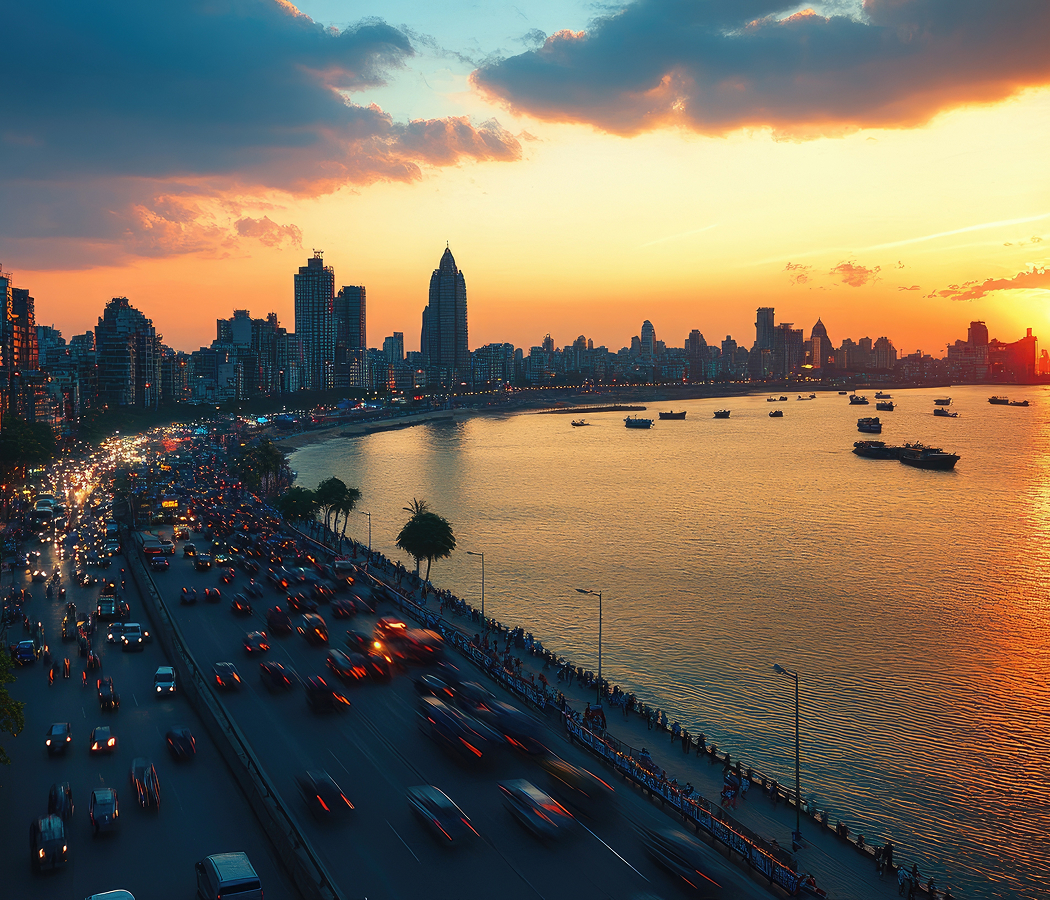
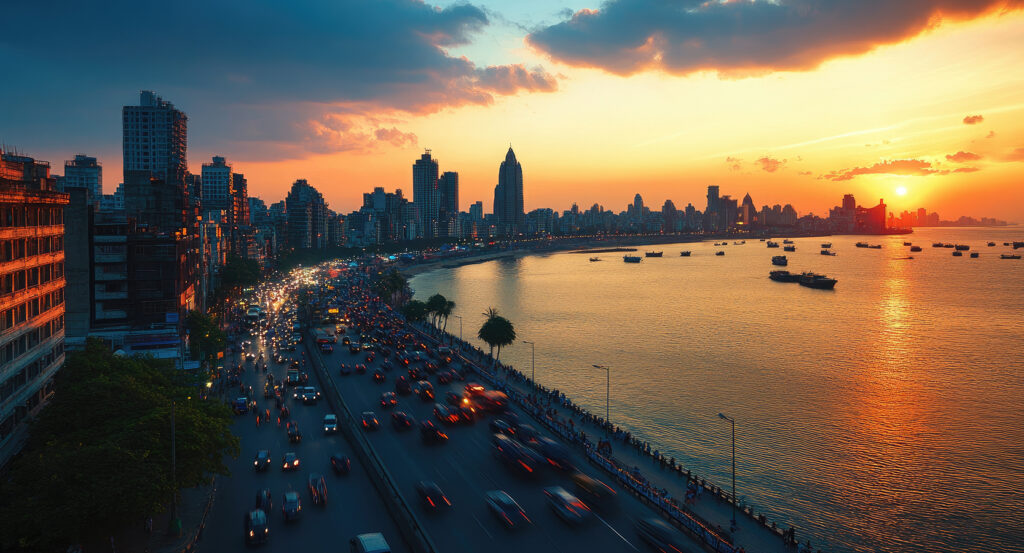
Set along Dr. E. Moses Road in Worli, Four Seasons Hotel Mumbai occupies a position between the Arabian Sea, Mahalaxmi Racecourse, Lower Parel's commercial district and the roads leading toward Haji Ali, with the Bandra-Worli Sea Link extending across the western horizon. Its distinctive physical setting combines a contemporary luxury tower, former mill districts, racecourse grounds, high-rise development and open coastal views within one of Mumbai's most rapidly transformed neighborhoods. The city is encountered primarily through movement between the hotel, Lower Parel, the racecourse, Haji Ali, waterfront roads and the bridges connecting South Mumbai with the western suburbs. A second atmosphere develops inside the property through restaurants, lounges, guest floors, spa spaces, rooftop views and event rooms that provide a composed refuge from Mumbai's traffic, humidity and constant urban activity. The result is an exceptional city hotel whose architecture and setting connect Mumbai's financial growth, maritime landscape, industrial history and cosmopolitan culture.
What defines Four Seasons Hotel Mumbai.
Four Seasons Hotel Mumbai is best known for introducing Four Seasons Hotels and Resorts to the Indian subcontinent, establishing an important international hospitality landmark during the transformation of Worli and Lower Parel from Mumbai's historic textile-manufacturing heartland into a major financial and residential district. The project's origins trace to the Jatia family, whose real estate enterprise Magus Estates, subsequently known as Provenance Land, pursued an ambitious partnership with the Canadian luxury hotel company. Four Seasons founder Isadore Sharp signed the management agreement in October 2003, establishing a collaboration that brought international hospitality investment into a district undergoing profound economic and architectural change. The agreement's signing involved Canadian Prime Minister Jean Chrétien, reflecting the significance of the commercial relationship between the Canadian hotel operator and its Indian development partners. The hotel occupied a site within the former industrial geography of Central Mumbai, where the decline of textile manufacturing had released substantial land for commercial redevelopment. Its development coincided with the emergence of major corporate headquarters, luxury residential towers and retail complexes across the surrounding mill districts, creating a new metropolitan center between South Mumbai's established financial institutions and the northern suburbs. Architect John Arzarian of Lohan Associates developed the building's contemporary architectural conception, introducing a slender glass-clad tower that departed from the expansive colonial architecture associated with Mumbai's historic grand hotels. The thirty-three-story structure incorporated extensive glazing and a carefully organized vertical composition, establishing a distinctive architectural presence within Worli's expanding skyline. Four Seasons Hotel Mumbai opened on May 12, 2008, becoming the company's first Indian property and marking a consequential stage in its expansion across Asia. General manager Armando Kraenzlin directed the opening, introducing the company's established hospitality philosophy to a market already shaped by influential domestic luxury institutions. The project also established a lasting relationship between Four Seasons and Provenance Land, whose subsequent development of branded private residences extended the partnership into Mumbai's luxury residential market. That expansion reflected the growing importance of internationally managed residential properties among the city's affluent professional and business communities. The hotel's commercial significance developed alongside Worli's increasing prominence as a corporate district, reinforcing the area's transition from an industrial neighborhood into one of Mumbai's principal concentrations of metropolitan wealth. A comprehensive renovation program scheduled for completion in 2026 introduced another major investment in the property, renewing its interiors and principal public spaces during a period of continuing architectural transformation across Central Mumbai. Four Seasons Hotel Mumbai represents a defining chapter in the internationalization of Indian luxury hospitality, connecting the redevelopment of Mumbai's industrial landscape with the expansion of one of the world's most influential hotel companies.
John Arzarian's architectural conception establishes the hotel's distinctive physical character through a contemporary interpretation of Mumbai's vertical urbanism, combining expansive glazing with an architectural orientation influenced by the traditional Indian principles of Vastu Shastra. The building's relationship with the Arabian Sea, Mahalaxmi Racecourse and the surrounding metropolitan skyline gives its interior spaces an unusually expansive geographical perspective, connecting the dense commercial environment of Worli with the city's coastal setting. The interior design develops another significant relationship with Mumbai's cultural inheritance through references to the textile traditions that shaped the surrounding district's economic and social history. LTW Designworks and Atelier Pond contributed to the property's evolving interior identity, incorporating saree-inspired patterns, rich colors and carefully selected fabrics into a contemporary interpretation of Indian craftsmanship. These decorative influences connect the building's modern architectural language with the weaving, dyeing and textile production traditions historically associated with Central Mumbai. Japanese design studio Super Potato developed San:Qi, the hotel's influential Asian restaurant, around a culinary conception whose name refers to three distinct energies. The original program brought Japanese, Chinese and Indian cooking traditions into a coordinated dining environment, with theatrical preparation techniques establishing a relationship between culinary craftsmanship and the restaurant's architectural composition. Its subsequent development incorporated Thai cuisine, extending the restaurant's interpretation of Asia's diverse culinary traditions through specialized regional techniques and ingredients. The property's most recognizable cultural institution emerged in December 2009 with the introduction of AER, a rooftop destination that established a prominent position within Mumbai's contemporary nightlife culture. Its elevated setting became closely associated with international electronic music, visiting DJs and the city's increasingly sophisticated cocktail scene, attracting an audience extending well beyond the hotel's overnight clientele. Designer Phillip Pond of Atelier Pond subsequently reimagined AER through two complementary environments inspired by maritime recreation and contemporary cocktail craftsmanship. The ocean-facing Yacht Club draws upon the visual language of coastal leisure, connecting expansive sea views with a social atmosphere shaped by music and communal gatherings. Gimlet Garden develops a contrasting botanical conception overlooking the urban skyline, incorporating green and brown tones, lush planting and a hand-painted botanical mural. The redesign places particular emphasis on the relationship between bartenders and guests, making the preparation of cocktails a central element of the space's cultural identity. Beverage manager Vineeth Krishnan contributed to this direction through a program emphasizing botanical ingredients, specialized spirits and contemporary mixology. AER received the Times Food and Nightlife Award for Best Bar Ambiance in 2024, reinforcing its established importance within Mumbai's international hospitality and entertainment culture. Together, the hotel's textile-inspired interiors, Super Potato's culinary architecture and Atelier Pond's rooftop transformation connect the artistic inheritance of Mumbai's industrial neighborhoods with the cosmopolita character of its contemporary waterfront skyline.
How Four Seasons Hotel Mumbai fits.
Four Seasons Hotel Mumbai works as the starting point for an exploration connecting the city's religious traditions, industrial development and cultural institutions with the maritime landscape of the Arabian Sea.
Begin at Haji Ali Dargah, the historic mosque and tomb complex standing on an islet reached by a causeway across the waters off Worli. The shrine's white domes, minarets and waterfront setting create one of Mumbai's most recognizable religious landscapes, where tides, pilgrimage, architecture and the open sea meet. Its position reveals the city's long relationship with maritime routes, coastal devotion and the changing geography of the shoreline. Continue to Nehru Centre, the cultural complex where exhibitions, planetarium programs, galleries and public events present India's scientific, artistic and civic life within the Worli district. The institution occupies a prominent position near the Arabian Sea and Mahalaxmi Racecourse, connecting education, public culture and the modern development of Central Mumbai. Its exhibitions and programs broaden the city's character beyond finance and commerce into science, history and national cultural expression. Continue to Chhatrapati Shivaji Maharaj Vastu Sangrahalaya, the major museum where archaeology, Indian art, sculpture, decorative arts and natural history occupy a landmark Indo-Saracenic building in South Mumbai. The museum's collections connect the city to the civilizations, kingdoms, religious traditions and artistic practices that shaped the Indian subcontinent. Its gardens and galleries provide a cultural counterpoint to Worli's towers and former industrial districts, placing Mumbai within a much longer history of trade and artistic exchange. Conclude at Dr. Bhau Daji Lad Mumbai City Museum, the historic institution where decorative arts, maps, photographs, models and objects present the development of Mumbai from island settlement to colonial port and modern metropolis. Its Victorian architecture and collections reveal the relationship between commerce, migration, industry, civic planning and the city's expanding population. The museum provides a direct connection between Mumbai's material history and the industrial landscape that later transformed Worli and Lower Parel. The progression moves from Haji Ali Dargah's maritime religious setting through Nehru Centre's civic and scientific culture, continues across Chhatrapati Shivaji Maharaj Vastu Sangrahalaya's regional collections and concludes at Dr. Bhau Daji Lad Mumbai City Museum, where Mumbai's ocean, faith, industry, art and urban history meet.
Where your story begins.
Foresyte Travel reveals places that feel extraordinary long before you arrive.
Enjoy editorial crafted for luxury travelers.
Foresyte may earn a commission when you book.