
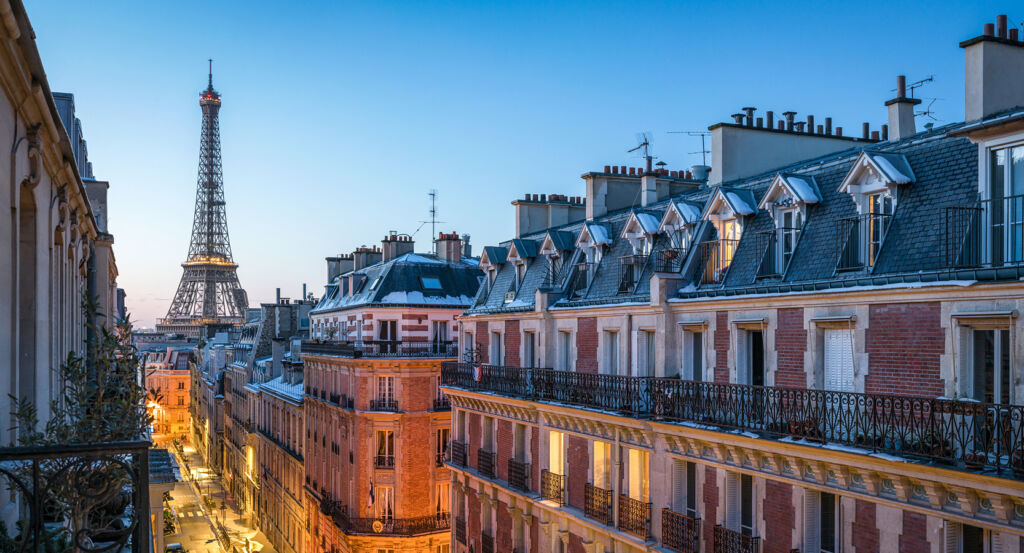
Why you should experience Fraser Suites Le Claridge Champs-Elysées in Paris, France.
Fraser Suites Le Claridge Champs-Elysées is a cinematic residence where Champs-Élysées's theatrical glamour, fashion mythology, international celebrity and century-long culture of performance survive inside an address once synonymous with Parisian nightlife and screen culture.
Set along Avenue des Champs-Élysées near Rue La Boétie and just steps from the avenue's historic entertainment corridor, the property occupies Le Claridge, whose twentieth-century character developed around a celebrated hotel, restaurant and cinema complex at one of Paris's most visible addresses. The building's entertainment history became inseparable from producer and cinema entrepreneur Jacques Haïk, the French distributor who introduced Charlie Chaplin's films to France and coined the French name Charlot before becoming a major figure in Parisian movie exhibition. Fraser Hospitality subsequently transformed the address into 135 serviced residences, preserving an unusually grand central courtyard behind the commercial intensity of the avenue. The result is a residence where Jacques Haïk's cinema culture and the Champs-Élysées tradition of performance give extended-stay hospitality an address carrying considerably more intrigue than its contemporary apartment format suggests.
What you should know about Fraser Suites Le Claridge Champs-Elysées.
Fraser Suites Le Claridge Champs-Elysées is best known for occupying the historic Le Claridge complex at 74 Avenue des Champs-Élysées, an address whose twentieth-century life encompassed luxury hospitality, dining, nightlife and cinema before Fraser Hospitality established 135 serviced residences around its internal courtyard. The Claridge cinema became closely associated with Jacques Haïk, the Tunisian-born French producer, distributor and exhibitor who acquired French rights to Charlie Chaplin's films, introduced Chaplin to French audiences as “Charlot” and later created major Paris cinemas including the Grand Rex. Le Claridge developed into part of the Champs-Élysées entertainment circuit during an era when cinemas, theaters, restaurants and luxury businesses increasingly transformed the avenue from an aristocratic promenade into a metropolitan stage for mass culture. Fraser's contemporary accommodation program extends from studios through one and two-bedroom residences, with selected apartments opening onto balconies or terraces and the largest configurations accommodating families within spaces designed for substantially longer stays than conventional hotel rooms.
Fraser Hospitality gives the property another international lineage through Frasers Property, the Singapore-headquartered real-estate group whose serviced-residence portfolio expanded across major business capitals under the Fraser Suites brand. Fraser Suites Le Claridge Champs-Elysées organizes that extended-stay model around separate living, dining and sleeping functions, with equipped kitchen facilities allowing the former entertainment address to operate as a residential base in the center of the eighth Arrondissement. Le Claridge's internal courtyard provides the architectural hinge between those histories, withdrawing the apartments from Avenue des Champs-Élysées while retaining the building's unusually deep footprint behind its boulevard frontage. Together, Jacques Haïk, Le Claridge, Fraser Hospitality and Frasers Property connect early French cinema exhibition with contemporary Asian hospitality, giving the property a century-spanning character built around changing ideas of how international audiences inhabit Paris.
How to fold Fraser Suites Le Claridge Champs-Elysées into your trip.
Fraser Suites Le Claridge Champs-Elysées works as the anchor for an afternoon tracing the architecture, decorative ambition and performance culture that transformed the Champs-Élysées into Paris's grand public stage.
Begin at Grand Palais, created for the 1900 Exposition Universelle by architects Henri Deglane, Albert Louvet, Albert Thomas and Charles Girault, whose vast steel-and-glass nave fused Beaux-Arts masonry with industrial engineering before hosting fencing and taekwondo during the Paris 2024 Olympics. Continue to Petit Palais, where Charles Girault arranged four wings around a semicircular garden for the same 1900 exhibition before the building became a museum in 1902 and acquired a decorative program including Albert Besnard's four Symbolist entrance murals painted between 1903 and 1910. Conclude at Théâtre des Champs-Élysées, the 1,905-seat theater whose architecture and Antoine Bourdelle bas-reliefs became inseparable from modernist performance when Igor Stravinsky's The Rite of Spring, choreographed by Vaslav Nijinsky, received its scandalous premiere there in 1913. The progression moves from the engineering ambition of the 1900 exposition through Girault's synthesis of architecture and decorative art into the artistic rupture of Stravinsky and Nijinsky, revealing the culture of performance that ultimately made Le Claridge possible.
Where your story begins.
Foresyte Travel reveals places that feel extraordinary long before you arrive.
Experience premium editorial crafted for luxury travelers.














































































































