Why Gimlet matters.
Gimlet is a celebrated European-inspired restaurant and cocktail bar where Melbourne CBD's historic commercial architecture meets Andrew McConnell's contemporary Australian gastronomy, the grandeur of twentieth-century brasserie culture, and Melbourne's internationally recognized dining traditions.
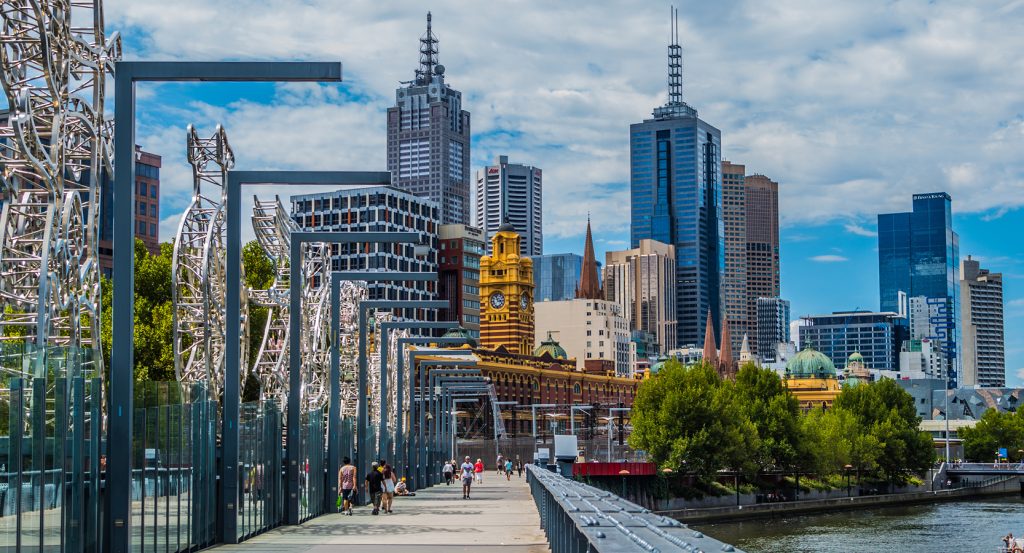
Occupying the ground floor of Cavendish House at the corner of Russell Street and Flinders Lane, Gimlet stands within Melbourne's eastern central business district, surrounded by historic commercial buildings and the city's established restaurant quarter. Flinders Lane extends west toward Swanston Street and east toward Exhibition Street, with Collins Street running parallel to the north and Flinders Street approaching the railway corridor to the south, placing the restaurant between Melbourne's financial district and its southern cultural precinct. The Chicago-style building preserves the substantial proportions of a 1920s commercial property, with large street-facing windows and an elevated interior ceiling establishing the architectural foundation for its restaurant conversion. Inside, an expansive central bar, burgundy leather banquettes, polished timber, decorative marble, and elaborate honeycomb chandeliers introduce the visual character of a grand European dining room. An elevated mezzanine overlooks the principal dining area, creating a second level of seating above the restaurant's animated central space. The result is a substantial metropolitan restaurant whose historic architecture, carefully composed interiors, and prominent corner position establish a distinctive setting for Melbourne's contemporary fine-dining culture.
What defines Gimlet.
Gimlet is best known for Andrew McConnell's transformation of a historic Melbourne commercial building into an internationally recognized restaurant that combines the traditions of European brasserie dining with the culinary ambitions of contemporary Australian hospitality. McConnell developed his professional reputation through a succession of influential Melbourne restaurants, establishing a distinctive approach to cooking grounded in seasonal produce, precise technique, and the relationship between food and its architectural surroundings. His career gained particular momentum through Cutler & Co., which opened in Fitzroy in 2009 and introduced an ambitious contemporary restaurant within a converted industrial building. The establishment strengthened McConnell's position among Australia's leading restaurateurs, providing the foundation for an expanding collection of hospitality businesses. Cumulus Inc. developed another expression of his approach through an all-day restaurant format that connected European café traditions with Melbourne's established culture of informal dining. Supernormal subsequently introduced a broader international culinary perspective, drawing upon the restaurant traditions of Tokyo, Shanghai, and Hong Kong through a menu shaped by Asian ingredients and techniques. McConnell's partnership with his wife, Jo McGann, became central to the development of the Trader House hospitality group, whose businesses expanded across restaurants, wine bars, and specialty food retail. The opening of Marion in Fitzroy in 2015 marked another important stage, establishing a wine-focused establishment whose intimate character contrasted with the larger restaurants in the group's portfolio. McConnell subsequently undertook substantial renovations at Cutler & Co. and expanded into specialty butchery through Meatsmith, strengthening the group's connections with meat production and the supply of premium ingredients. Gimlet emerged as his first major new restaurant project in five years, introducing an opportunity to develop a substantially more theatrical interpretation of classical dining. The chosen location was Cavendish House, a landmark commercial building constructed during the 1920s whose architectural character recalled the substantial office buildings of Chicago. Its ground-floor interior had previously accommodated a high-fidelity audio showroom, leaving a generous commercial space whose proportions suited McConnell's ambition for a grand metropolitan restaurant. The project brought McConnell and McGann together with Sydney design studio Acme, whose previous work included the acclaimed restaurant Fred's and the Archie Rose distillery. Acme developed an interior that drew upon the building's original architectural character, establishing a coherent relationship between its substantial structural elements and the decorative traditions of European and American restaurants. The design introduced a central cocktail bar as the organizing feature of the room, surrounded by dining booths and an elevated mezzanine whose arrangement encouraged movement between different forms of hospitality. McConnell collaborated with chef Allan Eccles on a menu grounded in classical European cooking, seasonal Australian ingredients, and the technical possibilities of a substantial wood-fired oven. The restaurant's development coincided with the restrictions imposed upon Victorian hospitality businesses during the coronavirus pandemic, disrupting its intended opening schedule and requiring significant changes to the original launch arrangements. Gimlet began welcoming diners in July 2020, introducing a major new restaurant during an exceptionally difficult period for Melbourne's hospitality industry. Its opening represented a substantial commitment to the future of central-city dining, bringing a large-scale restaurant into a commercial district whose businesses were confronting unprecedented operating restrictions. The establishment rapidly attracted attention for its architectural ambition, cocktail program, and sophisticated interpretation of European restaurant traditions. International recognition followed in 2022 when Gimlet entered the World's 50 Best Restaurants extended ranking at number 84, placing it among a select group of Australian establishments recognized by the organization. The achievement strengthened McConnell's international reputation and established Gimlet as a significant addition to Melbourne's gastronomic landscape. Its development connects the expansion of an influential Australian restaurant group with the restoration of historic commercial architecture, the reinvention of classical metropolitan dining, and the international recognition of Melbourne's restaurant culture.
Andrew McConnell's culinary direction at Gimlet develops the traditions of European brasserie cooking through a disciplined relationship between premium Australian ingredients, live-fire preparation, and the concentrated flavors associated with classical French technique. The kitchen's substantial wood-fired oven establishes the principal method for preparing larger cuts of meat and seafood, introducing controlled heat and smoke into a repertoire shaped by roasting, grilling, and carefully developed sauces. Allan Eccles contributed to the original culinary program through a close collaboration with McConnell, establishing a menu whose flexibility accommodates substantial restaurant meals alongside smaller preparations served at the central bar. The treatment of beef demonstrates the kitchen's commitment to exceptional raw ingredients, particularly through the selection of heritage cattle breeds whose natural marbling and mighty structure support cooking over intense heat. Chianina beef became an early signature of the restaurant, connecting an Italian breed celebrated for its size and distinctive meat quality with the techniques of contemporary Australian wood-fired cooking. A substantial T-bone develops its characteristic exterior through direct exposure to the oven's heat, preserving the tenderness of the interior and concentrating the flavor of the meat. Potatoes roasted in the same oven acquire a complementary richness through the addition of Taleggio, whose soft texture and pronounced aroma deepen the preparation's savory character. Seafood introduces a contrasting culinary register, with oysters and premium shellfish providing delicate textures that emphasize freshness and restrained seasoning. The kitchen's treatment of lobster extends this approach through precise cooking that preserves the crustacean's natural sweetness and firm consistency. Caviar service introduces another expression of classical luxury dining, establishing a relationship between exceptional ingredients and the formal presentation traditions of European restaurants. These elements form part of a broader culinary program whose central principle is the careful development of natural flavor through heat, acidity, and the measured application of rich accompaniments. The cocktail bar establishes an equally consequential dimension of Gimlet's character, reflecting McConnell's intention to create a restaurant whose drinking culture possesses the same technical seriousness as its kitchen. Its namesake cocktail combines gin with a house-made citrus cordial, bringing the aromatic character of the spirit into balance with concentrated sweetness and acidity. The preparation connects the establishment with the historical development of the gimlet as a classic cocktail, traditionally associated with British naval drinking culture and the use of preserved citrus. Martinis occupy another central position within the bar program, reinforcing the restaurant's relationship with the cocktail traditions of major European and American cities. The extensive wine selection develops this international character through benchmark producers and established appellations, supporting the restaurant's substantial meat and seafood preparations with bottles chosen for their structure and aromatic complexity. Dessert production introduces a final technical dimension through a dedicated Carpigiani gelato machine, whose controlled freezing process produces exceptionally smooth textures and preserves the natural character of seasonal ingredients. McConnell's original conception emphasized the relationship between complementary flavors, allowing individual gelato preparations to develop into carefully balanced combinations. The restaurant's late-night supper service extends its culinary character beyond conventional dinner hours, introducing a more informal menu that includes the Cavendish House burger and Crêpes Suzette finished through theatrical tableside flambéing. The combination of classical technique, live-fire cooking, sophisticated cocktails, and carefully coordinated service gives Gimlet a distinctive position within Melbourne's dining culture, preserving the social traditions of the grand metropolitan restaurant through a contemporary Australian culinary program.
How Gimlet fits.
Gimlet works as the evening centerpiece of a Melbourne exploration connecting the city's nineteenth-century civic institutions, the architectural grandeur of its historic entertainment district, and the evolution of public performance from colonial lecture halls to internationally celebrated theatrical productions.
Begin at Melbourne Town Hall, the expansive municipal building occupying the corner of Swanston Street and Collins Street. Architect Joseph Reed designed the structure in the French Second Empire style, introducing an elaborate civic composition whose construction reflected Melbourne's expanding prosperity during the nineteenth century. Prince Alfred, Duke of Edinburgh, laid the foundation stone in 1867, establishing a prominent royal association with the city's principal municipal project. The building opened on August 9, 1870, with Mayor Samuel Amess organizing a grand concert and ball to celebrate the occasion. A major organ constructed by London firm William Hill & Son followed in 1872, establishing the auditorium as an important setting for musical performance. The building's ceremonial character subsequently developed through an elaborate entrance portico completed in 1887, and its public significance extended into popular culture when the Beatles greeted enormous crowds from the portico during their 1964 Australian tour. Continue to Melbourne Athenaeum, the historic cultural institution whose origins reach to the establishment of the Melbourne Mechanics' Institution in 1839. The organization acquired its Collins Street property in 1840, and architect O'Hagan developed the original building completed in December 1842. Its library, museum, lecture hall, and educational activities established an important intellectual center within the rapidly developing colonial settlement. A substantial expansion in 1872 introduced a larger public hall, followed by the adoption of the Melbourne Athenaeum name in 1873. Architects Smith and Johnson designed the prominent three-storey façade completed in 1886, incorporating a statue of Minerva by sculptor Richard Kretzschmar. The institution's theatrical character developed through Frank Talbot's transformation of the principal hall into a dedicated performance venue in 1924, establishing a lasting relationship with Melbourne's traditions of drama, comedy, and live entertainment. Conclude at Regent Theatre, the grand former picture palace whose architectural history reflects the extraordinary ambitions of Melbourne's interwar entertainment industry. Designed by architect Cedric Heise Ballantyne, the theatre opened on March 15, 1929, introducing an elaborate auditorium and a richly decorated interior combining Gothic, Louis XVI, and Spanish Baroque influences. Its original facilities included a Wurlitzer organ and an orchestra pit supporting the presentation of silent films, connecting the building with the technological and artistic development of early cinema. The theatre closed in July 1970 following decades of changing entertainment habits, prompting a prolonged campaign to preserve the threatened building. Entrepreneur David Marriner subsequently advanced an ambitious restoration project, with work beginning in 1993 and culminating in the theatre's reopening on August 17, 1996. Andrew Lloyd Webber's Sunset Boulevard inaugurated its renewed theatrical program that October, establishing the restored building as a major destination for international musical productions. The progression moves from Melbourne Town Hall's nineteenth-century municipal grandeur through Melbourne Athenaeum's development of public education and performance and culminates at Regent Theatre, where the preservation of an interwar picture palace sustains the city's tradition of expansive entertainment architecture.
Where your story begins.
Foresyte Travel reveals places that feel extraordinary long before you arrive.
Enjoy editorial crafted for luxury travelers.
Foresyte may earn a commission when you book.