
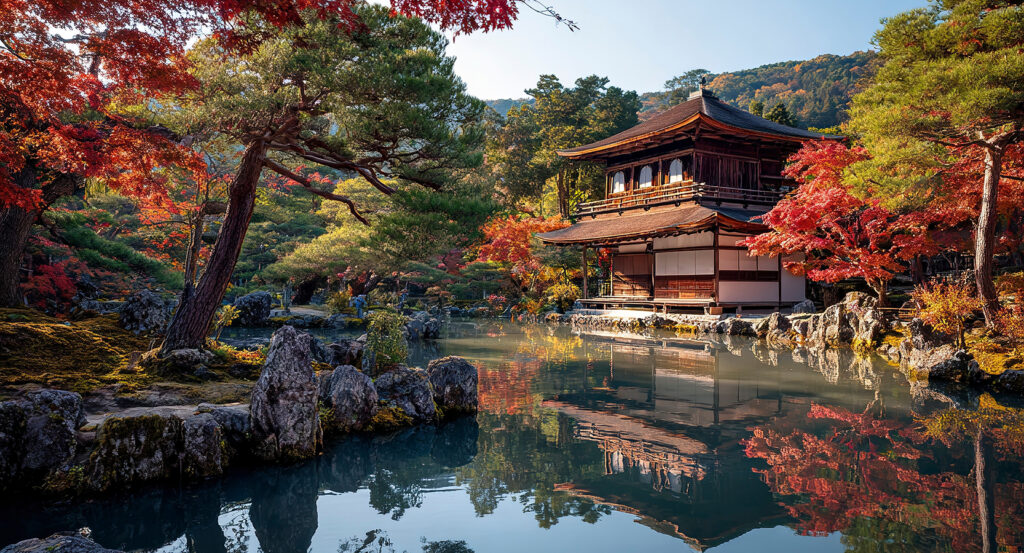
Why you should experience Togu-do in Kyoto, Japan.
Togu-do at Ginkaku-ji is Kyoto's chamber of quiet thought, a place where simplicity became ritual, and ritual became art.
Tucked away in the northern corner of Ginkaku-ji's moss gardens, this modest wooden structure doesn't command attention; it rewards awareness. Its elegance lies not in grandeur but in presence. Sliding doors open to reveal polished tatami floors, alcoves adorned with scrolls and flowers, and the faint aroma of cedar. The light here feels deliberate, filtered, patient, almost alive. Every shadow seems placed by intention. This is the room where stillness learned to move: the spiritual cradle of the tea ceremony, of minimalism, of Japan's timeless aesthetic discipline. To stand inside Togu-do is to feel the moment when art and life first became indistinguishable.
What you should know about Togu-do.
Built in 1486 under the patronage of Ashikaga Yoshimasa, Togu-do was his private retreat within Ginkaku-ji, a space designed for contemplation and poetic refinement.
It contains Japan's oldest known chashitsu, or tearoom, called Dōjinsai, considered the prototype for all that followed. Within this four-and-a-half tatami space, the philosophy of wabi-cha was born, a style of tea that elevated simplicity and imperfection over luxury and excess. The tokonoma (alcove) inside Dōjinsai served as the setting for seasonal scrolls and single flowers, setting a precedent for centuries of Japanese interior design. The architecture of Togu-do merges two traditions: the aristocratic shoin-zukuri style with its writing desks and decorative transoms, and the humble sukiya aesthetic of the tea hut. This union reflected Yoshimasa's vision of balance, refinement. Few realize that the hall's very name, “Togu-do,” translates to “Hall of Wisteria Fragrance,” symbolizing beauty that deepens with time. Over the centuries, monks, poets, and philosophers gathered here to study chanoyu, ink painting, and the subtleties of etiquette that became the blueprint of Japanese culture. To enter Togu-do is to step into the birthplace of Japan's inner language, grace.
How to fold Togu-do into your trip.
Visiting Togu-do is less about seeing and more about sensing.
After walking through Ginkaku-ji's sand garden and pond, follow the narrow path lined with moss toward the north corner of the complex. The hall's simplicity may seem understated compared to the Silver Pavilion, but linger, it reveals itself slowly. Stand outside the open veranda and look inward; the proportions are exact, the silence deliberate. If the interior is open to view, notice how the tatami layout forms a rhythm of space, how the shadows breathe along the paper screens. Imagine Yoshimasa seated here, reading by candlelight or watching the moon reflect on the pond beyond. Visit in early morning when light seeps through the lattice, illuminating the scroll within the alcove, or in autumn when maple leaves drift across the threshold. Togu-do teaches the traveler what Ginkaku-ji itself captures, that beauty is not what fills a space, but what remains after all else is removed. Step back slowly before leaving, and take one last look at the doorway framed by green, a perfect image of Kyoto's essence: discipline, stillness, and infinite refinement contained within a single room.
Where your story begins.
Foresyte Travel reveals places that feel extraordinary long before you arrive.
Experience premium editorial crafted for luxury travelers.

















































































































