
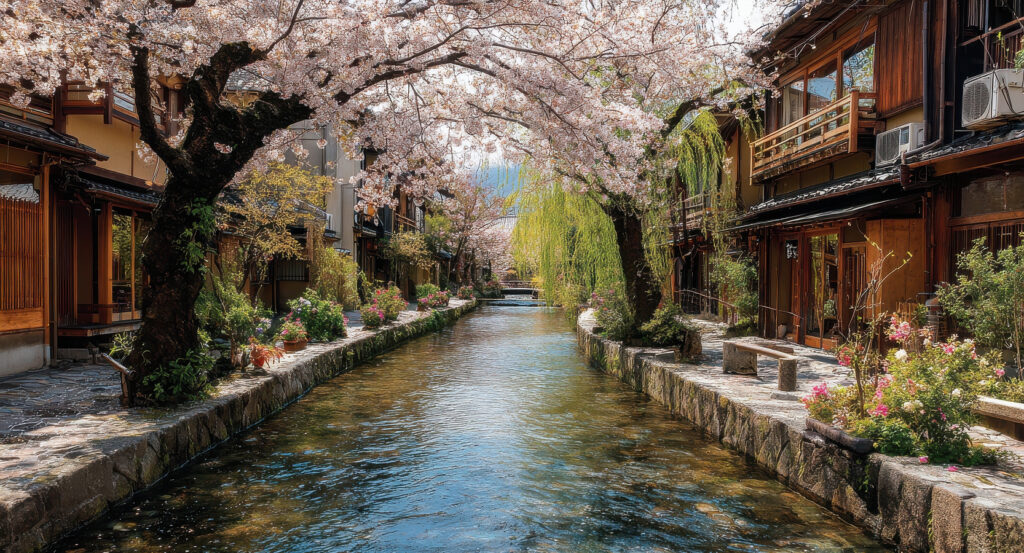
Why you should experience Gion Ryokan Karaku in Kyoto, Japan.
Gion Ryokan Karaku is Kyoto encountered through intimacy, ritual, and deliberate calm, a ryokan that places you inside Gion without exposing you to its noise, offering an experience that feels residential, composed, and deeply attuned to the city's oldest rhythms.
Located just steps from Yasaka Shrine yet tucked onto a quiet side street, Karaku occupies a rare position where Kyoto's most storied district feels lived-in. Arrival is gentle and grounding. You step away from lantern-lit lanes and foot traffic into an interior that immediately quiets the senses. Wood, stone, tatami, and soft light shape a space that feels protective rather than insular, signaling that this is a place meant for rest and reset rather than observation. Public areas are modest and intentional, designed to guide movement calmly and without excess. There is no performance, no attempt to dramatize tradition. Instead, the ryokan allows proportion, material, and silence to do the work. Guest rooms reinforce this philosophy with remarkable consistency. Spaces are not expansive, but they are deeply considered. Tatami floors, low furnishings, and uncluttered layouts encourage presence and stillness. Beds or futons are prepared with care, offering firm, grounding comfort that supports deep rest after long days navigating Kyoto's temple precincts, shrine paths, and historic streets. Windows frame inner gardens, rooftops, or quiet neighborhood edges, keeping the city close. Furniture is minimal and purposeful. Every element has a role, and the absence of excess becomes part of the experience. Lighting is soft and indirect, calibrated to follow the natural rhythm of the day. Bathrooms balance modern comfort with restraint, prioritizing warmth, water quality, and ease of use over decorative gesture. Everything works quietly, reinforcing the sense that your attention belongs elsewhere. Dining at Gion Ryokan Karaku is an extension of this calm intelligence. Meals emphasize seasonality, balance, and ingredient clarity. Breakfasts and dinners feel like rituals rather than events, grounding you in Kyoto's culinary cadence without overwhelming the senses. Shared spaces act as pauses rather than destinations: places to sit, reflect, or transition gently between the outside world and rest. Service is attentive, sincere, and deeply unobtrusive. Interactions feel personal and situational. Staff anticipate needs subtly, offering guidance when helpful and space when silence is more appropriate. The ryokan attracts travelers who value depth over display: cultural explorers, repeat visitors to Kyoto, couples seeking intimacy without luxury theater, and anyone who wants Gion to feel navigable and human rather than overwhelming. Gion Ryokan Karaku does not explain Kyoto or package it for consumption. It places you within it quietly and trusts the city to reveal itself.
What you should know about Gion Ryokan Karaku.
Gion Ryokan Karaku was shaped by the belief that authenticity in Kyoto hospitality comes from restraint, continuity, and respect for daily ritual.
The ryokan's structure reflects traditional Gion residential logic, where buildings prioritize enclosure, subtle transitions, and human scale over display. Interiors emphasize materials that age with use: wood that deepens in tone, tatami that softens underfoot, and surfaces that absorb sound and light. Design decisions favor subtraction rather than accumulation, allowing space, silence, and proportion to define atmosphere. Guest rooms were planned around real use. Designers considered how guests move through the room, where they rest, where they sit, and how they transition between activity and stillness. Storage is discreet, circulation is clear, and furniture placement supports daily ritual. Bathrooms were integrated carefully to provide modern comfort. Dining spaces were conceived as intimate extensions of the living environment, reinforcing the idea that meals are part of the stay's rhythm. Operational culture mirrors this architectural intent. Service is paced, situational, and deeply human. Staff are trained to read presence rather than follow protocol, creating interactions that feel sincere and responsive. Over time, Karaku has developed a loyal following among travelers who return because the experience remains grounding and consistent. In a district where many accommodations dramatize tradition or dilute it into generic luxury, Gion Ryokan Karaku stands apart by remaining quietly itself.
How to fold Gion Ryokan Karaku into your trip.
Gion Ryokan Karaku works best when you allow it to slow your pace and sharpen your attention, using it as a point of grounding.
Begin mornings early, stepping out into Gion while streets are still quiet and shrine gates are opening. Walk through Yasaka Shrine as locals pass through on daily routes, then wander toward Maruyama Park or Higashiyama's side streets while light is still soft. Because the ryokan is embedded in a lived neighborhood, returning midday feels restorative. Come back to rest on tatami, drink tea, or simply sit. Afternoons reward unhurried movement: narrow lanes, small temples, and neighborhood cafés reveal themselves when you are not rushing. Evenings align naturally with Karaku's tone. Dine quietly, attend a performance, or take a slow walk through lantern-lit streets before returning to a space that absorbs energy. Late returns feel calm because the ryokan mirrors the city's nighttime rhythm. Gion Ryokan Karaku pairs especially well with shorter stays focused on depth, repeat visits, and travelers who want Kyoto to feel personal. By the time you leave, Gion will feel less like a performance and more like a neighborhood you briefly inhabited, and Karaku will feel like the quiet threshold that made that intimacy possible. In a city defined by ritual, repetition, and restraint, Gion Ryokan Karaku offers something rare: hospitality that recedes just enough to let Kyoto be fully present.
Where your story begins.
Foresyte Travel reveals places that feel extraordinary long before you arrive.
Experience premium editorial crafted for luxury travelers.

















































































































