Why you should experience Grand Hotel Casselbergh in Brugge, Belgium.
Grand Hotel Casselbergh is where Brugge's historic elegance becomes palpable, a place that marries centuries-old heritage with discreet contemporary comfort, inviting you to inhabit the city.
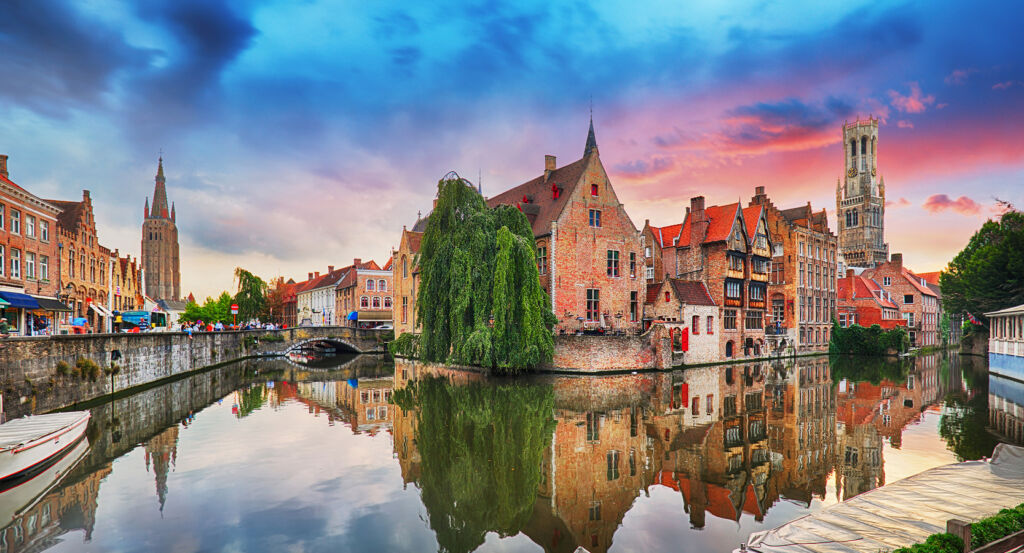
Brugge is often seen through its postcard imagery: winding canals, stepped gables, and medieval squares bathed in soft northern light. Many visitors move quickly from landmark to landmark, missing the city's deeper texture, the rhythm of alleys, the layered patina of stone, the way time moves slowly when you let it. Grand Hotel Casselbergh invites you to experience Brugge on that deeper register. Set within a row of historic buildings that once formed part of the city's Sashuis (cloth hall) district, the hotel feels embedded in Brugge's urban fabric. Approaching the façade, you sense restraint rather than flamboyance, an architectural presence that acknowledges its surroundings rather than competes with them. Inside, public spaces unfold with architectural coherence and composure. Vaulted ceilings, original stone arches, and polished floors coexist with thoughtful contemporary interventions that preserve spatial integrity. The lobby and lounges strike a balance between historical depth and refined livability; there is no sense of staging or performance here, only a quiet calibration of material, light, and proportion. Guest rooms at Grand Hotel Casselbergh reflect the same philosophy. Each space is composed with clarity and restraint, designed for inhabiting. Beds are deeply comfortable and positioned to support restorative sleep after days of exploration. Lighting is adjustable and thoughtfully placed, allowing you to shape the room's mood rather than having it imposed upon you. Carefully curated furnishings, textiles, and finishes feel modern yet rooted, not decorative accents but contributors to the room's atmosphere of calm, intentional comfort. Large windows draw in Brugge's changing light, framing views of rooftops, spires, and quiet lanes that make the city feel present even when you are inside. Bathrooms are spacious and composed, emphasizing layout, materials that age well, and fixtures that make routine feel effortless. What sets Grand Hotel Casselbergh apart is how silence and sound are managed. The hotel's spatial logic buffers the bustle of Brugge's public spaces while allowing interior acoustics to feel alive. Furniture, textiles, and architectural forms are calibrated so that movement and conversation feel natural and easy, not invasive or amplified. Service throughout the property is attentive, polished, and unobtrusive. Staff interactions feel warm without being performative, knowledgeable without rehearsal, and always attuned to your needs rather than scripted hospitality gestures. The location amplifies the experience: a short walk brings you to Brugge's iconic squares, canal paths, museums, and artisan workshops, yet returning always feels like entering a calm interior world. Grand Hotel Casselbergh does not attempt to simplify Brugge's complexity; it reflects it, offering an environment where you can think, rest, and absorb the city with intention.
What you should know about Grand Hotel Casselbergh.
Grand Hotel Casselbergh has one of the most layered architectural narratives in Brugge, its buildings were once part of the city's economic engine and civic life long before they became a hotel.
Rather than inventing a historical identity, the property preserves and extends one that has always existed. The structures that now house the hotel were part of Brugge's cloth hall district, spaces where trade, production, and civic interaction once intersected daily. This lineage gives the hotel an embedded quality, the architecture is not a backdrop but a continuation of place. When it was converted into a hotel, the restoration philosophy was not to recreate the past but to read it as ongoing. Original stonework, arches, and proportions were preserved and celebrated not as museum pieces but as active contributors to spatial experience. Contemporary interventions were introduced with precision and restraint: materials that respond to light and climate, proportions that honor original volumes, and details that build continuity. One of the hotel's lesser-known strengths is its spatial sequencing. Brugge's urbanism compresses and decompresses, narrow alleyways open to wider squares, small doorways lead into expansive interiors. Grand Hotel Casselbergh mirrors this rhythm internally: intimate corridors yield to wider lounges, low thresholds open into high ceilings, and private spaces transition gracefully into public zones. This sequencing creates an internal promenade where movement feels legible. Another defining aspect of the hotel is its embrace of authentic materiality. Brick, stone, timber, and plaster are left exposed where possible, not as decorative gestures but as honest surfaces that accumulate light and presence over time. These materials interact with contemporary finishes in ways that feel generative, not retro. Over time, this has made the hotel a site of architectural continuity, not a historic set piece, but a place where the centuries of Brugge's life remain legible and meaningful. This orientation extends beyond aesthetics into the guest experience as well. Service is grounded in cultural fluency rather than tourism scripts: recommendations are based on deep local insight, interactions feel personal rather than procedural, and the hotel's rhythm respects your presence rather than imposing generic hospitality pacing. In a city where visitors often move quickly from landmark to landmark, Grand Hotel Casselbergh invites you to slow down and experience Brugge as a sequence of moments, cumulative, layered, and deeply felt.
How to fold Grand Hotel Casselbergh into your trip.
Grand Hotel Casselbergh works best when you use it not as a waypoint but as the view through which you engage Brugge, structuring your time around depth.
Begin your mornings with a deliberate pause: let the changing light filter through the hotel's windows before stepping out. Walk from the hotel toward the Burg and Markt with intention rather than checklist momentum, allowing the city's urban fabric to unfold through rhythm rather than rush. Explore museums, artisan studios, and historic churches with periodic returns to the hotel for recalibration, a quiet lunch, a slow cup of tea in an interior lounge, or a brief sit in a courtyard that feels secluded even though the city surrounds it. Midday returns become restorative rather than disruptive, making your later explorations feel deeper rather than fatigued. In the afternoons, wander toward canal paths and quieter neighborhoods rather than always circling back to the most visited squares. The hotel's proximity makes this effortless, allowing you to discover layers of Brugge that many travelers overlook. Evenings at Grand Hotel Casselbergh are especially conducive to reflection. Rather than overscheduling, let dinner unfold over conversation and local flavors, then return to the hotel to absorb the day's impressions in quiet space. The hotel's interior calm makes it easier to notice subtleties, how light changes brick and stone, how sound shifts between rooms, how spatial proportion affects your sense of presence. On longer stays, this internal, external blend prevents fatigue. Each day gains nuance rather than repetition, and your understanding of Brugge deepens incrementally rather than superficially. When departure comes, leaving Grand Hotel Casselbergh does not feel abrupt. It feels like stepping back into the present from a period of focused presence, a reminder that the most meaningful travel experiences are not measured in checklists but in how deeply you are able to inhabit a place.
Where your story begins.
Foresyte Travel reveals places that feel extraordinary long before you arrive.
Experience premium editorial crafted for luxury travelers.