
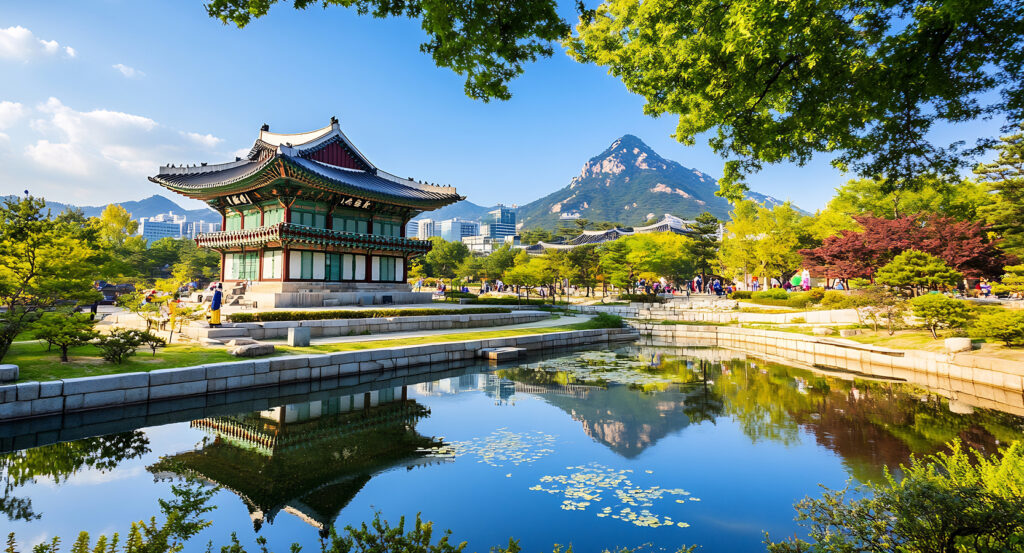
Why you should experience The National Folk Museum of Korea in Seoul, South Korea.
The National Folk Museum of Korea is where history breathes, not in silence, but in the hum of everyday life reborn.
Tucked within the eastern grounds of Gyeongbokgung Palace, the museum stands as a bridge between royal heritage and the rhythms of ordinary Koreans who built the nation's soul. Its architecture, crowned by a five-tiered pagoda roof, blends seamlessly with the palace skyline, yet what lies inside is entirely human, the texture of life across dynasties. Step through its wide stone courtyard, and you're greeted by open-air exhibits of earthen jars, thatched-roof homes, and farming tools, their weathered surfaces glowing in the sunlight. Inside, the galleries unfold like chapters of a living book: weddings and harvest festivals, scholars and merchants, games and folklore, food and faith. Each display is tenderly curated, not to impress, but to remind you that the truest history is written in the gestures of daily life. It's a place of quiet revelation, where the humble and the divine meet beneath the same roof.
What you should know about The National Folk Museum of Korea.
The National Folk Museum was founded in 1945, the same year Korea regained its independence, as a tribute to cultural rebirth and continuity.
Its current home within the palace grounds opened in 1993, constructed on the symbolic site of the former royal kitchens to represent nourishment, of body, culture, and identity. The museum's mission goes beyond preservation; it seeks to translate the spirit of Korean life into universal language. Its three permanent halls trace a complete arc of civilization: from prehistoric communities of the peninsula, through the agrarian rhythms of the Joseon Dynasty, to the transformation of modern society. Artifacts here are not just objects, they're stories. You'll find weathered wedding garments embroidered with cranes for longevity, hand-carved masks from shamanic rituals, and the delicate hanji paper that once carried Confucian teachings. Each exhibit uses sound, scent, and motion, rice being pounded, a mother's lullaby, to immerse visitors in living memory. Few realize that the museum's research wing maintains one of Asia's largest oral history archives, preserving thousands of first-hand accounts from elders across the peninsula. Even its gardens serve purpose: the circular layout mirrors the Korean concept of cheon-ji-in, harmony between heaven, earth, and humanity. The five-tiered pagoda above the main building symbolizes wisdom extending skyward, yet its foundation stones are from the same granite quarries used for Gyeongbokgung's walls, binding past and present in a single gesture.
How to fold The National Folk Museum of Korea into your trip.
The National Folk Museum of Korea is best experienced not as an exhibit, but as a walk through the living memory of a people.
Enter from the eastern gate of Gyeongbokgung Palace, where the museum rises beyond a tranquil courtyard filled with stone sculptures and folk art. Start in the Hall of History of Korean People, its chronological flow from early settlements to Joseon-era daily life creates a grounding sense of continuity. Move next to the Hall of Korean Lifestyle, where miniature dioramas depict family rituals, traditional markets, and even the arrangement of ancestral shrines inside homes. Linger at the display of hanbok garments to see how color and pattern marked social rank, season, and celebration. End in the Hall of Korean Folk Culture, where seasonal festivals come alive through music and projection, reminding you that tradition in Korea has never been static, it dances, sings, and evolves. Step outside afterward to the open-air exhibits: stand beneath the wooden windmill, explore the recreated village homes, or rest beneath the shade of the pagoda's eaves. For deeper reflection, time your visit after exploring Geunjeongjeon Hall or Hyangwonjeong Pavilion, together they reveal both the grandeur and the humanity of Joseon life. The National Folk Museum of Korea at Gyeongbokgung Palace in Seoul isn't just a collection of artifacts, it's a living chorus of memory, proof that character endures not in monuments, but in the simple rituals of being human.
Where your story begins.
Foresyte Travel reveals places that feel extraordinary long before you arrive.
Experience premium editorial crafted for luxury travelers.

















































































































