
Why you should experience Hôtel Beige 4 étoiles Paris 9e in Paris, France.
Hôtel Beige 4 étoiles Paris 9e is a composed four-star hotel where Faubourg Montmartre's theatrical energy, Haussmannian elegance, fashion consciousness and taste for metropolitan performance are distilled into an intentionally quiet study of Parisian restraint.
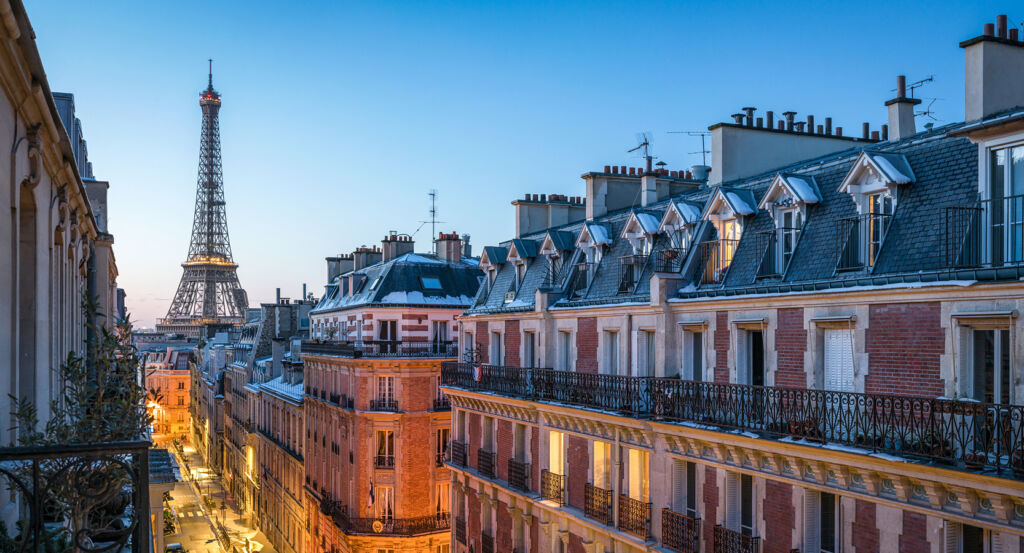
Set along Rue de Maubeuge near Rue Lamartine and just steps from Square Montholon, the hotel occupies the pointed corner of a cut-stone Haussmannian building dating to 1878, its pale façade establishing the architectural premise for the monochromatic world inside. Completely renovated and introduced as Hôtel Beige in 2021, the property turns cream, ecru, sand and greige into a disciplined visual character extending through 33 rooms and junior suites across five floors connected by a surviving period staircase. Balconies on upper categories exploit the building's acute corner geometry, with one Prestige room wrapping around the prow-like intersection and opening a sightline toward the Eiffel Tower. The result is a hotel where an 1878 Haussmannian shell and an unusually rigorous tonal concept transform Faubourg Montmartre's visual exuberance into something quieter, sharper and deliberately controlled.
What you should know about Hôtel Beige 4 étoiles Paris 9e.
Hôtel Beige 4 étoiles Paris 9e is best known for emerging in 2021 from the complete renovation of an 1878 Haussmannian corner building, transforming its cut-stone façade, period staircase and five accommodation floors into a 33-room boutique hotel conceived almost entirely through gradations of beige, cream, greige and ecru. Six accommodation categories progress from Classic and Superior rooms through balcony-equipped Deluxe and Prestige configurations to a Prestige room with Eiffel Tower views and the Junior Suite, while connecting rooms combine two sleeping spaces and two bathrooms across 27.5 square meters. The corner architecture becomes most explicit in the 16.5-square-meter Prestige Eiffel Tower room, where a wraparound balcony follows the pointed junction of Rue de Maubeuge and Rue Lamartine and mirrors and wall coverings emphasize the unusual geometry of the Haussmannian structure. Morphée devices extend the hotel's philosophy of controlled quiet into Deluxe categories and above through 16 screen-free meditation and sophrology sessions designed for sleep and nighttime waking, turning the property's deliberately subdued visual character into a broader physical program.
Nathalie Julio develops Hôtel Beige 4 étoiles Paris 9e's visual authorship through the property's styling, reinforcing a palette that treats variations within a single neutral family as the hotel's defining decorative language. Christophe Bielsa extends that authorship through the hotel's photography, translating the pale stone façade, tonal guestrooms and sharply angled corner architecture into the visual character through which the 2021 property presents itself. Morphée introduces a different design discipline through hardware intentionally operating without screens or wireless connectivity, using its 16-session library to connect the quietness promised by the interiors with an explicit ritual of rest. Together, Nathalie Julio, Christophe Bielsa and Morphée reinforce the same concept established by the 1878 building itself, allowing color, image, architecture and sleep technology to converge around Hôtel Beige's unusually disciplined interpretation of quiet.
How to fold Hôtel Beige 4 étoiles Paris 9e into your trip.
Hôtel Beige 4 étoiles Paris 9e works as the anchor for an afternoon moving from Romantic salon culture through the audacity of Parisian music hall into a final encounter with the nineteenth century's fascination with celebrity and performance.
Begin at Musée de la Vie Romantique, where Ary Scheffer settled in an Italianate pavilion in 1830, added two north-facing studios and hosted Friday salons between 1831 and 1858 that brought Delacroix, Chopin, Liszt, George Sand, Rossini, Dickens and Pauline Viardot into the creative world of Nouvelle Athènes. Continue to Folies Bergère, born on May 2, 1869 when Albert Boislève converted part of the former Les Colonnes d'Hercule bedding store into a theater-café-concert with 768 auditorium seats and 400 café seats beneath the iron-framed structure developed by architect Plumeret. Conclude at Musée Grévin, where Le Gaulois founder Arthur Meyer recruited caricaturist Alfred Grévin to give three-dimensional faces to newsmakers before opening the museum on June 5, 1882, with financier Gabriel Thomas arriving in 1883 and later enriching the institution with the Grévin Theatre and Hall of Mirrors. The progression moves from Scheffer's private republic of artists through the democratic entertainment of Folies Bergère into Meyer and Grévin's conversion of public fame into physical performance, revealing the extraordinary nineteenth-century culture of personality surrounding Hôtel Beige.
Where your story begins.
Foresyte Travel reveals places that feel extraordinary long before you arrive.
Experience premium editorial crafted for luxury travelers.














































































































