Why you should experience Hotel De Tuilerieën in Brugge, Belgium.
Hotel De Tuilerieën is where Brugge feels refined, inward, and almost ceremonial in its calm, a canal-side residence that trades movement for stillness and visibility for quiet authority.
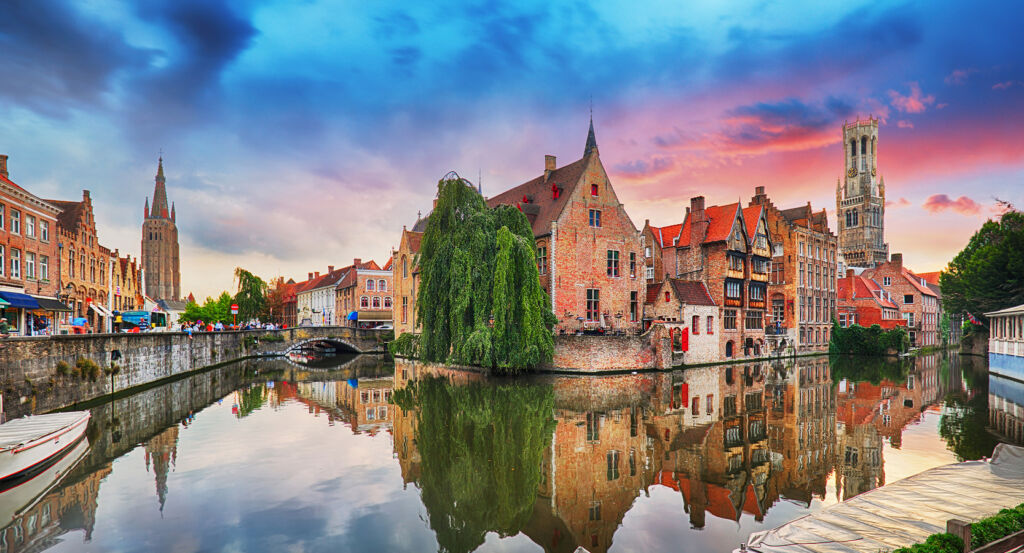
Brugge is often experienced as a city in motion, its beauty unfolding through walking routes, bridges, and public squares that reward constant movement. Hotel De Tuilerieën asks for the opposite. Set along the Dijver canal, among the city's most dignified and visually composed waterways, the hotel positions you in a place where Brugge slows down and gathers itself. Arrival feels composed and intentional. The façade presents confidence without display, signaling immediately that this is not a place competing for attention. Crossing the threshold feels like entering a private interior world that has already decided its pace. Inside, the atmosphere is hushed, polished, and deliberately restrained. Interiors lean toward classical balance rather than decorative excess, with rich fabrics, warm wood, and carefully chosen art creating a sense of cultivated continuity. Public spaces are elegant but not grandiose, arranged to encourage pause, quiet conversation, and observation. There is a palpable sense of enclosure here, not as confinement but as protection, allowing the city's intensity to recede. Guest rooms extend this sense of cultivated calm. Each room feels carefully proportioned and thoughtfully appointed, favoring symmetry, texture, and softness over statement. Beds are deeply comfortable and positioned to anchor the room. Lighting is layered and warm, designed to create a sense of evening ritual. Furnishings emphasize quality and tactility, with seating, storage, and surfaces arranged to support lingering. Many rooms overlook the canal or the hotel's quiet surroundings, reinforcing the feeling that Brugge is present but subdued. Bathrooms are spacious and refined, finished in marble and stone, offering deep tubs, strong water pressure, and layouts that encourage unhurried routine. Throughout the hotel, sound is managed with exceptional care. Thick walls, soft materials, and inward-facing rooms create an acoustic environment where silence feels intentional and dignified. Even during peak seasons, the hotel maintains a sense of separation that allows the city to be absorbed slowly. Service at Hotel De Tuilerieën reflects this same composure. Interactions are polished, attentive, and discreet, guided by an understanding that guests here often value privacy and rhythm over performance. Assistance feels anticipatory without being intrusive, and recommendations are offered with confidence rather than excess. The location completes the experience. While steps from Brugge's cultural landmarks, the hotel's position along the canal ensures that returning always feels like entering a calmer register. Hotel De Tuilerieën does not attempt to reinterpret Brugge or dramatize its past. It offers a way to experience the city through stillness, allowing its depth, elegance, and continuity to surface gradually and remain intact.
What you should know about Hotel De Tuilerieën.
Hotel De Tuilerieën occupies a site deeply tied to Brugge's aristocratic domestic history, a lineage that continues to shape the hotel's sense of refinement and inward focus.
The building dates back several centuries and was once part of a network of noble residences positioned along Brugge's most prestigious canals. These waterways were not merely scenic; they were markers of status, access, and permanence. Residences along canals like the Dijver were designed to reflect stability and cultivation rather than commercial utility, favoring proportion, enclosure, and material quality. This heritage remains legible in the hotel's structure today. The building's layout emphasizes symmetry and separation, with rooms arranged to minimize exposure and maximize privacy. When the property was adapted into a hotel, the guiding principle was preservation through continuity. Original architectural elements were retained where possible, and modern comforts were integrated discreetly to avoid disrupting the building's internal logic. One lesser-known aspect of the hotel is how intentionally it embraces classical restraint. Rather than leaning into medieval ornamentation or overt historical storytelling, the interiors reflect a later, more cultivated period of Brugge's history, one shaped by wealth, diplomacy, and cultural refinement. This choice creates an atmosphere that feels timeless rather than period-specific, allowing the hotel to avoid becoming a historical pastiche. Another defining element is the hotel's relationship with ritual. Spaces are arranged to support patterns of behavior rather than performance. Sitting rooms encourage reading and conversation, corridors guide movement quietly, and views are framed. This spatial discipline has a psychological effect. Guests often slow their pace unconsciously, lower their voices, and spend more time inhabiting spaces. The canal itself plays a central role in this experience. Historically, canals like the Dijver were designed to be observed from within private residences. Reflections on the water, changing light, and quiet movement reinforce the sense of Brugge as a city of depth. Over time, Hotel De Tuilerieën has attracted travelers who value discretion and composure. Diplomats, cultural travelers, repeat visitors, and those seeking a quieter engagement with Brugge often return precisely because the hotel does not attempt to reinvent itself. The service culture reinforces this continuity. Staff engage with guests through subtle attentiveness rather than overt hospitality gestures, offering guidance that feels informed and measured rather than exhaustive. In a city where history is often presented as something to be consumed quickly, Hotel De Tuilerieën preserves history as atmosphere. It allows Brugge's aristocratic calm to remain present without explanation, making the experience feel inherited rather than curated.
How to fold Hotel De Tuilerieën into your trip.
Hotel De Tuilerieën works best when you allow it to set the resonant and temporal pace of your Brugge experience, using calm as a structure.
Begin your mornings slowly. The canal-side setting makes early hours especially resonant, with light reflecting softly on water and the city still largely at rest. Take time over breakfast, observe the movement outside, and let the day begin. From the hotel, explore Brugge deliberately. Walk toward nearby museums, churches, and squares, but resist the urge to stack experiences tightly. Knowing that you can return easily to genuine quiet changes how you engage with the city. Midday returns to the hotel are not indulgences; they are essential resets. A pause in your room, a moment overlooking the canal, or time spent reading in a sitting room allows Brugge's density to settle. In the afternoon, focus on experiences that reward attention and restraint. Visit smaller museums, walk lesser-used canal paths, or spend time in places where the city feels composed. The hotel's location makes these choices feel natural. Evenings benefit from simplicity. Choose dinner nearby or within walking distance, then return as Brugge softens and crowds thin. Walking back along the canal at night reinforces the sense that the city is at its most eloquent when it is quiet. Re-entering Hotel De Tuilerieën feels like stepping into a protected interior world where the day's impressions can settle. On longer stays, this rhythm becomes transformative. Alternating outward engagement with inward stillness prevents fatigue and allows each day to feel distinct. Brugge reveals itself most fully through repetition, familiarity, and calm observation, and the hotel's character supports this. When departure day arrives, leaving Hotel De Tuilerieën feels measured rather than abrupt, as though you are stepping back into motion from a place that has held you gently rather than impressed you loudly. The hotel does not ask you to conquer Brugge or decode it quickly. It provides the conditions to experience the city through composure, privacy, and attention, allowing its elegance to remain with you long after you leave.
Where your story begins.
Foresyte Travel reveals places that feel extraordinary long before you arrive.
Experience premium editorial crafted for luxury travelers.