Why you should experience Hotel Dukes' Palace in Brugge, Belgium.
Hotel Dukes' Palace is where Brugge reveals its true hierarchy, not as a city of charm alone, but as a former seat of power, discipline, and cultivated authority that still quietly governs the space it occupies.
Brugge is often experienced as something ornamental, a place of canals and cobblestones admired from a respectful distance, but Hotel Dukes' Palace dissolves that surface-level reading the moment you arrive. This is not a hotel layered onto history or styled to resemble it. It is history that never relinquished its position. Set slightly removed from the city's busiest arteries yet firmly within its medieval core, the palace establishes a tone of separation and control. Entering through its gates feels less like a check-in and more like crossing into a protected inner court, a place where the noise of the city falls away and time recalibrates itself. The exterior is substantial rather than decorative, its stonework heavy with purpose, its scale measured but authoritative. Inside, the atmosphere is defined by restraint. Vaulted ceilings, cloister-like corridors, polished stone floors, and carefully preserved architectural details create a sense of order that feels inherited. Light enters deliberately, filtering through tall windows and archways, reinforcing the feeling that this is a place designed for governance, reflection, and permanence. The public spaces feel composed and calm, encouraging slower movement and quieter observation. Nothing asks for attention, yet everything commands respect. Guest rooms continue this philosophy with disciplined elegance. Spaces are generous without feeling indulgent, refined without becoming ornate. High ceilings, large windows, and carefully proportioned layouts give each room a sense of air and authority, allowing you to inhabit the space. Beds are plush and deeply comfortable, positioned as anchors rather than focal points, while furnishings favor quality and weight over trend or novelty. The palette is subdued and dignified, allowing the architecture itself to carry the resonant weight of the experience. Bathrooms are spacious and composed, finished in marble and stone, offering deep tubs, strong water pressure, and an atmosphere that feels ritualistic. Throughout the hotel, silence plays an active role. There is a palpable sense of insulation from the outside world, as though the palace absorbs sound and urgency, leaving behind a quieter internal rhythm. The gardens reinforce this feeling. Tucked within the palace grounds, they offer manicured lawns, shaded paths, and secluded benches that feel monastic in their calm. Sitting there, Brugge feels distant despite being only steps away. Service at Hotel Dukes' Palace matches the setting. It is formal without stiffness, attentive without intrusion, and delivered with the confidence of a place that understands its own standing. Staff interactions feel precise and respectful, shaped by an understanding that this is a property where presence matters as much as performance. The location completes the experience. From the palace, the entirety of Brugge unfolds easily on foot, yet returning always feels like retreat.
What you should know about Hotel Dukes' Palace.
Hotel Dukes' Palace occupies one of the most historically significant sites in Brugge, a place where the city's political and cultural authority was once concentrated.
The palace was originally constructed as the residence of the Dukes of Burgundy, whose rule during the late Middle Ages transformed Brugge into one of Europe's most influential commercial and cultural centers. Under Burgundian control, Brugge was not merely prosperous; it was strategic. Trade routes, financial institutions, artistic patronage, and political alliances converged here, and the palace functioned as a seat of decision-making. Its architecture reflects that role. Rather than extravagance, the design emphasizes solidity, symmetry, and controlled grandeur. Thick stone walls, enclosed courtyards, and cloistered passages were intended to protect power as much as display it. Over time, the palace transitioned into ecclesiastical use, becoming a monastery and later a seminary, further reinforcing its association with discipline, order, and contemplation. These successive identities shaped the building's internal logic. Spaces were designed for study, reflection, and governance, not entertainment. When the property was eventually transformed into a hotel, the restoration process focused on preservation. Original structures were carefully maintained, with modern comforts integrated discreetly so as not to disrupt the architectural narrative. One lesser-known detail is how many of the corridors and courtyards follow medieval circulation patterns, intentionally separating public and private movement. This design still influences how the hotel feels today, creating natural quiet zones and moments of seclusion. The gardens, too, reflect monastic traditions, designed not as decorative landscapes but as controlled environments for contemplation. Unlike many historic hotels that lean heavily on performance, Hotel Dukes' Palace derives its authority from continuity. It has served power, faith, and now hospitality. This layered history gives the property a psychological weight that cannot be replicated through design alone. Staying here is not about nostalgia. It is about proximity to a lineage of authority that shaped Brugge's rise and left an imprint still legible in stone, proportion, and silence.
How to fold Hotel Dukes' Palace into your trip.
Hotel Dukes' Palace works best when you allow it to function as your private counterpoint to Brugge's public beauty, a place of return.
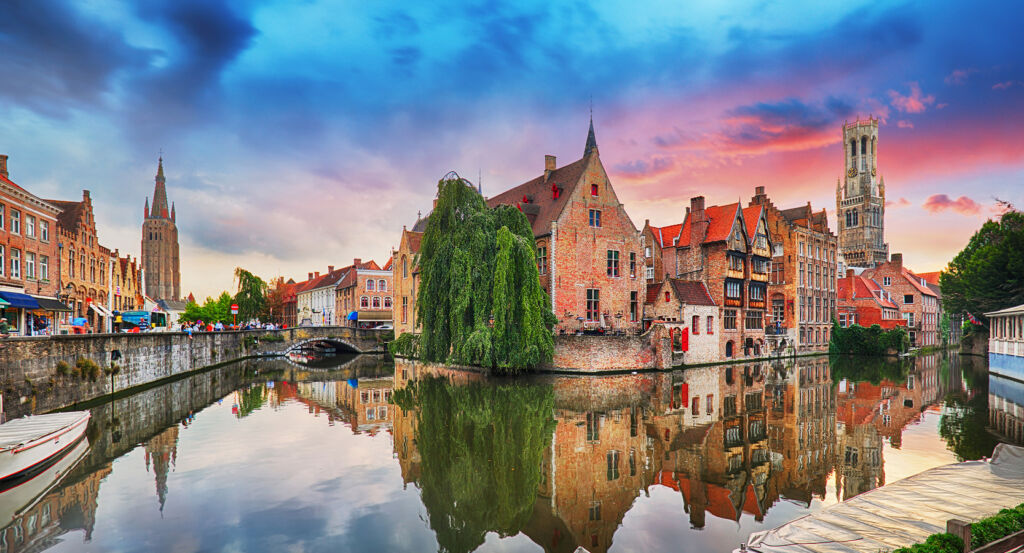
Begin your days slowly, letting the palace set your internal pace before engaging with the city. Morning light filtering through tall windows and across stone floors creates a sense of grounded calm that makes early hours feel deliberate. Step out on foot to explore Brugge's canals, squares, and museums, knowing that the palace remains a quiet constant behind you. Visit the Markt, the Belfry, and the Groeningemuseum, then wander without agenda through side streets where the city feels less staged and more lived in. Midday returns to the hotel feel natural. Pause in the gardens, sit with a book, or simply allow the silence to recalibrate you before heading back out. In the afternoon, explore Brugge's culinary landscape, from refined Flemish dining to intimate cafés tucked into centuries-old buildings. The palace's location allows you to experience the city fully while maintaining resonant distance from its crowds. Evenings benefit from restraint. Rather than overscheduling, let the day taper into a slower rhythm. A drink in the hotel's bar or a quiet walk through the gardens grounds the experience, reminding you that Brugge's magic is as much about stillness as performance. On longer stays, this balance becomes essential. The palace absorbs the intensity of sightseeing, preventing physical fatigue and allowing each day to feel distinct. When it is time to depart, leaving does not feel abrupt. It feels like stepping back into the present from a place that exists slightly outside of it. Hotel Dukes' Palace does not aim to entertain or overwhelm. It offers something rarer: a chance to inhabit Brugge from a position of composure, authority, and calm, experiencing the city not as a visitor chasing beauty, but as a temporary custodian of its deeper order.
Where your story begins.
Foresyte Travel reveals places that feel extraordinary long before you arrive.
Experience premium editorial crafted for luxury travelers.