
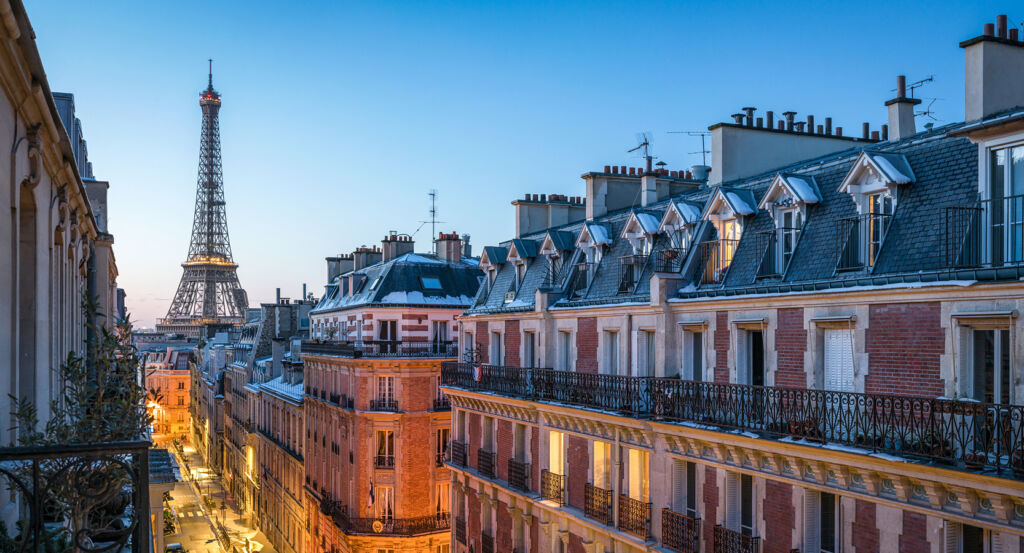
Why you should experience Hôtel Le Pradey Paris 1e Arrondissement in Paris, France.
Hôtel Le Pradey Paris 1e Arrondissement is a cultivated four-star hotel where Palais-Royal's decorative refinement, couture heritage, artistic patronage and centuries of Parisian craftsmanship converge within a 28-room collaboration spanning architecture and fashion.
Set along Rue Saint-Roch near Rue de Rivoli and just steps from Jardin des Tuileries, the hotel emerged in 2011 with interiors by architect Vincent Bastie, who used zinc, wood, Paris stone and concrete to root the contemporary property in materials associated with the capital. Designer Chantal Thomass created the Cabaret and Petit Rat de l'Opéra suites through red velvet, pink satin, ballet shoes and tutu tulle, translating her fashion style into theatrical interiors, while the fifth floor developed a separate relationship with Maison Hermès through furniture and textiles associated with the house. Hermès references extended to pieces connected with Jean-Michel Frank and Rena Dumas, placing French decorative design alongside Bastie and Thomass within the same small property. The result is a hotel where Vincent Bastie, Chantal Thomass and Maison Hermès turn a Rue Saint-Roch address into a concentrated expression of Parisian architecture, fashion and decorative craftsmanship.
What you should know about Hôtel Le Pradey Paris 1e Arrondissement.
Hôtel Le Pradey Paris 1e Arrondissement is best known for opening in 2011 as a 28-room design hotel shaped through three distinct creative signatures, architect Vincent Bastie, fashion designer Chantal Thomass and Maison Hermès. Bastie established the architectural structure through zinc, wood, stone and concrete while developing rooms whose original identities referenced major Parisian sites including Louvre, Grand Palais, Géode and Saint-Roch, embedding interpretations of the capital directly into the accommodation concept. Chantal Thomass brought an entirely different authorship to the Cabaret and Petit Rat de l'Opéra suites, translating the theatricality of her fashion career through froufrous, red velvet, pink satin, pointe shoes and tutu tulle, while contemporary documentation specifically identified the two interiors as her creations. The fifth floor developed another design lineage through Maison Hermès textiles and furniture, with suites named L'Explorateur, L'Écuyère and Les Carrés and materials including leather, cashmere and silk, while opening coverage connected the furnishings with Jean-Michel Frank and Rena Dumas. Vincent Bastie's architectural vocabulary, Chantal Thomass's two fashion-authored suites and the Hermès-associated fifth floor established Hôtel Le Pradey Paris 1e Arrondissement as a collaboration among distinct branches of French design rather than a property built around a single decorative scheme.
Jean-Michel Frank gives the Hermès connection particular historical depth because the Parisian decorator developed furniture with the house during the 1920s and 1930s, while Rena Dumas later founded the architecture and interiors practice RDAI in 1972 and became deeply associated with the spatial language of Hermès stores. Chantal Thomass brought a separate history of challenging conventions in French lingerie and fashion into Le Pradey, making the Cabaret and Petit Rat de l'Opéra suites extensions of an established creative identity. Vincent Bastie completed the discussion through an architectural career encompassing numerous Paris hotels, using Le Pradey's mezzanine, salon-library and material palette to organize the competing fashion and decorative references within a coherent interior. Jean-Michel Frank, Rena Dumas, Chantal Thomass and Vincent Bastie consequently connect Hôtel Le Pradey Paris 1e Arrondissement with several generations of French decorative authorship, allowing its design character to carry cultural provenance beyond the immediate 2011 opening.
How to fold Hôtel Le Pradey Paris 1e Arrondissement into your trip.
Hôtel Le Pradey Paris 1e Arrondissement works as the anchor for an afternoon tracing painting, decorative craftsmanship and artistic patronage through the institutions surrounding the Tuileries.
Begin at Musée de l'Orangerie, where Napoleon III commissioned Auguste Bourgeois in 1852 to construct an orangery in only four months before Georges Clemenceau championed its conversion for Claude Monet's Nymphéas, eight panels measuring two meters high and 91 meters in combined length that Monet donated to France and helped arrange with architect Camille Lefèvre before their 1927 installation. Continue to Musée des Arts Décoratifs, where an institution rooted in the 1864 Union centrale des beaux-arts appliqués à l'industrie eventually established its museum within the Louvre's Pavillon de Marsan, creating a collection dedicated to furniture, jewelry, fashion and the decorative arts that provides a natural institutional counterpart to Le Pradey's own connections with Hermès and Chantal Thomass. Conclude at Église Saint-Roch, whose origins reach to a chapel established in 1521 before Louis XIV laid the first stone of Jacques Lemercier's new church on March 23, 1653, beginning the architectural development of the building that gave Rue Saint-Roch its name. The progression moves from Monet's state-sponsored painting environment through France's decorative-arts tradition into the seventeenth-century church embedded within the hotel's own street, revealing the continuum of art, design and patronage surrounding Hôtel Le Pradey Paris 1e Arrondissement.
Where your story begins.
Foresyte Travel reveals places that feel extraordinary long before you arrive.
Experience premium editorial crafted for luxury travelers.














































































































