Why you should experience Hotel Montanus in Brugge, Belgium.
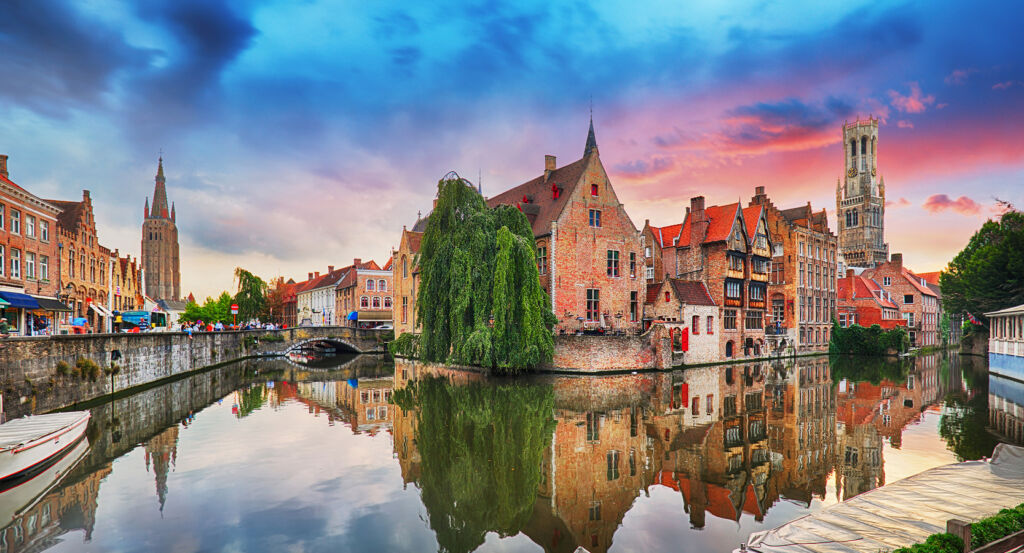
Hotel Montanus is where Brugge feels inward-facing, serene, and deliberately paced, a refined retreat that allows the city's medieval density to soften into something livable.
Brugge can easily press in on you. Its narrow streets, layered history, and steady flow of visitors create an experience that is visually rich but mentally demanding. Hotel Montanus offers relief not by distancing you from the city, but by reintroducing space, quiet, and composure into the equation. Set slightly south of the historic core near the Begijnhof and Minnewater, the hotel occupies a pocket of Brugge where the city exhales. Arrival feels calm and unforced. The property does not announce itself loudly or compete with its surroundings. Instead, it presents a measured, residential posture that immediately signals retreat. Inside, the atmosphere is controlled and balanced. Interiors favor symmetry, muted tones, and materials that absorb rather than reflect noise, creating an environment that feels protective without being insular. Public spaces are modest in scale but thoughtfully arranged, offering places to pause, converse, or simply sit. Movement through the hotel feels intuitive rather than directed, reinforcing a sense of ease that becomes increasingly valuable over multi-day stays. Guest rooms extend this sense of calm with disciplined comfort. Spaces are well-proportioned and uncluttered, designed to support rest. Beds are deeply comfortable and positioned to anchor the room. Lighting is layered and adjustable, allowing rooms to transition smoothly from morning clarity to evening quiet. Furnishings emphasize function and quality, offering enough storage and seating to settle in. Many rooms overlook the hotel's garden or quiet surroundings, reinforcing the sense of separation from the city's busier corridors. Bathrooms are clean, spacious, and composed, prioritizing warmth, layout, and ease of use over indulgent display. Throughout the hotel, sound is carefully managed. The surrounding neighborhood is quieter by nature, and the building's layout further buffers external noise, creating an acoustic environment that feels intentional. Service at Hotel Montanus reflects this restraint. Staff interactions are attentive, polite, and unintrusive, guided by an understanding that guests here often value calm continuity over performance. Assistance feels available without being imposed, and recommendations tend toward thoughtful rather than exhaustive. The location completes the experience. From the hotel, Brugge's historic center remains easily walkable, yet returning always feels like stepping back into a quieter register. Hotel Montanus does not attempt to dramatize Brugge or reinterpret its past. It offers a composed base that allows the city's richness to be absorbed gradually, making the experience feel restorative.
What you should know about Hotel Montanus.
Hotel Montanus occupies a site shaped by Brugge's quieter institutional and residential history, a lineage that continues to inform the hotel's sense of order and calm.
The area surrounding the hotel has long been associated with places of reflection rather than commerce, situated near the Begijnhof and Minnewater, both historically tied to contemplation, enclosure, and separation from the city's more transactional zones. This context matters. Buildings in this part of Brugge were designed to support sustained habitation and inward focus. Hotel Montanus inherits this spatial logic. Its layout emphasizes enclosure, gardens, and controlled circulation. When the property was adapted for hospitality, the guiding principle was balance. Original structures were preserved where possible, and newer elements were integrated with restraint to maintain coherence. One lesser-known aspect of the hotel is how intentionally it leverages green space. In a city where private outdoor areas are rare, the presence of gardens and quiet courtyards becomes a defining feature. These spaces are not decorative afterthoughts but functional buffers that shape the guest experience psychologically, offering moments of pause that reset attention between excursions. Another defining element is the hotel's relationship with repetition. Because the experience is not built around novelty or performance, longer stays feel sustainable. Guests often return to Hotel Montanus precisely because it does not demand engagement; it supports it. This has shaped a clientele that values rhythm, predictability, and calm over intensity. The service culture reinforces this identity. Staff operate with consistency and discretion, focusing on continuity. Interactions feel stable rather than transactional, making it easier for guests to settle into a routine. Over time, the hotel has evolved through measured updates rather than reinvention, preserving its core character while meeting contemporary expectations. In a city where many properties foreground history as a selling point, Hotel Montanus allows history to function quietly in the background. It does not ask to be admired. It provides structure, silence, and proportion, allowing Brugge to be experienced with a sense of balance that aligns naturally with the surrounding neighborhood.
How to fold Hotel Montanus into your trip.
Hotel Montanus works best when you let it serve as your point of equilibrium in Brugge, shaping your days through alternation.
Begin your mornings slowly. The hotel's calm environment and proximity to green space make early hours especially restorative, whether that means enjoying breakfast without urgency or stepping outside for a quiet walk near the Minnewater before the city fully awakens. From the hotel, enter Brugge deliberately. Walk toward the historic center at a measured pace, allowing the city's density to build gradually. Visit major landmarks when curiosity draws you, not because proximity demands it. Midday returns to the hotel are particularly valuable here. A brief pause in your room or garden allows the city's physical layers to settle, making afternoon exploration feel more perceptive and less exhausting. In the afternoon, focus on Brugge's quieter dimensions. Explore smaller museums, wander along canals away from the busiest routes, or spend time in neighborhoods where daily life continues beyond tourism. The hotel's location makes these choices feel natural. Evenings benefit from restraint. Choose dinner nearby or within walking distance, then return as crowds thin and Brugge softens into quiet. Re-entering Hotel Montanus at night feels like returning to a protected interior world. On longer stays, this rhythm becomes essential. Alternating outward engagement with inward calm prevents fatigue and allows each day to feel distinct. Brugge reveals itself most fully through balance rather than intensity, and the hotel's character supports this mode of travel intuitively. When departure day arrives, leaving Hotel Montanus feels composed rather than abrupt, as though you are stepping back into motion from a place that has quietly steadied you rather than competed for your attention. The hotel does not attempt to frame Brugge or interpret it for you. It provides calm, structure, and space, allowing the city's deeper character to surface gradually and remain with you long after you leave.
Where your story begins.
Foresyte Travel reveals places that feel extraordinary long before you arrive.
Experience premium editorial crafted for luxury travelers.