Why you should experience Hotel NH Brugge in Brugge, Belgium.
Hotel NH Brugge is where Brugge becomes grounded, navigable, and quietly reassuring, a stay that strips away performance and places you inside the city's lived rhythm.
Brugge can feel overwhelming when approached through its most famous images. The medieval density, the concentration of landmarks, and the steady flow of visitors can turn the city into something to manage. Hotel NH Brugge offers a different orientation. Housed in a former monastery near the city center, the hotel introduces Brugge through proportion, calm, and functional clarity. Arrival feels measured and straightforward. There is no sense of staged heritage or ornamental excess, only an immediate impression of solidity and order. The exterior carries a quiet authority, hinting at the building's original purpose as a place of structure and retreat. Inside, the atmosphere is calm and composed. The hotel's interiors favor space, light, and legibility, allowing you to understand where you are and how to move. Public areas feel open but not exposed, designed to support transition. The tone throughout is practical but warm, offering relief from the city's density. Guest rooms continue this sense of balance. Spaces are generous by Brugge standards, with layouts that prioritize usability and rest over decorative storytelling. Beds are supportive and comfortable, designed for real sleep after days spent walking stone streets. Lighting is layered and adjustable, allowing rooms to shift easily between morning clarity and evening calm. Furnishings are restrained and functional, offering sufficient storage and work surfaces so the room feels settled. Windows bring in Brugge's soft northern light and frame views of streets, rooftops, or internal courtyards, reinforcing the sense that you remain inside the city even when you are resting. Bathrooms are clean, spacious, and efficient, emphasizing layout, water pressure, and ease of use over visual drama. Throughout the hotel, sound is carefully managed. Despite its proximity to the city center, interior spaces remain calm, buffered by the building's thick walls and thoughtful circulation. The experience feels stable rather than stimulating, a quality that becomes increasingly valuable over multi-day stays. Service reflects this same sensibility. Staff interactions are professional, warm, and efficient, focused on clarity and reliability. Questions are answered directly, guidance is practical, and assistance feels timely. The location reinforces the hotel's role as a grounding base. Situated near the concert hall and within walking distance of Brugge's historic core, the hotel offers immediate access. Returning after a day in the city feels like stepping back into order, a subtle but meaningful shift in pace. Hotel NH Brugge does not attempt to dramatize Brugge or reinterpret its past. It provides a calm, functional environment that allows the city to be experienced steadily, making space for observation, rest, and continuity.
What you should know about Hotel NH Brugge.
Hotel NH Brugge occupies a former monastery whose original purpose continues to shape the hotel's atmosphere, spatial logic, and sense of calm.
The building was constructed as a place of discipline, reflection, and routine, qualities that remain legible in its proportions and layout. Thick walls, high ceilings, and orderly circulation patterns were designed to support focus rather than distraction, and these characteristics translate naturally into hospitality. Rather than masking this heritage with decorative excess, the hotel preserves its structural clarity. Corridors feel wide and legible, rooms are arranged with consistency, and shared spaces emphasize openness. One lesser-known aspect of the hotel is how effectively this monastic origin supports modern travel needs. Brugge's medieval urban fabric is dense and visually saturated, which can create physical fatigue over time. Hotel NH Brugge counterbalances this by offering interior spaces that feel neutral and restorative. The absence of heavy thematic design allows guests to decompress mentally, making the city easier to absorb over multiple days. Another defining element is the hotel's relationship with scale. Many properties in Brugge are constrained by narrow plots and irregular layouts, but NH Brugge benefits from the monastery's original footprint. This results in larger rooms, broader circulation areas, and a sense of spatial generosity that is rare in the city center. This generosity is not indulgent; it is functional, allowing guests to unpack, settle in, and establish a temporary routine. Over time, this has made the hotel particularly appealing to repeat visitors, business travelers, and those staying longer than a night or two. The service model reflects this audience. Rather than curating an experience, staff support continuity. Recommendations are practical and context-aware, helping guests navigate peak times, alternative routes, and local amenities. The hotel's evolution has followed a similar philosophy. Updates and renovations have focused on maintaining relevance and comfort. This incremental approach has preserved the building's calm authority while ensuring modern standards are met. In a city where many hotels lean heavily on history as a selling point, Hotel NH Brugge stands apart by allowing history to function quietly in the background. It does not ask to be admired; it asks to be used. This restraint gives the hotel a durability that aligns naturally with Brugge's own balance between preservation and daily life.
How to fold Hotel NH Brugge into your trip.
Hotel NH Brugge works best when you let it act as your stabilizing point, shaping your days through rhythm and recovery.
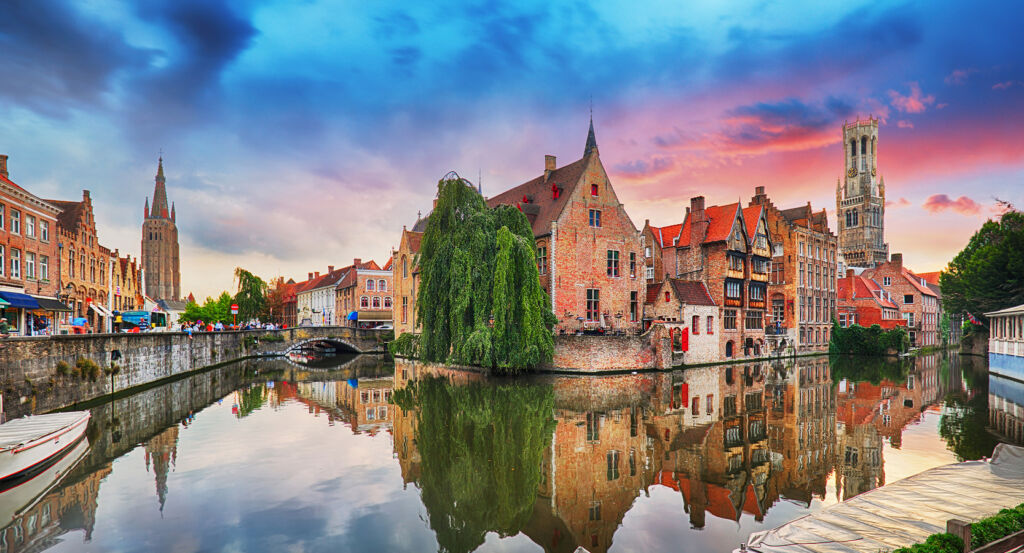
Begin your mornings. The hotel's calm interiors make it easy to start the day gradually, whether that means enjoying breakfast on site or stepping out early to experience Brugge before crowds gather. From the hotel, walk toward the historic center at a measured pace, letting the city unfold through streets. Visit the Markt, the Belfry, and nearby museums, then return to the hotel midday as part of your plan. This pause is essential. A brief rest, time to reorganize, or simply sitting in a quieter environment allows the city's density to settle, making afternoon exploration more perceptive. In the afternoon, explore Brugge's quieter layers. Walk along canals away from the busiest routes, visit neighborhood cafés, or spend time in cultural spaces that reward attention. The hotel's location makes these choices feel natural. Evenings benefit from simplicity. Choose a nearby restaurant, enjoy a slow walk as the city softens, and return to the hotel. On longer stays, this pattern becomes increasingly valuable. Alternating between outward engagement and inward calm prevents physical overload and allows Brugge's character to emerge gradually. Each day feels distinct, shaped as much by rest as by discovery. When departure day arrives, leaving Hotel NH Brugge feels composed rather than abrupt, reinforcing the hotel's role as a functional anchor rather than a destination unto itself. The hotel does not attempt to frame Brugge or interpret it for you. It provides space, clarity, and continuity, allowing you to experience the city steadily and fully, with enough calm to let its deeper character reveal itself over time.
Where your story begins.
Foresyte Travel reveals places that feel extraordinary long before you arrive.
Experience premium editorial crafted for luxury travelers.