
Why Hotel The Mitsui Kyoto, a Luxury Collection Hotel & Spa matters.
Hotel The Mitsui Kyoto, a Luxury Collection Hotel & Spa is Kyoto reimagined as calm, architectural intelligence, and cultural presence, a hotel that doesn't just sit in one of the world's most delicate historic cities, but inhabits it with specificity, restraint, and a depth that unfolds over time.
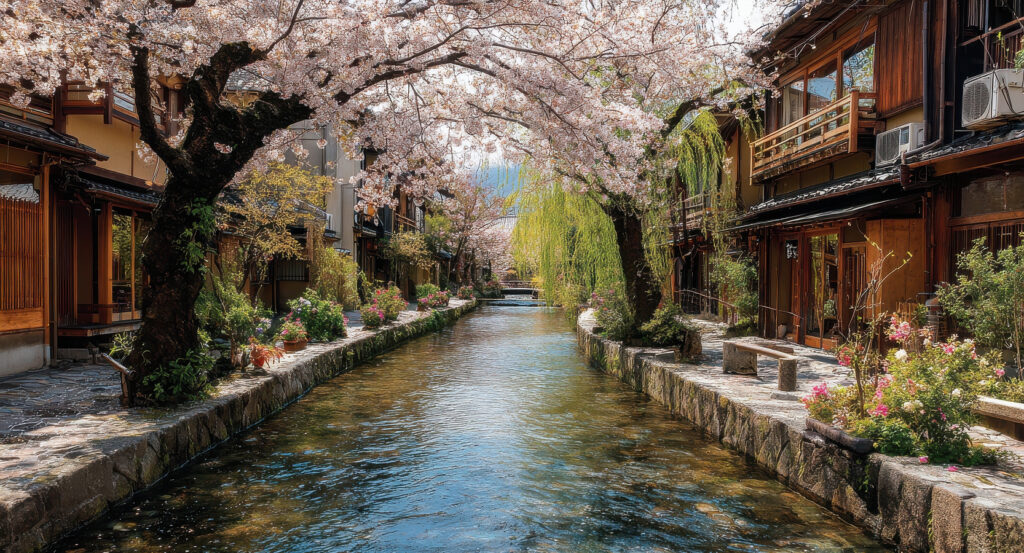
Located in the Nakagyo Ward near the Shirakawa Canal and the historic Miyagawacho geisha district, the hotel occupies a position that balances proximity to Kyoto's ancient spiritual landscapes with access to the city's urban rhythms. Arrival here does not feel like crossing a threshold into a brand experience; it feels like entering a composed world shaped by material clarity, spatial logic, and the quiet articulation of time. The exterior architecture is subtle and refined, signaling thoughtful restraint. Inside, public areas are generous yet hushed: soaring volumes, expanses of natural light, and curated materiality create an environment that encourages presence, reflection, and a sense of ease that feels rare in dense urban cores. There is no physical overload. Instead, space is composed like a slow unfolding, allowing your nervous system to settle and your attention to recalibrate. Guest rooms and suites extend this philosophy with remarkable coherence. They are spacious by Kyoto standards and arranged to support rest, work, and contemplative pause. Beds are deeply comfortable and engineered for restorative sleep after days spent walking temple gardens, shrines, traditional neighborhoods, and museum corridors. Floor-to-ceiling windows frame views of inner gardens, tree-lined canal paths, or the city's low rooflines, integrating Kyoto's texture into daily life. Furniture is purposive and elegantly restrained. Desks support real work, seating invites lingering reflection, and storage allows you to unpack fully and inhabit the room as a place of habitation. Lighting is among the hotel's defining strengths, layered, indirect, and calibrated to support both activity and calm without abrupt contrast, enabling smooth psychological transitions throughout the day. Bathrooms are generous and quietly luxurious, designed as places of private sanctuary. Deep soaking tubs, walk-in rain showers, and high-quality finishes make the everyday ritual of bathing feel restorative, reinforcing the hotel's overarching emphasis on ritual and presence. Dining at The Mitsui Kyoto continues the hotel's disciplined approach. Culinary experiences here are rooted in seasonality, local sourcing, and refined technique, presented in spaces that support focus and conversation. Whether dining formally or casually, the experience feels aligned with Kyoto's culinary character: thoughtful, measured, and tho contextual. The hotel's spa is a place of quiet reset, designed to support relaxation, renewal, and somatic calm, with treatments that draw on Japanese wellness traditions and international expertise. Service throughout the hotel is attentive, intuitive, and emotionally literate. Interactions feel guided by timing and awareness rather than script, offering support that feels personal without intrusion. Staff anticipate needs quietly and step back with equal grace. The Mitsui Kyoto attracts travelers who value depth over flash: cultural explorers, long-stay visitors, couples seeking calm rather than cliché, and anyone who wants Kyoto to be experienced through feeling rather than checklist. This is a hotel that acknowledges the city's complexity and offers a structure where its layers, aesthetic, spiritual, historical, become legible and resonant.
What defines Hotel The Mitsui Kyoto.
Hotel The Mitsui Kyoto was conceived not as a hotel in Kyoto, but as an architectural and experiential extension of Kyoto's spatial and cultural logic, drawing on traditional Japanese architectural principles rather than resorting to stylized heritage tropes.
The property occupies a site historically linked to Kyoto's merchant class and canal trade, and its design responds to that lineage through the disciplined use of space, sequence, and material. Architects and designers prioritized flow over frame, creating transitions between public and private that feel natural. Rather than using grand gestures, the hotel uses proportion, repetition, and balance to shape experience. Materials were selected for tactile presence and aging quality. Natural stone, warm timber, brushed metal, and subdued textiles interact with light and shadow to create environments that absorb presence. Public spaces were developed as sequences: arrival, lounge, dining, and circulation are arranged to support calm movement and tonal consistency under varying conditions of light, density, and use. Guest room layouts were resolved through observation of how people actually inhabit space over multiple nights: movement paths, unpacking patterns, rest points, and light exposure were all considered in spatial decisions. This results in rooms that feel intuitive and complete. Storage, work spaces, and seating were integrated based on real use. Lighting was integrated early in the architectural process rather than retrofitted, enabling layers that support circadian rhythm and minimize visual strain. Bathrooms were designed as hermetic retreats rather than transitional spaces, emphasizing enclosure, material subtlety, and water as a restorative agent. The spa occupies spaces where enclosure, silence, and material warmth support psychological reset as much as physical relaxation. Operational culture reflects this architectural intent. Staff training emphasizes contextual awareness, cultural literacy, and adaptive response. Interactions feel rooted in situation rather than protocol, enabling service that feels genuinely helpful rather than performative. Over time, the hotel has cultivated a loyal following among travelers who return not for novelty, but because the experience remains coherent and grounding under repeated use. In a landscape where many city hotels oscillate between heritage theming and international sameness, The Mitsui Kyoto stands apart by listening to place.
How Hotel The Mitsui Kyoto fits.
Hotel The Mitsui Kyoto works best when you treat it as a temporal anchor of calm and presence rather than a backdrop you pass through between activities.
Begin mornings with deliberate ease: enjoy breakfast in composed surroundings, letting light and stillness orient your internal rhythm before stepping into Kyoto's layered streets. Walk toward Gion's historic lanes in soft morning light, explore the Philosopher's Path while crowds are still quiet, or visit temples like Nanzen-ji and Eikan-do with a sense of slow acquisition. Because the hotel sits slightly removed from the busiest tourist corridors, returning midday feels restorative. Come back to rest, read, or simply be with the garden view before heading out again. Afternoons lend themselves to deeper kind of exploration: craft districts, tea houses, museums with calm corners, and quiet shrines that reward unhurried attention. Evenings unfold with subtle reward. Dine in refined local restaurants, attend traditional performances, or wander Shirakawa Canal at dusk before returning to a space that absorbs energy. Late returns feel natural rather than abrupt because the hotel's spatial language supports calm transition. Hotel The Mitsui Kyoto pairs especially well with longer stays, repeat visits, and itineraries focused on cultural immersion. By the time you leave, Kyoto will feel less like a sequence of landmarks and more like a lived environment, and the hotel will feel like the place that made that lived experience legible. In a city defined by ritual, refinement, and resonance, The Mitsui Kyoto offers a rare advantage: luxury that listens, shapes, and holds presence.
Where your story begins.
Foresyte Travel reveals places that feel extraordinary long before you arrive.
Enjoy editorial crafted for luxury travelers.
Foresyte may earn a commission when you book.

















































































































