Why Kadeau matters.
Kadeau is a three-MICHELIN-starred Danish restaurant where Christianshavn's historic maritime character meets Nicolai Nørregaard's deeply personal interpretation of Bornholm's agricultural heritage, connecting island-grown ingredients, traditional preservation techniques and Scandinavian craftsmanship within one of Copenhagen's most consequential culinary institutions.
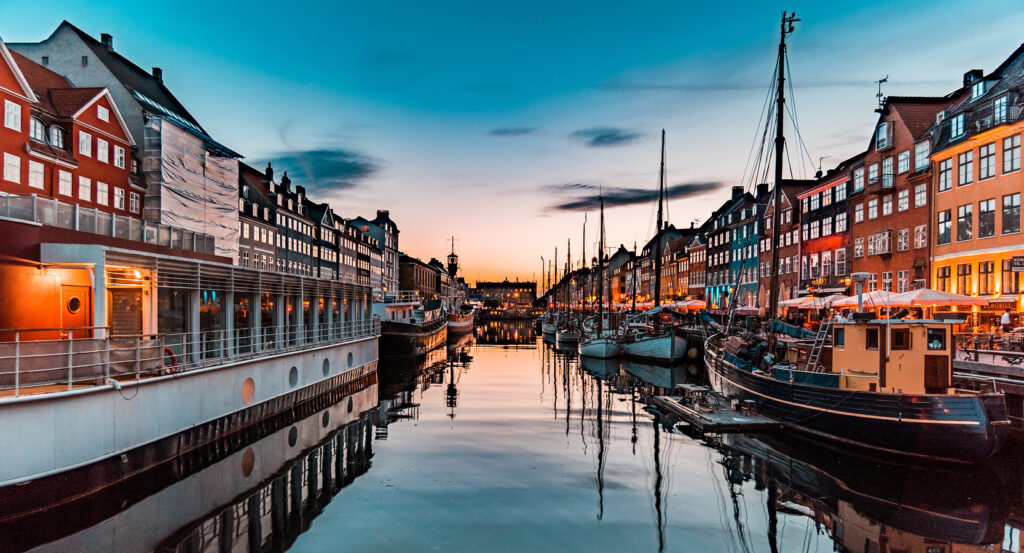
Wildersgade runs through Christianshavn's historic residential and commercial quarter near Sankt Annæ Gade, placing the restaurant between the waterfront warehouses of Strandgade and the canal-side streets surrounding Christianshavns Torv, a short walk from the Danish Architecture Center's former neighborhood of merchant houses and maritime workshops. The discreet street-level entrance opens into an intimate interior conceived by Danish design practice OEO Studio, combining Scandinavian craftsmanship with restrained Japanese influences. Oak surfaces, brass detailing and carefully selected natural materials establish a warm architectural composition organized around a prominent open kitchen. Handmade ceramic tableware, understated furnishings and soft lighting contribute to a dining environment whose material character changes subtly with the seasons. The result is a restaurant whose compact urban setting, carefully composed interiors and direct relationship between kitchen and dining room establish an intimate architectural counterpart to its ambitious culinary program.
What defines Kadeau.
Kadeau is best known for transforming the agricultural traditions of Denmark's Baltic island of Bornholm into an internationally influential restaurant group, culminating in Copenhagen's third MICHELIN star in 2026. Its origins lie in the childhood friendship of Nicolai Nørregaard, Rasmus Kofoed and Magnus Klein Kofoed, three Bornholm natives whose early experiences connected food with the island's fishing communities, agricultural production and traditions of household preservation. Nørregaard grew up in Svaneke on Bornholm's eastern coast, developing an appreciation for locally cultivated vegetables, freshly caught seafood and the seasonal requirements of island life through his grandfather's cooking. His professional development followed an unconventional path, beginning with restaurant work at Svaneke Pakhus after an initial interest in studying architecture. The self-taught chef subsequently joined Rasmus Kofoed in acquiring a small restaurant near the sandy beaches of Øster Sømarken, establishing the original Kadeau Bornholm in 2007. Their first restaurant occupied a coastal setting whose isolation encouraged close relationships with local growers, fishermen and producers, establishing the foundations of a distinctive approach to Danish ingredients. Early critical recognition developed during 2008 and 2009, followed by a substantial increase in national attention during 2010 as the New Nordic culinary movement gained international prominence. The partners expanded to Copenhagen in 2011, creating a year-round restaurant that complemented the Bornholm establishment's seasonal operating calendar. Their first metropolitan premises were exceptionally compact, occupying seventy square meters encompassing the kitchen, dining room and supporting facilities. The Copenhagen operation subsequently relocated to larger premises in Christianshavn, establishing a permanent setting for the increasingly ambitious culinary program. MICHELIN awarded Kadeau Copenhagen its first star in 2013, recognizing the restaurant's development of Bornholm ingredients through contemporary Nordic techniques. The original Bornholm restaurant received its own MICHELIN star in 2016, becoming the first restaurant on the island to achieve the distinction. A substantial refurbishment of the Copenhagen restaurant during the same year reduced seating capacity and introduced a more intimate dining environment, with OEO Studio developing an interior grounded in Scandinavian materials and Japanese design principles. Kadeau Copenhagen received its second MICHELIN star in 2018, establishing the restaurant among Denmark's leading fine-dining institutions. The business expanded its leadership structure in 2022 when longtime head chef Kyumin Hahn became a partner, joining the founding team in directing the restaurant's development. Both Kadeau restaurants received MICHELIN Green Stars in 2023, recognizing their sustained commitment to environmentally responsible gastronomy and agricultural relationships. International recognition continued in 2025 when Kadeau entered The World's 50 Best Restaurants ranking at number forty-one, bringing its distinctive Bornholm-centered cooking into a wider global culinary conversation. The restaurant reached another milestone in 2026 when the MICHELIN Guide Nordic Countries elevated Kadeau Copenhagen to three stars, its highest classification. Nørregaard's achievement carried particular significance through his self-directed culinary education and the sustained development of an approach rooted in the food traditions of his childhood. Kadeau's evolution connects a modest coastal restaurant with the highest level of international gastronomic recognition, establishing Bornholm's agricultural heritage as the foundation of an influential contemporary Danish institution.
Nicolai Nørregaard's culinary direction begins with the seasonal possibilities of Bornholm's distinctive island climate, developing ingredients through cultivation, foraging, fermentation and carefully controlled preservation. The kitchen organizes its annual repertoire into two principal periods, Growing Season and Preservation Season, connecting the restaurant's cooking directly with the agricultural calendar. Summer preparations emphasize fresh herbs, vegetables, fruits and flowers harvested at their peak, allowing their natural sweetness, acidity and aromatic character to shape individual courses. Winter cooking draws upon ingredients preserved during the warmer months, transforming the same agricultural products through drying, pickling, fermentation and other methods that develop concentrated flavors. Kadeau's dedicated kitchen garden occupies four cultivated plots on Bornholm, including two greenhouses, and supplies both restaurants with vegetables, herbs, fruit and honey. The garden began in 2012 through the work of Nørregaard's father, Flemming, and subsequently developed under Emil, a former sous-chef whose agricultural practices emphasize healthy soil and permaculture. Its cultivation program incorporates ingredients suited to Bornholm's comparatively mild coastal conditions, including figs, cherries, plums and mulberries. These fruits contribute natural acidity and sweetness to preparations developed around the relationship between fresh produce and preserved ingredients. Wild plants gathered from the island's coastal landscapes and woodland environments introduce additional botanical character, connecting the kitchen with the agricultural and ecological diversity of the Baltic region. Fermentation provides a central method for extending these ingredients across the year, allowing naturally occurring microorganisms to develop acidity, savory depth and aromatic complexity. Pickling establishes a complementary approach through the controlled application of salt, vinegar and sugar, preserving delicate vegetables and fruits while introducing contrasting textures. Drying concentrates flavor by reducing moisture, creating ingredients whose intensity supports preparations involving seafood, meat and cultivated produce. Smoking contributes another connection with Bornholm's historical food culture, drawing upon methods associated with the island's fishing communities and traditional smokehouses. Nordic seafood provides an essential foundation through its delicate textures and natural salinity, establishing relationships with preserved berries, coastal herbs and fermented vegetable preparations. Carefully sourced meats contribute additional depth through controlled cooking and accompaniments developed from the restaurant's seasonal pantry. Beetroot demonstrates the kitchen's ability to develop an ordinary agricultural ingredient through contrasting treatments, connecting earthy sweetness with the resinous aromatic character of coniferous plants. Walnut preparations extend the same attention to texture and concentration through pastry techniques that develop roasted aromas and balanced sweetness. The restaurant's ceramics contribute another distinctive element through Nørregaard's longstanding collaboration with Bornholm ceramicist Torben Lov, whose workshop, Lov i Listed, produces the handmade tableware used across the Kadeau restaurants. Their partnership has continued for more than fifteen years, with new ceramic collections developed through discussions of materials, form and the evolving culinary repertoire. Individual pieces establish a tactile connection between the island's established craft traditions and the food presented upon them. Beverage pairings complement the menu's seasonal development through wines selected to balance fermented acidity, botanical aromas and concentrated savory flavors. Service emphasizes the agricultural origins of individual ingredients, connecting each preparation with the island landscapes and production methods responsible for its character. Kadeau's culinary distinction emerges from this sustained relationship between cultivation, preservation and craftsmanship, transforming Bornholm's seasonal food traditions into a coherent and technically accomplished form of contemporary Danish gastronomy.
How Kadeau fits.
Kadeau works as the concluding destination for a Christianshavn itinerary connecting Copenhagen's seventeenth-century urban expansion, Baroque religious architecture and the maritime commerce that shaped the Danish capital's international trading relationships.
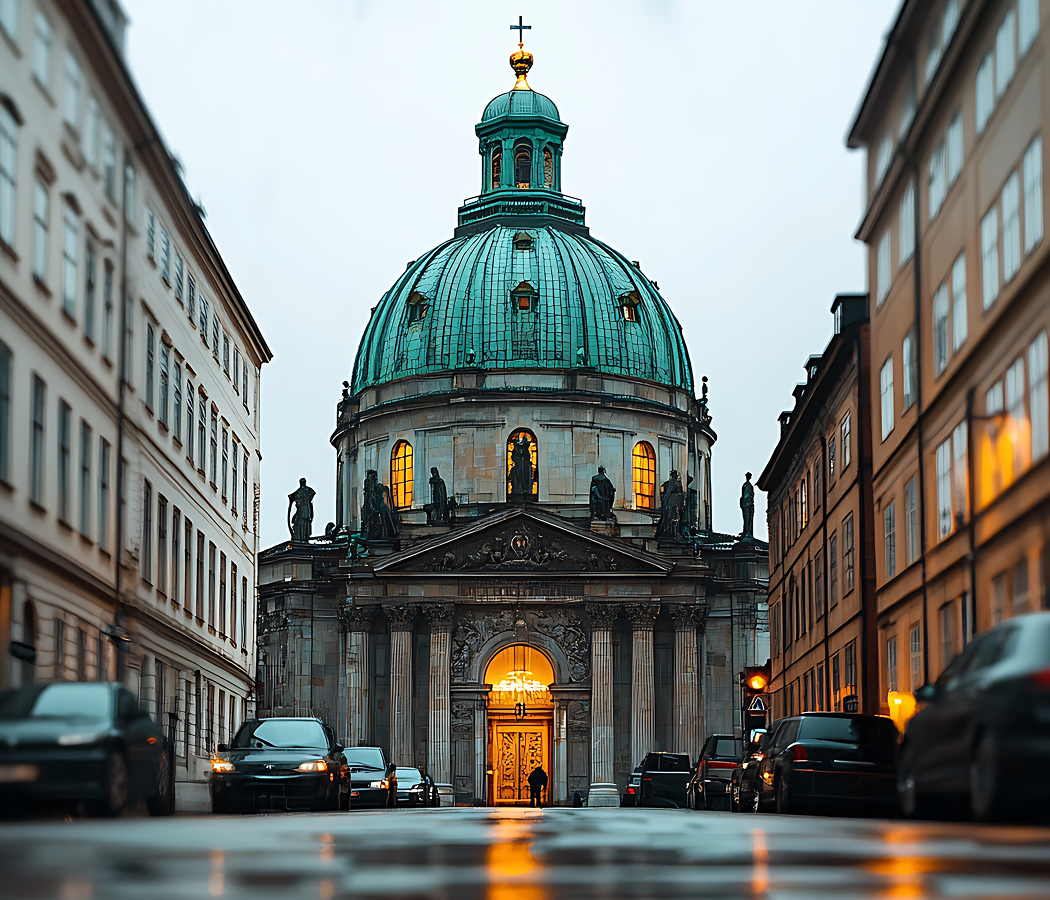
Begin at Church of Our Saviour, the substantial Baroque church established during Christianshavn's development as a fortified commercial settlement under King Christian IV. Architect Lambert van Haven designed the principal building, whose construction began in 1682 during the reign of Christian V. The church was consecrated in 1696, introducing an ambitious religious institution into the district's planned network of canals, residential streets and commercial properties. Its most distinctive architectural feature arrived in 1752 when architect Lauritz de Thurah completed the celebrated spiral spire, incorporating an external staircase that winds around the copper-clad structure toward a gilded globe and figure of Christ. The tower rises ninety meters above the surrounding district, establishing a commanding visual presence across Copenhagen's historic waterfront. Continue to Christianshavns Canal, the central waterway developed during the seventeenth-century creation of Christianshavn as a planned commercial settlement inspired by Dutch canal cities. The district's original urban design incorporated a regular street network, a central square and navigable waterways intended to support trade and maritime transportation. Dutch engineer Johan Semp contributed to the planning process, developing a fortified settlement whose canal infrastructure connected commercial properties with Copenhagen's harbor. The adjoining streets of Overgaden Oven Vandet and Overgaden Neden Vandet preserve the historical relationship between waterfront access, merchant residences and the movement of goods through the district. Surviving eighteenth-century warehouses and historic canal-side buildings establish the architectural character of the former trading quarter. Conclude at North Atlantic House, the historic waterfront warehouse occupying Strandgade 91 beside the harbor. Constructed in 1767, the substantial brick building originally accommodated goods associated with Denmark's commercial relationships with Greenland, Iceland and the Faroe Islands. Its historical function connected Copenhagen's maritime economy with the movement of products and materials across the North Atlantic, establishing the building as an important component of the kingdom's overseas trading infrastructure. The restored warehouse subsequently developed into a cultural institution devoted to contemporary art and cultural exchange involving Greenland, Iceland and the Faroe Islands. Its exhibitions and public programs extend the building's historical associations into an institutional relationship with the artistic production of the North Atlantic region. The progression moves from the architectural ambitions of Denmark's absolutist monarchy through the commercial waterways of Christianshavn and culminates in the maritime warehouse that connected Copenhagen with the wider North Atlantic world.
Where your story begins.
Foresyte Travel reveals places that feel extraordinary long before you arrive.
Enjoy editorial crafted for luxury travelers.
Foresyte may earn a commission when you book.