
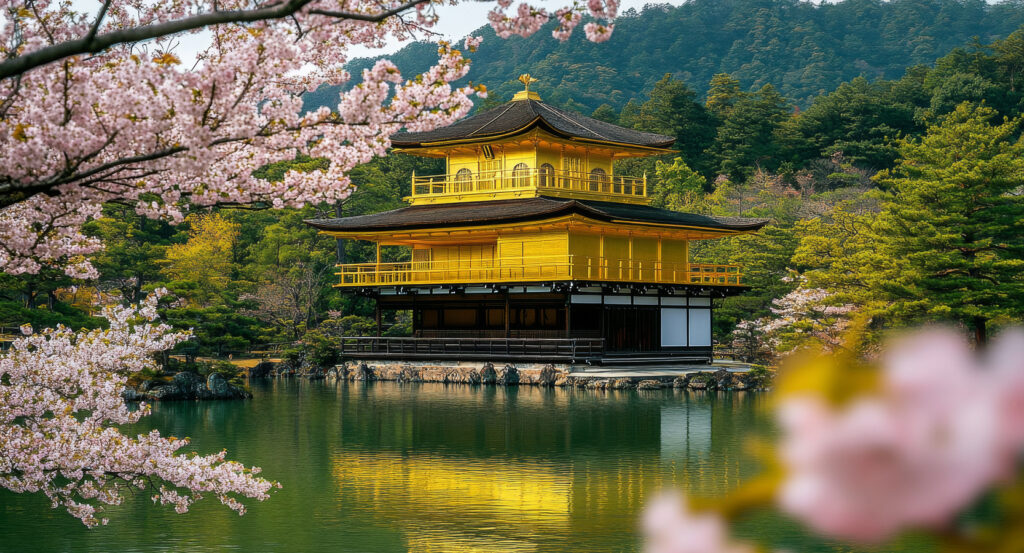
Why you should experience Kyōko-chi Pond in Kyoto, Japan.
Kyōko-chi Pond is Kyoto's reflection, both literally and spiritually.
At first glance, it seems simple: a still expanse of water framed by pines and stones. But when you stand before it, the illusion deepens. The pond reflects the Golden Pavilion so perfectly that reality and reflection become inseparable, each amplifying the other in a silent duet of light. On windless mornings, the temple glows twice, once in gold, once in glass, and the air feels suspended between worlds. The sound here is faint but textured: the hush of water lapping against mossy rocks, the rustle of bamboo in the breeze, the occasional call of a crow echoing through the trees. You realize that this pond was never meant to be decoration. It's a meditation in form, a mirror not just for buildings and sky, but for the viewer's own stillness. Stand long enough, and you'll feel your reflection softening into the scene. In a city that moves between centuries with effortless grace, the Mirror Pond is its moment of pause.
What you should know about Kyōko-chi Pond.
Known as Kyōko-chi, “Mirror Pond”, this body of water predates the Golden Pavilion itself and is central to the temple's entire design philosophy.
Laid out in the late 14th century during the creation of Ashikaga Yoshimitsu's retirement villa, the pond was inspired by Pure Land Buddhist symbolism, the idea that paradise could be represented on earth through harmony between water, sky, and reflection. Its irregular shoreline was designed intentionally, shaped to frame the pavilion from every possible vantage point, so that each step around the path reveals a new composition of gold, greenery, and light. The small islands scattered across the pond are not random; each carries meaning. The largest, called Ashihara-jima, symbolizes the islands of the immortals from Chinese mythology, an image of eternal life floating just out of reach. Others represent cranes and turtles, emblems of longevity and wisdom. The subtle flow of water through the pond, so calm it's almost invisible, is engineered to mimic the rhythm of breath, creating the illusion of perfect stillness while life moves quietly beneath the surface. Few visitors realize that the pond's name, Mirror, was not metaphorical flattery but spiritual instruction: it reminds us that enlightenment is not found in still water, but in the act of reflection itself.
How to fold Kyōko-chi Pond into your trip.
To experience Kyōko-chi Pond fully, you must let go of hurry and embrace observation.
Arrive early, before the crowds and cameras, when the sun is just cresting over the mountains. As you walk through the temple grounds, resist the instinct to rush to the pavilion. Pause instead at the pond's edge. Watch how the light shifts across the surface, gold one moment, silver the next. Move along the path slowly, noticing how each bend reframes the scene: the pavilion's reflection stretching, breaking, reforming as clouds drift overhead. If you're quiet, you may catch the sound of koi breaking the surface, rippling through the reflection like time itself. Visit again in late afternoon or during autumn, when the maple leaves bleed crimson across the water and the golden light deepens to amber. From the far edge of the garden, the view reverses, the pond reflecting not the temple, but the sky, as if the world has turned inside out. This is the genius of Kinkaku-ji's design: a landscape that changes depending on where you stand, reminding you that perspective is its own form of prayer. When you leave, turn once more toward the pond. You'll see your own reflection caught between gold and green, fleeting, imperfect, and yet somehow complete. That's the quiet lesson of Kyōko-chi Pond: it doesn't just show beauty; it teaches you how to see it.
Where your story begins.
Foresyte Travel reveals places that feel extraordinary long before you arrive.
Experience premium editorial crafted for luxury travelers.

















































































































