Why Moonlocking Pavilion matters.
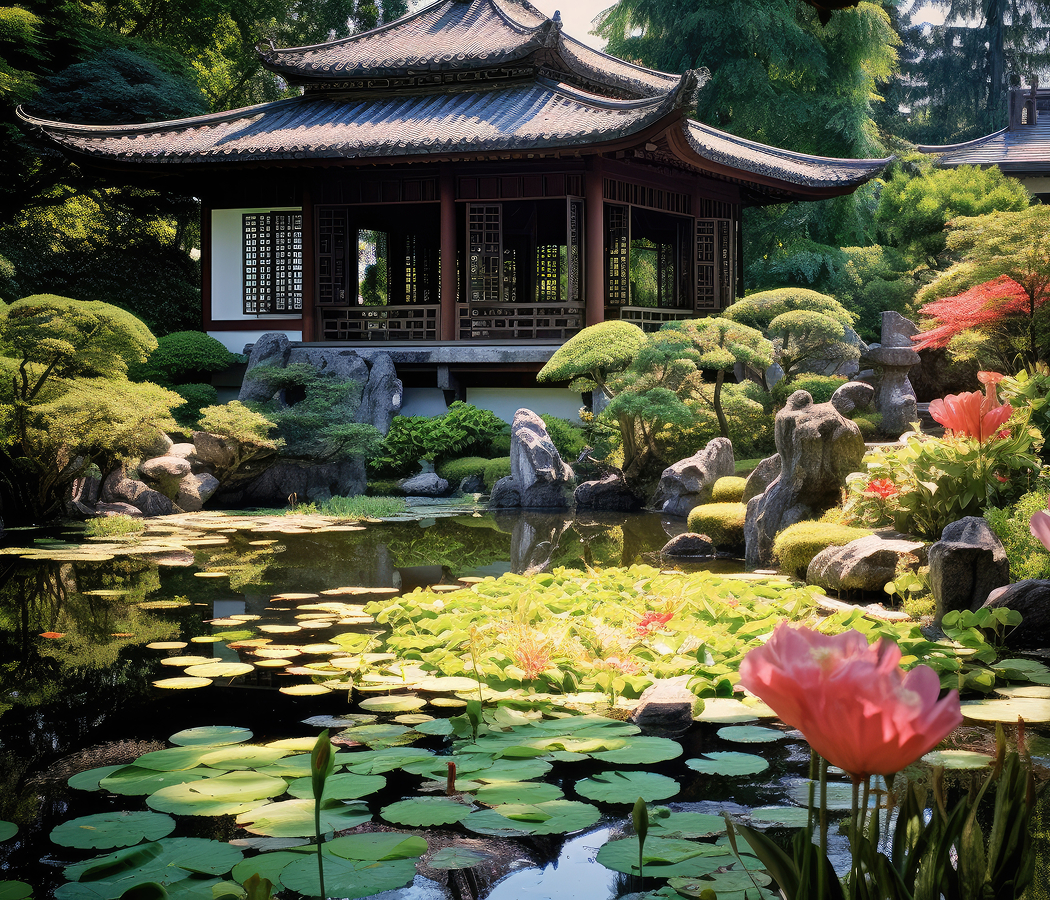
The Moonlocking Pavilion at the Lan Su Chinese Garden in Portland is where reflection turns to revelation, a still, poetic vantage where light, water, and shadow blur into one quiet rhythm.
Set at the edge of Lake Zither, the pavilion seems to hover just above the water, its wooden beams and tiled roof mirrored so perfectly below that it feels suspended between two worlds. Step inside, and you're surrounded by balance, the rustle of bamboo, the ripple of koi, the occasional chime of teacups drifting from the Tower of Cosmic Reflections nearby. Its name, Moonlocking, comes from a Suzhou tradition of watching the moon's reflection “lock” into water on clear nights, a moment when heaven and earth align through the act of still observation. Standing there, with the moonlight trembling across the pond, it's hard not to feel the same, weightless, infinite, and at peace within the geometry of the garden.
What defines Moonlocking Pavilion.
The Moonlocking Pavilion, known in Chinese as Yue Xin Xie (月心榭), translates to “Pavilion of the Moon's Heart,” a metaphor for clarity and reflection.
It was designed in the style of classical scholar gardens of Suzhou, where water served as both mirror and muse. The pavilion's design incorporates intentional asymmetry, the uneven pattern of columns, curved eaves, and diagonally aligned tiles create movement within stillness, echoing the Daoist ideal that beauty lies in imperfection. Each panel of its latticed windows frames a living painting, a drifting lotus petal, a passing cloud, or the faint silhouette of a bridge in the distance. Historically, pavilions like this were places for poetry and contemplation, where scholars gathered to compose verses beneath the moon or sip tea while reciting lines about transience and renewal. At Lan Su, it's also one of the garden's most acoustically resonant points, the softest sounds of the pond and breeze become amplified, turning silence itself into a kind of music. The pavilion's flooring is made from hand-laid stone arranged in a wave-like mosaic, designed to evoke the ripples that shimmer beneath the moon's reflection. Few realize that its positioning was precisely calculated so the moon rises directly into view between the pavilion's beams during the autumn Mid-Autumn Festival, a celestial alignment honoring the garden's poetic heart.
How Moonlocking Pavilion fits.
The Moonlocking Pavilion is among the most meditative corners of the Lan Su Chinese Garden, ideal for visitors seeking a moment of quiet reflection.
Enter the garden through the main gate, then follow the lakeside path past the Tower of Cosmic Reflections Teahouse until you reach the pavilion's delicate, overwater structure. Visit in the late afternoon or early evening when the light softens, or, if you're lucky, under the glow of a full moon when the pavilion lives up to its name. Spend 20-30 minutes here, sit on the stone bench, listen to the sound of water brushing against the posts, and watch how reflections shift with each breath of wind. Early mornings offer mist and solitude, while twilight brings a golden tranquility that feels suspended in time. Bring a journal or simply close your eyes; this is a place that invites presence, not activity. Afterward, continue your walk toward the Knowing the Fish Pavilion or return to the Teahouse for a final cup, both complement the Moonlocking Pavilion's contemplative mood. As you leave, look back once more: the pavilion will seem to float on the pond's surface, cradling the moon's reflection, a vision of stillness perfectly locked in light.
Where your story begins.
Foresyte Travel reveals places that feel extraordinary long before you arrive.
Enjoy editorial crafted for luxury travelers.
Foresyte may earn a commission when you book.