Why you should experience Martin's Relais in Brugge, Belgium.
Martin's Relais is where Brugge reveals its most contemplative side, a canal-side refuge that replaces crowds and performance with stillness, proportion, and the quiet confidence of place.
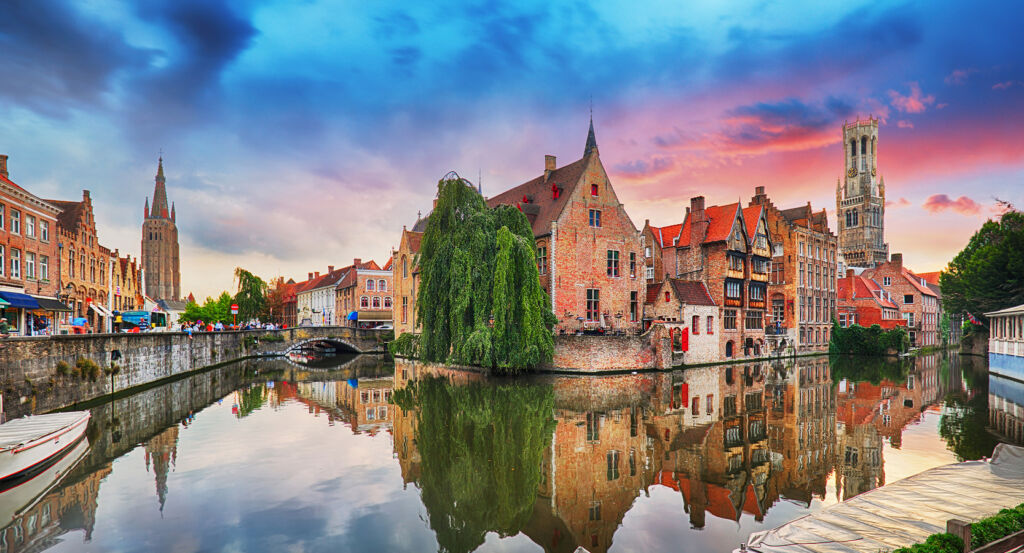
Brugge is often encountered at full volume, its beauty compressed into busy squares and landmark corridors where admiration competes with congestion, but Martin's Relais introduces the city through a different lens. Set along one of Brugge's most tranquil canals and housed within a series of historic patrician residences, the hotel feels removed without being distant, central without being exposed. Arrival is subtle and deliberate. There is no dramatic threshold or sense of ceremony; instead, you ease into the space as though stepping into a private home that has always belonged exactly where it stands. The exterior blends seamlessly into the canal streetscape, its presence defined by harmony. Inside, the atmosphere shifts immediately toward calm. Interiors are intimate, warm, and residential in scale, shaped by timber beams, stone floors, muted tones, and carefully preserved architectural details that give the hotel its sense of grounded authority. Movement through the public spaces feels unhurried, guided by narrow passages that open into lounges and sitting rooms overlooking the water. The effect is not grand but deeply composed, encouraging observation. Guest rooms extend this sense of quiet inhabitation. Each room feels individual rather than standardized, shaped by the proportions of the historic buildings themselves. Sloped ceilings, exposed beams, and canal-facing windows create a sense of specificity that anchors you in place. Beds are deeply comfortable and inviting, positioned to support real rest. Lighting is soft and adjustable, allowing rooms to shift gently from morning clarity to evening calm. Furnishings emphasize texture and quality over statement, with seating, storage, and surfaces arranged to make the space feel lived-in. Many rooms offer views directly onto the canal, where reflections of stone façades and passing light become part of the room's atmosphere. Bathrooms are well-scaled and thoughtfully finished, prioritizing ease, warmth, and functionality over indulgence. Throughout the hotel, sound is managed with care. The canal absorbs much of the city's external noise, and the building's thick walls and layered interiors further insulate the experience, creating an environment where silence feels intentional. Service at Martin's Relais aligns perfectly with this mood. Staff interactions are warm, precise, and understated, guided by attentiveness. Assistance feels anticipatory rather than reactive, and recommendations are offered with local familiarity rather than rehearsed enthusiasm. The location completes the experience. From the hotel, Brugge's historic core is easily walkable, yet returning always feels like withdrawing into a quieter register. Martin's Relais does not attempt to reinterpret Brugge or compete with its beauty. It offers a place to experience the city through stillness, allowing its depth and texture to emerge gradually and without pressure.
What you should know about Martin's Relais.
Martin's Relais occupies a collection of historic canal houses that reflect Brugge's mercantile and domestic past, a lineage that continues to shape the hotel's character and spatial logic.
These buildings were originally private residences belonging to Brugge's merchant class, positioned along canals that once functioned as arteries of trade, communication, and daily life. Unlike grand civic or religious structures, these houses were designed for sustained habitation rather than display, a quality that remains deeply embedded in how the hotel feels today. The architecture favors human scale, proportion, and inward focus, creating spaces that feel protective and composed. When the buildings were adapted into a hotel, the guiding principle was preservation through continuity. Original beams, masonry, staircases, and window placements were retained wherever possible, allowing the structure's internal rhythms to remain intact. This has resulted in a layout that feels organic rather than optimized, with rooms and corridors that follow historical logic instead of modern uniformity. One lesser-known aspect of Martin's Relais is how this architectural inheritance influences the guest experience psychologically. The absence of large, open-plan public areas encourages slower movement and quieter interaction. Guests naturally lower their voices, linger longer, and move with greater awareness of space. The canal itself plays an important role. Historically, these waterways were working routes rather than scenic features, and their continued presence gives the hotel a sense of continuity with Brugge's lived past. Reflections on the water, subtle shifts in light, and the occasional sound of footsteps along the canal wall reinforce a feeling of time moving gently. Another defining element is the hotel's relationship with repetition and return. Because rooms vary in layout and character, repeat guests often request specific spaces, forming attachments that resemble familiarity. This pattern of return has shaped the hotel's culture, attracting travelers who value intimacy, discretion, and depth over novelty. The service philosophy supports this orientation. Staff are trained to engage with guests as individuals rather than itineraries, offering guidance that responds to curiosity rather than pushing highlights. In a city where history is frequently consumed through images, Martin's Relais preserves history as an atmosphere, allowing it to be felt through proportion, silence, and continuity.
How to fold Martin's Relais into your trip.
Martin's Relais works best when you allow it to set the internal pace of your Brugge experience, using calm as a structure.
Begin your mornings slowly, letting canal light and stillness define the first hours of the day. Watching reflections move across the water from your window or stepping outside before the city fully awakens creates a sense of connection that lingers throughout the day. From the hotel, explore Brugge on foot. Walk toward the Markt and Burg, but allow yourself to deviate into quieter streets and smaller bridges where the city feels more personal. Use the hotel as a midpoint. Midday returns are especially valuable here. A brief pause in your room or a quiet moment in a lounge allows the density of Brugge's history to settle. In the afternoon, focus on experiences that reward attention: small museums, artisan workshops, lesser-visited churches, or extended canal walks that reveal subtle variations in architecture and light. The hotel's location makes these explorations feel natural. Evenings benefit from restraint. Choose a nearby restaurant, walk back as the city softens and crowds thin, and allow the return to the hotel to feel like a continuation of the day. Sitting quietly by the canal or retiring early reinforces the sense that Brugge is best experienced through rhythm. On longer stays, this approach becomes essential. Alternating between outward exploration and inward calm prevents fatigue and allows each day to feel distinct. The city reveals itself gradually, through repetition and familiarity. When departure day arrives, leaving Martin's Relais feels reflective rather than abrupt, as though you are stepping back into motion from a place that exists slightly outside of time. The hotel does not promise performance or transformation. It offers something subtler and more enduring: the conditions to experience Brugge with attention, patience, and a sense of quiet belonging that lingers long after you leave.
Where your story begins.
Foresyte Travel reveals places that feel extraordinary long before you arrive.
Experience premium editorial crafted for luxury travelers.